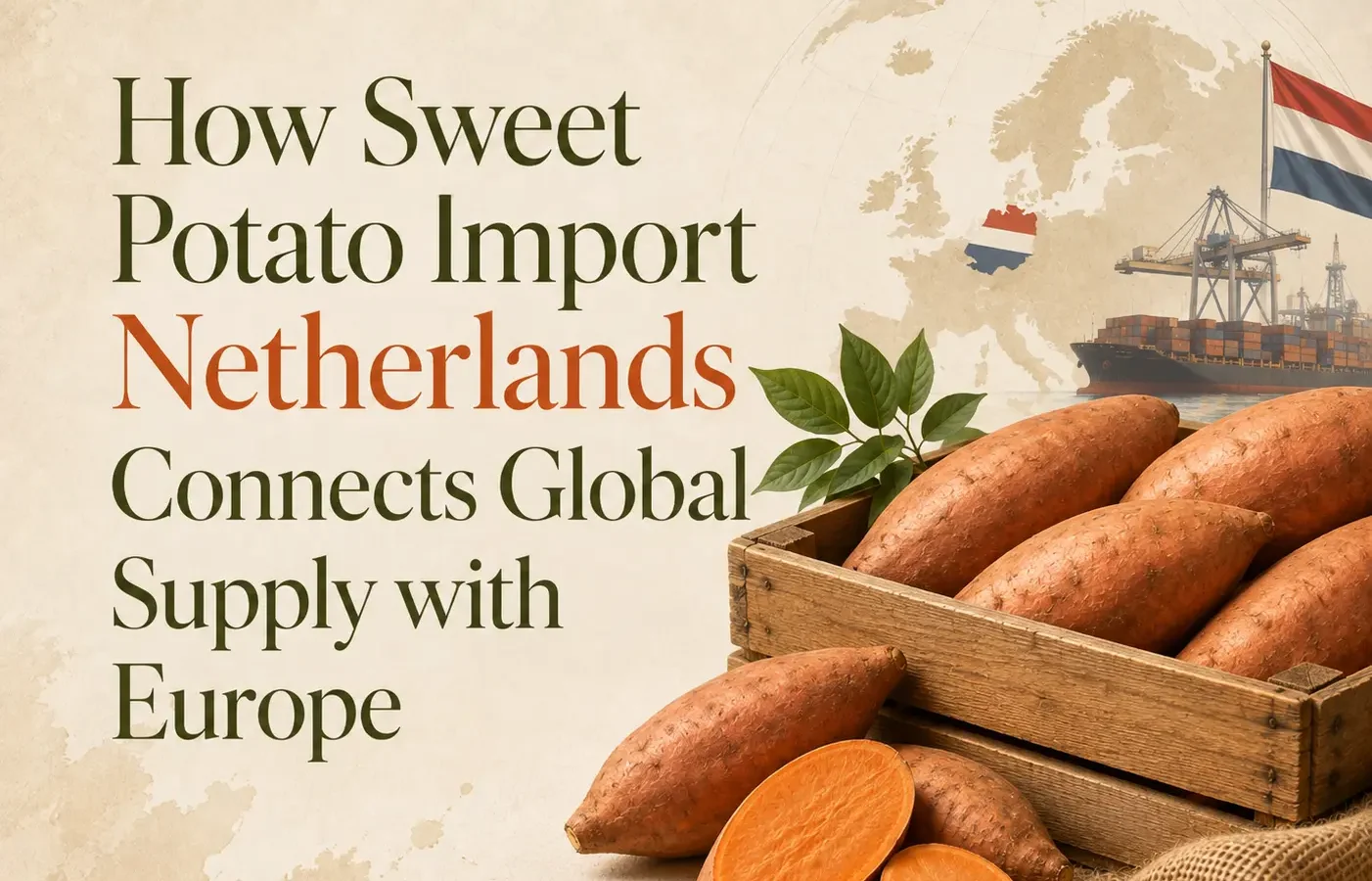
The role of sweet potato import Netherlands extends beyond the needs of one domestic market. The Netherlands is closely connected to wider European distribution, which means imported produce may continue moving through warehouses, wholesale channels, retail networks, and neighbouring markets after arrival. This makes logistics, arrival quality, packaging, and supply visibility especially important for buyers managing imported sweet potatoes.
For businesses operating in the sweet potato Netherlands market, the commercial value of a shipment depends on how well it performs throughout this wider distribution journey. Current sweet potato import trends increasingly reflect that reality, with buyers paying closer attention to remaining shelf life, product consistency, and how efficiently goods can move after import. Understanding sweet potato export services can also help buyers evaluate how preparation at origin supports smoother distribution across European markets.
Why Sweet Potato Import Netherlands Has a Wider European Role
The importance of sweet potato import Netherlands comes partly from the country’s position within European trade and distribution. Imported products may serve Dutch buyers directly, but they can also move onward to customers in other markets. This gives the sweet potato Netherlands market a broader commercial role and helps explain why modern sweet potato import trends place so much emphasis on logistics efficiency and post-arrival performance.
More Than Supply for One Domestic Market
A shipment entering the Netherlands may have several possible destinations after arrival. Depending on the buyer and distribution model, sweet potatoes can move through:
- Dutch wholesale markets.
- Retail distribution centres.
- Food-service networks.
- Regional importers.
- Customers in neighbouring EU markets.
This means importers need products that remain commercially strong beyond the first point of entry.
The Netherlands as a European Distribution Gateway
The Netherlands can act as an important distribution point for products destined for wider European markets. That gives buyers access to flexible routes, but it also increases the importance of careful preparation at origin.
Working with an Egyptian sweet potato exporter that understands grading, packing, and international shipment preparation can help buyers reduce the risk of quality problems before products enter wider European distribution.
Why Logistics Capability Influences Import Value
A product may be attractive and well graded, but poor logistics can still reduce its commercial value. Delays, weak coordination, or unsuitable handling can shorten the remaining selling window.
For sweet potato import Netherlands, logistics capability is therefore part of product value. This is one reason sweet potato import trends increasingly favour suppliers that can support not only export, but the buyer’s wider distribution requirements within the sweet potato Netherlands market.
What Sweet Potato Import Trends Reveal About European Distribution
Current sweet potato import trends show that distributors are paying closer attention to how efficiently imported products move after arrival. In sweet potato import Netherlands, the shipment may still have a long journey ahead after clearing import procedures, so buyers need reliable arrival quality, sufficient shelf life, and clear information about product availability. These expectations are shaping sourcing decisions across the sweet potato Netherlands market.
Greater Focus on Efficient Product Movement
Efficiency matters because every extra handling stage can affect cost and product condition. Importers increasingly look for supply that can move through the chain without unnecessary repacking, sorting, or delays.
Efficient product movement can support:
- Faster warehouse turnover.
- Lower handling requirements.
- Better stock planning.
- Reduced labour costs.
- More predictable onward distribution.
These operational advantages are becoming an important part of sweet potato import trends.
Stronger Demand for Reliable Arrival Quality
Arrival quality matters more in a distribution hub because the product may continue travelling after import. Buyers need roots that still have enough commercial life left for storage and redistribution.
The quality control process at origin can help reduce avoidable issues by identifying roots that do not match agreed standards before they are packed and shipped.
Why Supply Visibility Matters to Distributors
Distributors need to know what volume is coming, when it will arrive, and whether the specification will match expectations.
For sweet potato import Netherlands, this visibility helps buyers coordinate warehousing and customer orders across the sweet potato Netherlands market. It also supports the wider direction of sweet potato import trends, where transparency is becoming a key part of supplier value.
How the Sweet Potato Netherlands Market Connects with Wider EU Demand
The sweet potato Netherlands market is closely connected with demand beyond the country’s borders. Products imported into the Netherlands may serve domestic customers, but they can also support wholesalers, retailers, and food-service businesses elsewhere in Europe. For sweet potato import Netherlands, this wider distribution role makes consistency and commercial flexibility particularly important.
Domestic Buyers and European Distribution
Importers may need to divide shipments between several customer types or destinations. One part of an order may serve Dutch buyers directly, while another may continue to other EU markets.
This can require:
- Clear commercial grading.
- Reliable carton composition.
- Strong product identification.
- Flexible stock allocation.
- Consistent quality across the shipment.
Understanding different varieties of sweet potatoes can also help buyers decide which products are better suited to different European customer preferences.
Serving Multiple Commercial Channels
Different channels may need different specifications. Retailers may prioritise appearance and uniformity, wholesalers may focus on volume and handling efficiency, while food-service buyers may care more about cooking performance and portion consistency.
This makes specification planning especially important in sweet potato import Netherlands.
Why Product Consistency Matters Across Markets
A shipment serving several customers needs to remain consistent enough to divide efficiently. Significant differences in size or quality can make allocation more difficult.
For the sweet potato Netherlands market, this is one reason sweet potato import trends increasingly favour suppliers that can maintain stable grading and commercial quality across larger orders.
What Successful Sweet Potato Import Netherlands Requires
Successful sweet potato import Netherlands depends on much more than placing an order and arranging transport. Buyers need accurate shipment planning, dependable specifications, and strong coordination from the production origin through arrival and distribution. In the sweet potato Netherlands market, these elements help reduce uncertainty and support smoother movement into wider European channels, which is increasingly important within modern sweet potato import trends.
Accurate Shipment Planning
Good planning begins before products leave the exporter. Buyers should understand:
- Expected harvest timing.
- Available commercial volumes.
- Packing schedule.
- Shipping window.
- Estimated arrival.
- Distribution requirements after import.
The sweet potato season in the origin country can influence these timelines, so seasonal planning should be realistic rather than based on fixed assumptions.
Reliable Product Specifications
Specifications need to be clear before packing begins. Buyers should confirm variety, grade, size, appearance, and packaging to avoid disputes after arrival.
This helps reduce:
- Unexpected variation.
- Additional sorting.
- Repacking requirements.
- Customer complaints.
- Inventory delays.
Coordination from Origin to Distribution
The strongest supply programmes maintain communication throughout the process. Exporters, importers, logistics partners, and distributors need accurate information at the right time.
For sweet potato import Netherlands, this coordination supports the wider sweet potato Netherlands distribution chain and reflects sweet potato import trends toward more connected, transparent supplier relationships.
Why Arrival Quality Matters in a Distribution Hub
Arrival quality is especially important in sweet potato import Netherlands because the product may continue through several distribution stages after reaching the country. Buyers in the sweet potato Netherlands market need sweet potatoes that are not only acceptable on arrival, but strong enough to withstand further storage, handling, and transport. This longer commercial journey is one reason sweet potato import trends place increasing emphasis on remaining shelf life.
Products May Continue Travelling After Import
A shipment may still need to move from the arrival point to:
- Distribution centres.
- Wholesale customers.
- Retail warehouses.
- Food-service operators.
- Other European destinations.
Each additional stage uses part of the product’s remaining commercial life.
Understanding when to harvest sweet potatoes is relevant because correct maturity can influence skin strength, storage potential, and how well roots tolerate transport.
Preserving Shelf Life for Onward Distribution
Buyers need enough time after arrival to inspect, store, allocate, and distribute the shipment. Products with weak remaining shelf life may create unnecessary pressure and force faster selling.
Strong shelf-life performance can support:
- More flexible inventory management.
- Longer distribution windows.
- Reduced markdown pressure.
- Better customer service.
- Lower risk of waste.
How Product Loss Affects Commercial Margins
Losses reduce the real value of an imported shipment. Damaged or deteriorated products may need to be removed or sold through lower-value channels.
For sweet potato import Netherlands, protecting arrival quality can therefore improve commercial margins across the wider sweet potato Netherlands supply chain and supports the quality-focused direction of current sweet potato import trends.
Packaging for Sweet Potato Import Netherlands
Packaging plays a critical role in sweet potato import Netherlands because products need to survive international transport and potentially continue into wider European distribution. For buyers in the sweet potato Netherlands market, the ideal packaging should protect roots, support efficient warehouse handling, and adapt to the requirements of different customers. This wider role is becoming increasingly important in sweet potato import trends.
Protection During International Transit
Sweet potatoes can experience vibration, pressure, and repeated handling during transportation. Packaging needs to provide enough structure to protect the crop without creating excessive compression.
Professional sweet potato packaging solutions can help:
- Reduce unnecessary root movement.
- Protect skin from bruising.
- Support stable palletisation.
- Preserve product appearance.
- Improve handling efficiency.
Efficient Warehouse and Distribution Handling
Packaging must also work after arrival. Cartons that are difficult to stack, inspect, or move can slow warehouse operations and increase labour requirements.
Buyers should consider:
- Practical carton weights.
- Stable pallet configurations.
- Clear product labelling.
- Suitable ventilation.
- Ease of inspection.
These details can directly influence how efficiently sweet potato import Netherlands moves through the distribution chain.
Packing for Different European Customers
Different customers may require different formats. Retailers, wholesalers, and food-service businesses can each have unique weight, labelling, or presentation requirements.
Flexible packaging helps importers serve the sweet potato Netherlands market while also allocating stock to customers elsewhere in Europe. That adaptability reflects sweet potato import trends toward more buyer-specific supply solutions.
How Logistics Performance Changes Supplier Value
Supplier value in sweet potato import Netherlands depends not only on product quality, but also on how reliably shipments are prepared, dispatched, and delivered. Strong logistics performance gives buyers more control over warehouse planning and customer commitments. In the sweet potato Netherlands market, this is particularly important because imported products may need to move quickly into wider European distribution after arrival.
Shipment Timing and Warehouse Planning
Accurate timing helps warehouses prepare labour, space, and inventory allocation before products arrive.
Reliable scheduling can help buyers:
- Reserve storage capacity.
- Plan receiving teams.
- Coordinate customer orders.
- Reduce warehouse congestion.
- Avoid unnecessary product delays.
For companies handling sweet potato wholesale, these benefits become increasingly important as shipment volumes increase.
Reducing Delays During Import Operations
Delays can reduce the remaining shelf life of fresh produce before it even enters distribution. Buyers therefore need suppliers and logistics partners that prepare documentation correctly and communicate changes early.
For sweet potato import Netherlands, reducing avoidable delays helps preserve the product’s commercial value and gives the sweet potato Netherlands market more time to distribute stock efficiently.
Why Clear Communication Supports Distribution
Communication gives buyers the ability to react. If departure timing changes or an expected volume shifts, early information allows the importer to adjust warehouse and customer plans.
This is why sweet potato import trends increasingly treat communication as part of supplier performance. A supplier that provides dependable information can create commercial value beyond the product itself.
How Sweet Potato Import Trends Encourage Origin Diversification
Current sweet potato import trends are encouraging European buyers to think beyond dependence on a single production origin. For businesses managing sweet potato import Netherlands, diversification can provide additional options when harvest timing, crop volumes, specifications, or logistics change unexpectedly. This flexibility is particularly valuable in the sweet potato Netherlands market, where imported products may support both domestic demand and onward distribution to other European destinations.
Reducing Supply Dependency
Depending heavily on one growing region can expose importers to risks they cannot fully control. Weather conditions, harvest delays, lower crop volumes, transport disruptions, or shortages of particular grades can all affect availability.
A diversified sourcing strategy gives buyers more ways to respond by providing:
- Alternative supply when one origin becomes limited.
- Additional commercial grades or sizes.
- More flexibility during demand peaks.
- Reduced exposure to regional crop disruptions.
- Better continuity for regular customers.
Understanding where do sweet potatoes grow can help buyers compare production regions and recognise why climate, soil, and seasonal timing create different sourcing opportunities around the world.
Using Different Seasonal Origins
Origin diversification becomes most useful when buyers understand how different harvest calendars complement one another. Instead of expecting one country to provide the same availability throughout the year, importers can plan sourcing around the strongest periods of several origins.
For sweet potato import Netherlands, this approach can create smoother transitions between supply windows and reduce pressure when one season begins to tighten.
Improving Availability Across European Markets
The distribution role of the Netherlands makes continuity particularly important. Products may need to serve several customers or destinations, so a shortage can affect more than one market.
By combining seasonal origins, businesses in the sweet potato Netherlands market can build more flexible availability for wider European distribution. This is one reason origin diversification has become increasingly relevant within sweet potato import trends.
What Buyers Compare Beyond Price in Sweet Potato Netherlands
Price remains an important purchasing factor, but buyers in the sweet potato Netherlands market increasingly evaluate what happens to the product after they have paid for it. For sweet potato import Netherlands, a low quotation can lose its advantage if roots arrive damaged, deteriorate quickly, or vary significantly between shipments. Modern sweet potato import trends therefore encourage buyers to compare the complete commercial performance of each supply option.
Quality on Arrival
The first question is whether the shipment reaches its destination in the condition that was agreed before departure. Importers may assess root firmness, skin condition, sizing, grading accuracy, and the percentage of product that remains commercially acceptable.
Quality on arrival can be influenced by the entire production and post-harvest journey, including sweet potato farming practices before the roots are harvested, cured, graded, packed, and prepared for export.
A shipment with stronger arrival quality can reduce the need for:
- Additional sorting.
- Product disposal.
- Regrading.
- Customer discounts.
- Emergency replacement stock.
Remaining Shelf Life
Arrival is not the end of the journey in the Netherlands. Products may still need to enter storage, move to distribution centres, or continue to customers elsewhere in Europe.
For sweet potato import Netherlands, buyers therefore need to consider how much commercial life remains after arrival. Strong shelf-life performance gives distributors more flexibility to allocate stock without rushing products through the market.
Consistency Across Repeated Shipments
One successful delivery provides limited information about long-term supplier performance. Buyers gain a clearer picture after several orders.
Current sweet potato import trends place greater value on suppliers that can maintain similar grades, sizing, product condition, and packing standards over time. For the sweet potato Netherlands market, that consistency makes inventory and customer planning significantly easier.
Where Egyptian Supply Fits into Sweet Potato Import Netherlands
Egyptian production can contribute to sweet potato import Netherlands by providing another seasonal origin for buyers managing European supply programmes. Its value depends on how well seasonal availability, commercial grades, and export preparation match the importer’s actual requirements. For the sweet potato Netherlands market, Egyptian supply can therefore function as part of a diversified sourcing strategy rather than simply another country on a supplier list.
Seasonal Availability for European Buyers
Egypt’s agricultural calendar can provide useful sourcing opportunities at periods that complement supply from other producing regions. This gives importers another option when planning volumes across different parts of the year.
The 7 Nile Delta soil advantages also help explain the production foundation behind Egyptian sweet potatoes, including agricultural conditions that support root development when combined with appropriate crop management.
Seasonal Egyptian supply can help buyers manage:
- Planned purchasing windows.
- Additional wholesale demand.
- Changes in availability from other origins.
- Customer-specific programmes.
- Wider European distribution requirements.
Export-Ready Commercial Grades
Availability alone is not enough. Products must also match the size, grade, appearance, and quality requirements agreed with the buyer.
For sweet potato import Netherlands, consistent commercial grading can simplify warehouse allocation and make it easier to distribute different parts of a shipment to suitable customers.
Supply Suitable for Wider Distribution
Products entering the Netherlands may continue travelling after arrival, so Egyptian supply needs to be prepared with the wider journey in mind.
Strong post-harvest handling, grading, packaging, and export coordination can help protect product quality through this process. These capabilities align with sweet potato import trends that prioritise shipment performance throughout the distribution chain, not merely at the point of export.
What Importers Should Confirm Before Choosing an Export Partner
Choosing an export partner for sweet potato import Netherlands should involve more than reviewing a quotation and confirming that stock is available. Buyers need to understand how quality is defined, how shipments will be prepared, and whether the exporter can support the volumes required throughout the planned programme. These checks are particularly important in the sweet potato Netherlands market, where supply may ultimately serve several customers or European destinations.
Quality and Grading Standards
Before ordering, buyers should define what an acceptable shipment actually means.
They should confirm:
- Available varieties.
- Commercial grades.
- Size ranges.
- Skin and appearance requirements.
- Acceptable quality tolerances.
- Sorting procedures.
Buyers interested in specific commercial varieties can explore Bellevue sweet potatoes when comparing the characteristics and options available for different market requirements.
Packaging and Shipment Specifications
Importers should also confirm how the agreed product will be packed and prepared. Carton format, weight, labelling, ventilation, pallet configuration, and shipment specifications should be understood before final packing begins.
These details can influence warehouse handling and onward distribution after arrival.
Volume Capacity and Export Coordination
A supplier may be able to fulfil one order without necessarily having the capacity to support a longer purchasing programme. Buyers should therefore ask what volumes can realistically be supplied and how repeat shipments will be coordinated.
Current sweet potato import trends increasingly reward this type of forward planning. For sweet potato import Netherlands, realistic capacity gives businesses in the sweet potato Netherlands market greater confidence when committing supply to their own customers.
How Farm Sweet Supports Sweet Potato Import Netherlands
Farm Sweet supports sweet potato import Netherlands with Egyptian sweet potatoes prepared around the commercial requirements of international buyers. For customers serving the sweet potato Netherlands market and wider European distribution, product quality needs to be supported by accurate grading, suitable packaging, realistic supply planning, and clear export coordination. These priorities reflect the direction of sweet potato import trends, where buyers increasingly assess the complete supply process.
Export-Ready Egyptian Sweet Potatoes
The journey to an export-ready product begins before packing. Production, harvest timing, post-harvest handling, and selection all influence the condition of the roots that eventually enter an international order.
Our Egyptian sweet potato benefits provide buyers with useful insight into the characteristics that make Egyptian production relevant to global markets, while commercial preparation helps translate those agricultural advantages into products suitable for international supply.
Professional Packing and Quality Control
After harvest, products need to be prepared according to the buyer’s agreed requirements. Grading helps create greater consistency, while appropriate packing protects roots during transport and handling.
The process focuses on maintaining:
- Agreed commercial sizes.
- Consistent product condition.
- Suitable presentation.
- Accurate packing.
- Protection for international transport.
For sweet potato import Netherlands, these steps are particularly valuable when products will continue into wider distribution after arrival.
Reliable Supply for European Distribution
Reliable supply also requires realistic communication about availability and timing. Farm Sweet works with international buyers to clarify specifications, seasonal volumes, packing requirements, and order preparation before shipment.
Buyers planning sweet potato import Netherlands can contact our Farm Sweet team to discuss requirements for the sweet potato Netherlands market and wider European distribution. This coordinated approach supports the consistency and visibility increasingly expected within sweet potato import trends.
Final Thoughts: Efficient Imports Create Wider Market Opportunities
The value of sweet potato import Netherlands extends beyond bringing products into one country. The Netherlands’ role in European distribution means imported sweet potatoes may continue into several commercial channels and destinations, making arrival quality, shelf life, logistics, and reliable supply especially important.
For businesses serving the sweet potato Netherlands market, efficiency begins at origin. Clear specifications, careful grading, suitable packaging, accurate shipment preparation, and communication all help protect the product before it enters the next stage of distribution. Current sweet potato import trends show why these operational details are becoming increasingly important when buyers compare suppliers and sourcing origins.
Farm Sweet’s professional sweet potato export services help connect production with the practical requirements of international trade, supporting the product through grading, packing, documentation, and shipment preparation.
Ultimately, efficient sweet potato import Netherlands creates more opportunities when products arrive ready for what comes next. Buyers that combine diversified origins, reliable suppliers, strong product specifications, and careful logistics planning can build a more flexible supply strategy for the sweet potato Netherlands market and the wider European customers it serves.
FAQs: European Distribution and Sweet Potato Netherlands Supply
- Why is sweet potato import Netherlands important for European trade?
The Netherlands can serve both domestic demand and wider European distribution, making logistics, shelf life, and consistent arrival quality particularly important.
- What sweet potato import trends are relevant to Dutch importers?
Sweet potato import trends include supply diversification, stronger logistics planning, consistent specifications, and greater focus on quality after long-distance transport.
- What matters most in the sweet potato Netherlands market?
Buyers may prioritise arrival quality, shelf life, grading consistency, packaging, reliable supply, and efficient movement through distribution networks.
- Why is shelf life important for sweet potato import Netherlands?
Products may continue to other European destinations after arrival, so sufficient remaining shelf life helps protect quality throughout onward distribution.
- How can Egyptian suppliers support sweet potato Netherlands buyers?
Egyptian suppliers can offer seasonal availability, export-ready grades, professional packaging, and supply suitable for Dutch and wider European distribution.