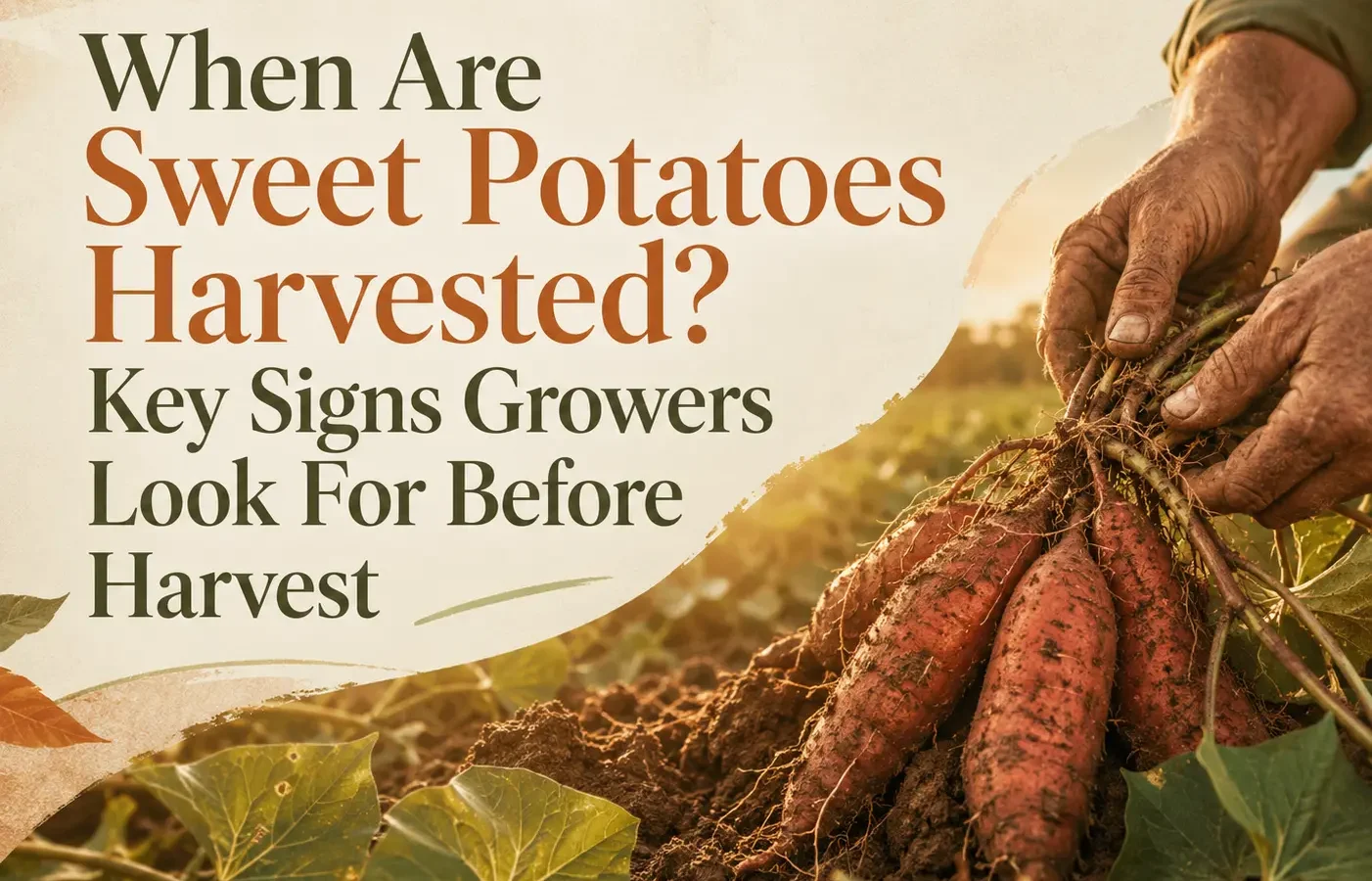
Knowing when are sweet potatoes harvested is one of the most important decisions in commercial sweet potato production. Harvesting at the wrong stage can affect root size, skin condition, storage performance, and the percentage of the crop that meets market specifications. Rather than relying on a fixed date, growers need to assess the crop’s development and consider the conditions it has experienced throughout the sweet potato season.
This is where Harvest indicators become particularly useful. Root size, skin development, plant maturity, soil conditions, and weather can all provide information about whether the crop is approaching the right harvest window. For growers and commercial suppliers, when to harvest sweet potatoes is therefore not simply a question of timing; it is a decision that connects field maturity with the quality buyers will expect after harvest.
Why Harvest Timing Matters in Sweet Potato Production
Harvesting marks the point where months of cultivation become a commercial product, making timing one of the most consequential decisions in the entire production cycle. The right harvest window can help growers achieve suitable sizing, stronger skin quality, and better post-harvest performance. During the sweet potato season, this decision needs to account for both the condition of the crop and the requirements of the market it is intended to serve.
Harvesting Is About Quality, Not Just Timing
A crop can reach a particular age without every root being ready for harvest. Variety, temperature, soil conditions, irrigation, and crop health can all influence development, which means a calendar date alone cannot determine when are sweet potatoes harvested.
Growers should look at several Harvest indicators together, including:
- Root development and sizing.
- Skin firmness and appearance.
- Uniformity across the field.
- General plant maturity.
- Recent weather conditions.
- Intended commercial grade.
This approach gives growers a clearer picture of whether the crop has reached a useful balance between maturity and quality.
How Harvest Decisions Affect Commercial Value
Harvest timing directly influences how much of the crop can meet commercial specifications. Harvesting too early may result in smaller roots or insufficient maturity, while waiting too long can increase the risk of oversized roots, cracking, irregular shapes, or field damage.
For businesses supplying sweet potato wholesale markets, these differences can have a direct financial impact. Buyers typically need predictable grades and consistent sizing, so a well-timed harvest can help growers maximise the proportion of the crop that is suitable for its intended market.
Why the Right Timing Supports Better Storage Performance
Harvest maturity also affects what happens after the roots leave the field. Sweet potatoes need to withstand handling, curing, storage, packing, and transportation, and their condition at harvest provides the starting point for each of these stages.
During the sweet potato season, growers who use multiple Harvest indicators can make more informed decisions about harvest readiness and prepare the crop for the next stage. Understanding when are sweet potatoes harvested therefore helps protect not only field quality but also the product’s potential throughout the supply chain.
When Are Sweet Potatoes Harvested During the Growing Cycle?
There is no single harvest date that applies to every sweet potato crop. The answer to when are sweet potatoes harvested depends on the variety, planting date, climate, soil, irrigation, and how quickly the roots have developed. Even within the same production region, different fields may reach maturity at slightly different times. Understanding the crop’s development is therefore essential for interpreting Harvest indicators accurately during the sweet potato season.
Understanding the Typical Sweet Potato Growth Period
Sweet potatoes move through several stages before reaching commercial maturity. After planting, the crop first focuses on establishment and vegetative growth before energy is increasingly directed toward storage-root development.
As the crop progresses, growers can monitor:
- Plant establishment.
- Vine development.
- Root formation.
- Increasing root size.
- Skin development.
- Overall field uniformity.
These observations help create a more complete picture of maturity. Rather than asking only how many days have passed, growers can use these Harvest indicators to determine whether the crop is actually approaching its desired commercial stage.
How Climate and Variety Influence Harvest Timing
Climate has a major influence on crop development. Warm temperatures and suitable sunlight generally support steady growth, while periods of unsuitable weather may slow development or increase plant stress.
Variety also matters because different sweet potatoes can have different maturity characteristics and commercial sizing patterns. This means the length of the sweet potato season is not identical for every production system.
For growers learning when are sweet potatoes harvested, the variety and local growing environment should therefore be considered together rather than applying one universal harvest schedule.
Why Different Regions Have Different Harvest Windows
Production regions differ in temperature, rainfall, soil conditions, planting dates, and overall climate. These differences naturally create different harvest windows, even when growers are producing similar varieties.
Understanding how to grow sweet potatoes under local conditions helps growers anticipate these differences and interpret crop development more accurately. Combining regional experience with field-based Harvest indicators allows the harvest decision to reflect the actual crop rather than an arbitrary calendar date.
The Main Harvest Indicators Growers Should Monitor
Determining when are sweet potatoes harvested becomes more reliable when growers assess several signs together. No single observation can fully describe root maturity, particularly when fields have experienced changing weather or uneven growing conditions. The most useful Harvest indicators provide information about root development, skin condition, plant maturity, and field uniformity, helping growers make better decisions as the sweet potato season approaches its commercial endpoint.
Root Size and Development
Root size is one of the first things growers and buyers consider, but maximum size is not necessarily the objective. The ideal size depends on the variety, grade, and intended market.
Growers should consider:
- Current root size.
- Shape and uniformity.
- Development across different field areas.
- Expected commercial grade.
- Whether additional time is likely to improve value.
For growing sweet potatoes commercially, this distinction is important. A crop should be harvested when roots have reached a commercially useful stage rather than simply being left in the ground until they become as large as possible.
Skin Condition and Root Appearance
Skin development provides another useful indication of maturity. Roots need sufficient skin development to tolerate lifting, handling, curing, and storage without unnecessary damage.
Growers can assess:
- Skin firmness.
- Surface appearance.
- Visible scratches or damage.
- Root shape.
- General consistency.
These Harvest indicators become especially valuable when deciding when are sweet potatoes harvested for markets where appearance and post-harvest performance are important.
Plant Maturity and Field Observations
The condition of the plants can provide additional context about how the crop is progressing. Changes in foliage, plant vigour, and differences between field areas may indicate that development is not completely uniform.
Growers should combine these observations with root assessments rather than relying on plant appearance alone. During the sweet potato season, a complete maturity assessment gives a much stronger basis for determining harvest readiness and protecting the quality of the final crop.
How Weather Conditions Influence Sweet Potato Harvest Timing
Weather can change the way a crop develops and can also affect whether field conditions are suitable for harvesting. Temperature, rainfall, soil moisture, and sudden environmental changes may accelerate, delay, or complicate the harvest window. For growers asking when are sweet potatoes harvested, understanding weather is therefore just as important as understanding the crop itself. These factors can also alter the sweet potato season from one production cycle to another.
The Impact of Temperature Changes
Temperature affects the pace of plant development and root formation. A period of favourable warmth may encourage steady progress, while unusually cool conditions can slow the crop. Excessive heat can also create stress when moisture is insufficient.
Growers should monitor:
- Recent temperature patterns.
- Plant development.
- Soil moisture.
- Signs of heat stress.
- Expected conditions around harvest.
These observations add valuable context to other Harvest indicators and help growers determine whether the crop is progressing according to expectations.
Managing Harvest After Rainfall
Rainfall can influence both root condition and the practical ability to harvest. Wet or heavy soil may make lifting more difficult and can increase the risk of mechanical damage or excessive handling.
After significant rainfall, growers may need to assess:
- Whether the field is workable.
- Soil moisture around the roots.
- Drainage conditions.
- Risk of bruising or cuts.
- Whether a short delay would improve conditions.
This is one reason sweet potato growing conditions need to be considered throughout the entire production cycle. Field conditions at harvest are partly the result of management decisions made weeks or months earlier.
Adjusting Plans During Unpredictable Conditions
A planned harvest date should provide direction, not prevent growers from responding to real conditions. Unexpected heat, rainfall, or uneven crop development may require harvest plans to be adjusted.
Understanding how to grow sweet potatoes successfully includes knowing when to adapt. By combining weather observations with crop-based Harvest indicators, growers can make better decisions about when are sweet potatoes harvested while protecting quality throughout the sweet potato season.
Why Sweet Potato Season Influences Supply Planning
The sweet potato season determines much more than when roots become available. It affects labour requirements, harvesting capacity, grading schedules, storage space, packing operations, transportation, and the timing of customer orders. For commercial growers and suppliers, understanding when are sweet potatoes harvested is therefore closely connected to planning how the crop will move from the field into the market.
Connecting Harvest Periods with Market Demand
Harvest planning works best when it considers the market the crop is intended to serve. Retailers, wholesalers, food-service businesses, and exporters may have different volume requirements and purchasing windows.
Growers can coordinate:
- Expected harvest volumes.
- Labour availability.
- Packing capacity.
- Storage requirements.
- Shipment schedules.
- Buyer commitments.
Reliable Harvest indicators help estimate when commercially suitable volumes are likely to become available. This allows suppliers to plan around actual crop readiness rather than promising volumes based solely on an estimated calendar date.
Managing Volumes During Peak Availability
Harvest periods can create significant pressure when large quantities mature at approximately the same time. Without sufficient preparation, growers may struggle to harvest, grade, cure, store, and pack products efficiently.
A well-planned sweet potato season helps coordinate these stages so that harvested roots do not remain exposed to unnecessary delays. Knowing when are sweet potatoes harvested also allows labour and post-harvest resources to be arranged before peak activity begins.
Planning Supply Beyond the Field
Commercial planning should continue after harvesting. Products may still need curing, grading, storage, packaging, and transportation before reaching the customer.
For businesses involved in sweet potato wholesale, connecting field maturity with post-harvest capacity is particularly important because large orders require predictable preparation and delivery. Using reliable Harvest indicators throughout the sweet potato season helps growers coordinate these stages and turn the harvest into a more dependable commercial supply.
How Early Harvesting Can Affect Sweet Potato Quality
Harvesting before roots have reached the right stage of development can affect much more than their final size. For growers asking when are sweet potatoes harvested, the answer needs to consider maturity, skin development, storage potential, and the requirements of the intended market. During the sweet potato season, rushing the crop into harvest can prevent roots from reaching their full commercial potential.
Smaller Roots and Commercial Limitations
One of the clearest consequences of early harvesting is reduced root size. Sweet potatoes need sufficient time underground to develop into the grades required by different buyers, and lifting them too soon can reduce the proportion of commercially desirable roots.
Growers should consider:
- Expected root size for the variety.
- Development across the field.
- Required commercial grades.
- Buyer preferences.
- Overall crop maturity.
The right Harvest indicators should therefore be assessed together rather than using size alone as the reason to begin harvesting.
Reduced Storage Potential
Harvest maturity can also influence how well roots handle the stages after leaving the field. Roots that have not developed sufficiently may be more vulnerable during handling and storage, potentially reducing the amount of time available for distribution.
This is particularly important for growers supplying export markets, where products may spend considerable time moving through storage and transportation before reaching their final customer.
Why Maturity Matters for Buyers
Buyers need products that deliver commercial value after arrival, not simply products that were harvested early enough to meet a shipping deadline. A mature crop is more likely to provide the appearance, sizing, and condition expected from a professional supplier.
For businesses evaluating harvest quality, our quality standards provide another useful reference for understanding the characteristics that should be protected before products move into commercial distribution. Ultimately, when are sweet potatoes harvested should be determined by the condition of the crop and its intended use, while reliable Harvest indicators help growers make that decision during each sweet potato season.
What Happens When Sweet Potatoes Are Harvested Too Late?
Waiting too long can create a different set of challenges from harvesting early. Although additional time in the soil may allow roots to increase in size, it does not automatically improve their commercial value. Understanding when are sweet potatoes harvested means finding the point where maturity and market requirements align, rather than simply extending the growing period. This balance becomes particularly important toward the end of the sweet potato season, when growers are preparing large volumes for market.
Changes in Root Size and Shape
Roots can continue increasing in size when left in the field, but excessive growth may produce sizes or shapes that are less suitable for particular commercial programmes.
The crop may develop:
- Oversized roots.
- Greater variation in shape.
- Less uniform sizing.
- Roots outside preferred commercial grades.
- Increased difficulty during sorting.
For growers targeting a jumbo sweet potato, size is valuable only when it is accompanied by suitable shape, skin condition, and overall quality.
Increased Risk of Surface Damage
Leaving mature roots underground for longer can increase their exposure to changing soil and weather conditions. Depending on the field environment, prolonged exposure may contribute to cracking, surface problems, or other defects that affect commercial appearance.
This makes Harvest indicators important even after roots have reached a desirable size. Growers need to continue assessing the crop rather than assuming that larger roots automatically mean a better harvest.
Impact on Market Acceptance
A crop that exceeds the preferred specification may be harder to distribute or may require additional sorting before it can reach the intended customer. This can reduce efficiency and increase handling costs.
The best harvest decision therefore balances size with marketability. By assessing when are sweet potatoes harvested according to maturity and buyer requirements, growers can protect the value created throughout the sweet potato season while using reliable Harvest indicators to avoid unnecessary delays.
Harvesting Sweet Potatoes for Different Commercial Markets
Harvesting decisions should reflect where the crop is going after it leaves the field. Retailers, wholesalers, food-service businesses, and exporters may have different requirements for size, appearance, maturity, and storage performance. This makes when are sweet potatoes harvested a commercial decision as much as an agricultural one. The right approach can vary within the same sweet potato season depending on the customers being supplied.
Requirements for Retail Buyers
Retail buyers often need roots that combine attractive appearance with consistent sizing and strong shelf performance. Uniformity makes products easier to pack and display, while suitable maturity helps protect their condition throughout distribution.
Retail-focused harvesting may therefore consider:
- Preferred size ranges.
- Skin appearance.
- Root uniformity.
- Expected shelf life.
- Presentation requirements.
Using reliable Harvest indicators helps growers identify when enough of the crop has reached the required commercial standard.
Wholesale and Food-Service Expectations
Wholesale buyers often require larger volumes with predictable grading, while food-service customers may place greater emphasis on sizing, texture, and preparation efficiency.
A supplier needs to understand these differences before deciding on harvest timing. Learning how to cultivate sweet potato successfully also means understanding how production decisions affect the requirements of the final customer.
Matching Harvest Decisions with Customer Needs
The same field may produce roots that fit several commercial categories, but timing determines how much of that crop reaches each grade. Coordinating harvest maturity with customer specifications can reduce unnecessary sorting and improve the efficiency of post-harvest preparation.
For this reason, when are sweet potatoes harvested should be considered alongside the target market, available Harvest indicators, and the expected requirements of each sweet potato season.
How Post-Harvest Handling Protects Harvest Quality
Harvesting removes the roots from the field, but it does not end the quality-management process. The condition of freshly lifted sweet potatoes can change quickly if they are dropped, exposed to unsuitable conditions, or moved through post-harvest stages without sufficient care. The answer to when are sweet potatoes harvested therefore needs to be connected with what happens immediately afterward, particularly during a busy sweet potato season.
Careful Field Handling After Harvest
Freshly harvested roots can be vulnerable to cuts, bruises, and surface damage. Rough handling can reduce their commercial value even when the crop was mature and healthy at the time of lifting.
Good field handling focuses on:
- Minimising drops.
- Avoiding unnecessary impacts.
- Separating visibly damaged roots.
- Protecting harvested products from unsuitable exposure.
- Moving roots carefully between stages.
These practices complement the Harvest indicators used before harvesting by helping preserve the quality those indicators identified.
Curing and Storage Preparation
Curing is an important post-harvest stage because it helps prepare roots for storage and strengthens their ability to withstand subsequent handling. Storage conditions should then be managed according to the requirements of the product and the expected distribution period.
Proper preparation can support:
- Better skin condition.
- Reduced moisture loss.
- Improved storage performance.
- Longer commercial availability.
- Lower risk of avoidable deterioration.
Maintaining Quality Before Distribution
Before products move toward buyers, they should be inspected, sorted, graded, and prepared according to the agreed commercial specification. Professional sweet potato packaging then helps protect that condition during subsequent storage and transportation.
For commercial suppliers, this entire process connects the decision about when are sweet potatoes harvested with the quality ultimately delivered to the customer. Good Harvest indicators help establish the right starting point, while careful post-harvest management protects that quality throughout the sweet potato season.
How Farm Sweet Supports Quality Harvest Preparation
Turning a mature crop into export-ready produce requires coordination across several stages. Farm Sweet’s approach connects field management with harvest preparation, grading, and international supply so that the quality developed during production is protected after the roots leave the soil. Understanding when are sweet potatoes harvested is therefore only one part of the process; the way the crop is prepared afterward can be equally important throughout the sweet potato season.
Careful Crop Management from Field to Shipment
Quality begins with the way the crop is managed before harvest. Soil preparation, irrigation, nutrition, plant health, and maturity assessment all contribute to the condition of the roots that eventually enter commercial supply.
Our approach focuses on:
- Consistent crop development.
- Careful harvest planning.
- Gentle post-harvest handling.
- Accurate grading.
- Preparation around buyer specifications.
Using clear Harvest indicators helps support better decisions about when different parts of the crop are ready for the next stage.
Quality Assessment Before Export
After harvesting, products need to be assessed before they are prepared for shipment. Sorting and grading help separate roots according to size, appearance, condition, and commercial requirements.
This creates a more predictable product for buyers and helps protect the value of the crop before it enters international distribution.
Reliable Preparation for International Buyers
International buyers need confidence that products will be prepared consistently from one order to the next. This means coordinating harvest, grading, packing, documentation, and shipment preparation rather than treating each stage separately.
Businesses looking to discuss crop availability, specifications, or international supply can contact our Farm Sweet team to explore suitable options. By connecting when are sweet potatoes harvested with reliable Harvest indicators and structured post-harvest preparation, Farm Sweet helps turn each sweet potato season into dependable commercial supply.
Final Thoughts: The Best Harvest Starts with Understanding the Crop
A successful harvest begins with understanding what the crop needs before it is ready to leave the field. When are sweet potatoes harvested is not a question that should be answered by a fixed date alone. Variety, climate, soil, plant development, root size, skin condition, and market requirements all contribute to the final decision.
Reliable Harvest indicators give growers a clearer way to assess maturity and avoid the two extremes of harvesting too early or leaving roots in the soil unnecessarily. Looking at several signs together makes it easier to protect commercial quality, storage potential, and the percentage of the crop that meets buyer specifications.
The wider sweet potato season also needs to be considered. Harvesting is connected to labour, grading, curing, storage, packing, and distribution capacity, so the right timing should fit the entire supply chain rather than the field alone.
Ultimately, the strongest results come from treating harvest as part of a complete production process. When growers understand the crop, respond to field conditions, and prepare roots carefully after lifting, they can protect more of the quality created throughout the season and deliver a more consistent product to commercial markets.
FAQs: What Growers Should Know About Sweet Potato Harvesting
- When are sweet potatoes harvested?
Sweet potatoes are usually harvested when roots reach commercial maturity, which depends on variety, climate, growing conditions, and market requirements.
- What are the main Harvest indicators for sweet potatoes?
Important Harvest indicators include root size, skin condition, maturity signs, crop development, and whether the roots meet commercial specifications.
- How does sweet potato season affect harvest timing?
Sweet potato season influences when crops reach maturity, how much supply is available, and when buyers can expect larger commercial volumes.
- Can harvesting sweet potatoes too early affect quality?
Yes. Early harvesting may result in smaller roots, weaker skin development, and lower commercial value.
- Why is harvest timing important for exporters?
Correct harvest timing helps exporters maintain better quality, storage performance, and consistency throughout international distribution.