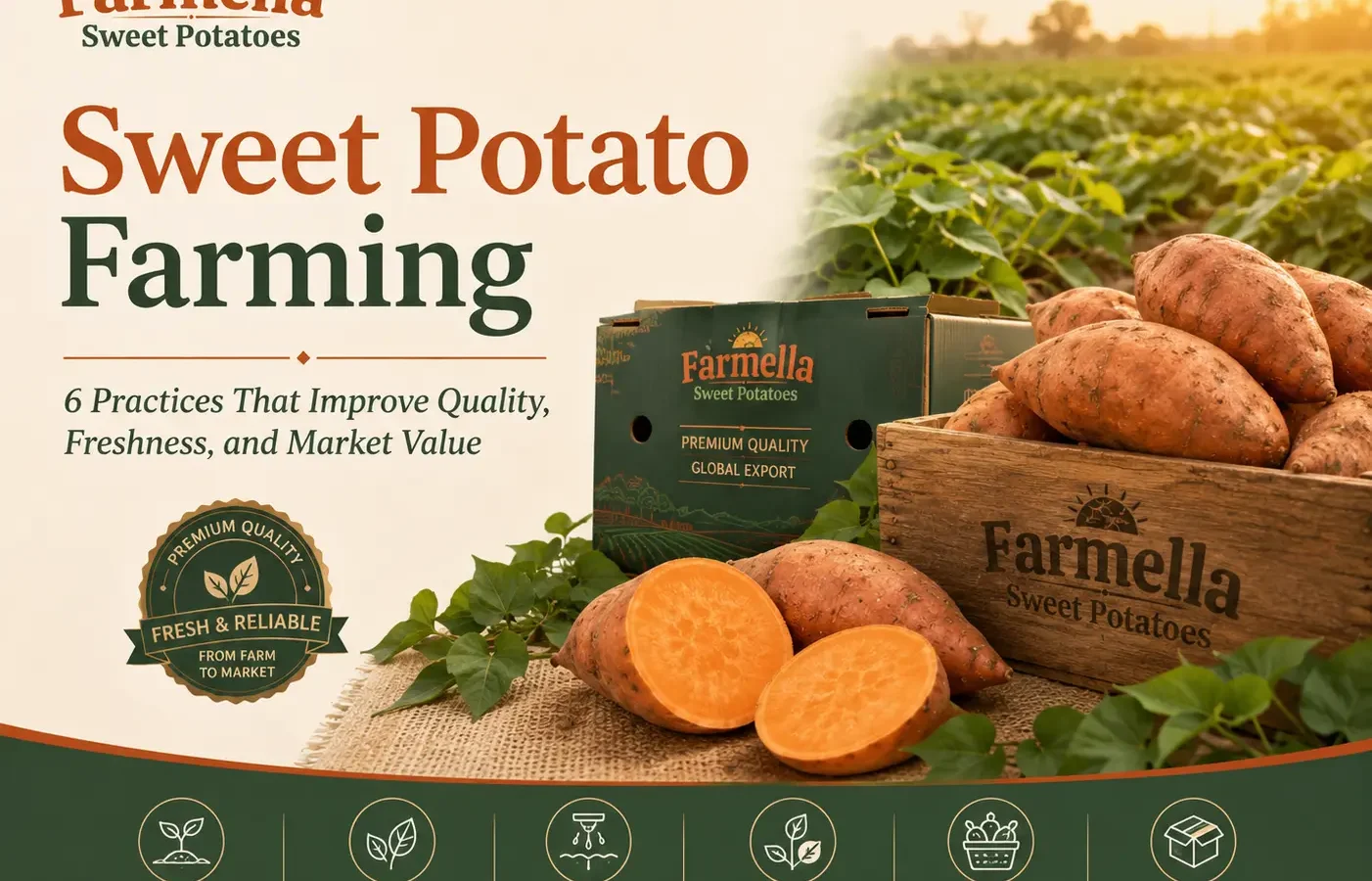
Successful sweet potato farming is about much more than producing a large harvest. In today’s agricultural markets, growers are increasingly expected to deliver crops that offer consistent quality, strong freshness, and reliable market performance. Buyers are not only looking for volume, they want sweet potatoes with good appearance, uniform sizing, strong shelf life, and dependable quality from one season to the next. These expectations are closely connected to Egyptian sweet potato benefits, especially when quality, freshness, and reliable supply matter. This is why every stage of production can influence the final value of the crop.
From soil preparation and irrigation management to harvesting and post-harvest handling, the decisions made throughout the season directly affect how the crop develops. Effective sweet potato cultivation requires growers to focus on both plant health and long-term product quality. Even small improvements in farming practices can help increase consistency, reduce losses, and improve market acceptance.
The production of farm fresh sweet potatoes begins long before harvest. Healthy soil, balanced moisture, proper nutrition, and timely field management all contribute to stronger root development and better overall crop performance. When these factors are managed correctly, growers are more likely to achieve sweet potatoes that meet the expectations of wholesalers, retailers, exporters, and consumers.
In this guide, we’ll explore six important practices that help improve quality, freshness, and market value in sweet potato farming. Whether you are looking to strengthen your current production methods or gain a better understanding of sweet potato cultivation, these practices can help support healthier crops, more consistent harvests, and better long-term results.
Understanding the Foundations of Successful Sweet Potato Farming
Strong sweet potato farming starts with understanding how the crop behaves from planting to harvest. Unlike some crops that tolerate rough conditions more easily, sweet potatoes respond clearly to soil structure, moisture levels, spacing, and harvest timing. If one part of the process is poorly managed, the results often appear later in root shape, size, texture, or shelf life.
What Makes Sweet Potato Farming Different from Other Crops
Sweet potatoes develop underground as storage roots, which means the growing environment directly affects the final product. This makes sweet potato growing conditions one of the first things growers should understand before planning a crop. The crop needs:
- Loose soil for root expansion
- Balanced moisture without waterlogging
- Warm growing conditions
- Enough space for vines and roots
- Careful handling after harvest
This makes sweet potato cultivation more sensitive to small field decisions than many growers expect.
Why Sweet Potato Cultivation Requires Consistent Management
Consistency matters because sweet potatoes grow over a long season. Irrigation, nutrition, weed control, and field monitoring should be managed regularly, not only when problems appear.
How Farming Decisions Influence Final Crop Quality
Every decision affects market value. Well-managed crops are more likely to produce farm fresh sweet potatoes with better appearance, smoother texture, stronger shelf life, and higher buyer confidence.
Practice #1: Preparing the Right Soil for Sweet Potato Cultivation
The foundation of successful sweet potato farming begins below the surface. Soil conditions directly influence how roots develop, how efficiently plants absorb water and nutrients, and how well the crop performs throughout the season. Even with proper irrigation and favorable weather, poor soil conditions can limit both yield and quality. This is why preparing the soil is often considered one of the most important stages of sweet potato cultivation. Healthy, well-managed soil creates the environment needed for stronger root development and more consistent harvests. This is also why many growers study nile delta soil advantages when looking at how soil quality supports sweet potato production.
Why Soil Structure Affects Root Development
Sweet potatoes require loose soil that allows roots to expand freely underground. When the soil becomes compacted, root growth may be restricted, resulting in irregular shapes and lower-quality harvests.
Good soil structure helps support:
- Better root expansion
- More uniform sizing
- Improved root shape
- Healthier plant development
- Easier harvesting operations
These conditions contribute to the production of farm fresh sweet potatoes that meet commercial quality expectations.
The Importance of Drainage in Sweet Potato Cultivation
Proper drainage is essential because excessive moisture can create unfavorable growing conditions. Waterlogged soil often limits oxygen availability and increases the risk of root-related problems.
Effective drainage helps provide:
- Better root health
- Reduced risk of disease
- More stable crop development
- Improved nutrient availability
- Stronger harvest quality
How Healthy Soil Supports Better Harvests
Healthy soil creates the conditions necessary for long-term crop success. It supports balanced growth, encourages efficient nutrient uptake, and helps maintain consistency throughout the season.
For growers focused on sweet potato farming, investing time in soil preparation often leads to stronger yields, improved crop quality, and more successful sweet potato cultivation from planting through harvest.
Practice #2: Choosing Varieties That Match Market Needs
One of the most important decisions in sweet potato farming is selecting the right variety. Not all sweet potatoes are grown for the same purpose, and different markets often have different expectations regarding appearance, flavor, texture, size, and storage performance. Choosing a variety that matches buyer requirements can improve market acceptance and increase the commercial value of the crop. Exploring the right sweet potato varieties helps buyers and growers match crop selection with market goals. This is why variety selection is considered a key part of successful sweet potato cultivation, especially for growers supplying wholesale, retail, or export markets.
Why Variety Selection Influences Commercial Success
The variety grown can affect nearly every aspect of crop performance, from yield potential to shelf life. Some varieties are preferred for their appearance, while others are selected for their sweetness, texture, or storage capabilities. For example, Beauregard sweet potatoes are often valued for their reliable appearance, balanced sweetness, and strong commercial performance.
Selecting the right variety can help improve:
- Market acceptance
- Harvest consistency
- Storage performance
- Buyer satisfaction
- Commercial profitability
These advantages contribute directly to the production of farm fresh sweet potatoes that meet specific customer expectations.
Characteristics Buyers Look for in Sweet Potatoes
Different buyers evaluate sweet potatoes based on a variety of quality factors. While requirements may vary by market, certain characteristics are consistently valued.
Buyers often look for:
- Uniform sizing
- Attractive appearance
- Consistent texture
- Reliable shelf life
- Good overall quality
Understanding these preferences helps growers make more informed planting decisions.
Matching Sweet Potato Varieties to Different Markets
Retailers, wholesalers, food processors, and exporters may all prioritize different product characteristics. Matching varieties to their intended market helps improve sales opportunities and reduce marketing challenges.
For successful sweet potato farming, variety selection should align with market demand while supporting the goals of long-term sweet potato cultivation and the production of high-quality, farm fresh sweet potatoes.
Practice #3: Managing Water, Nutrition, and Crop Growth
Healthy crop development depends on maintaining the right balance between moisture, nutrients, and plant growth throughout the season. Even when soil conditions and variety selection are favorable, poor management in these areas can limit yield and reduce crop quality. This is especially important for varieties such as Bellevue sweet potatoes, where balanced field management supports consistency and market quality. This is why successful sweet potato farming requires growers to monitor crop needs regularly and make adjustments when necessary. Water and nutrients work together to support root development, while balanced growth helps ensure the crop reaches its full potential. Effective management of these factors is a core part of successful sweet potato cultivation.
Why Irrigation Plays a Critical Role in Sweet Potato Farming
Sweet potatoes require consistent moisture to support healthy growth. Too little water can slow development, while excessive irrigation may create conditions that negatively affect root quality.
Proper irrigation helps support:
- Strong root development
- Better nutrient absorption
- More uniform crop growth
- Improved yield potential
- Greater harvest consistency
When moisture levels are managed correctly, farm fresh sweet potatoes are more likely to develop the appearance and quality buyers expect.
Nutrient Management During Sweet Potato Cultivation
Nutrients provide the resources plants need to grow and develop throughout the season. Balanced fertility programs help support healthy vines, strong roots, and consistent crop performance.
Good nutrient management contributes to:
- Improved plant health
- Better root formation
- More efficient growth
- Greater crop consistency
- Higher quality harvests
How Balanced Growth Improves Yield and Quality
The goal of sweet potato cultivation is not simply rapid growth but balanced development throughout the season. When water, nutrients, and crop management work together, growers are more likely to achieve stronger yields, better root quality, and long-term success in sweet potato farming.
Practice #4: Protecting Crop Quality Before Harvest
Achieving a successful harvest depends on more than planting, irrigation, and nutrition. Throughout the season, crops face environmental conditions and field challenges that can affect both yield and quality. Protecting crop health before harvest helps ensure that months of effort result in a product that meets commercial expectations. This is why proactive management is an important part of sweet potato farming. By reducing stress and addressing problems early, growers can support stronger crop performance and improve the overall success of sweet potato cultivation. This careful approach also reflects Egyptian sweet potato heritage, where farming experience plays a major role in protecting crop quality.
Managing Environmental Stress Throughout the Season
Environmental conditions can influence crop development at every stage of growth. Excessive heat, irregular rainfall, drought, and other weather-related factors may place stress on plants and affect root formation.
Growers often focus on:
- Maintaining consistent moisture levels
- Improving soil conditions
- Monitoring weather patterns
- Reducing unnecessary plant stress
- Supporting stable crop development
These efforts help increase the chances of producing farm fresh sweet potatoes with strong market quality.
Preventing Common Growth and Quality Problems
Many crop issues begin gradually and can become more difficult to manage if left unchecked. Early intervention helps prevent small problems from affecting larger areas of the field.
Common challenges include:
- Uneven plant growth
- Root development issues
- Weed competition
- Moisture-related stress
- Quality inconsistencies
Managing these risks early supports healthier crops and more reliable harvest outcomes.
Why Field Monitoring Supports Better Results
Regular field inspections allow growers to evaluate crop progress and identify concerns before they affect production. Monitoring helps support timely management decisions throughout the season.
For successful sweet potato farming, consistent observation is often one of the most effective tools for maintaining crop quality. When combined with good management practices, field monitoring strengthens sweet potato cultivation and helps growers achieve higher-quality harvests with greater consistency.
Practice #5: Harvesting at the Right Time for Better Results
Harvest timing can have a significant impact on the quality, freshness, and market value of a crop. Even after a successful season of sweet potato farming, harvesting too early or too late may affect root size, appearance, storage performance, and overall commercial quality. This is why experienced growers pay close attention to crop maturity before beginning harvest operations. Understanding when to harvest sweet potatoes helps protect root maturity, freshness, storage performance, and final market value. Proper timing helps maximize the benefits of sweet potato cultivation while protecting the quality developed throughout the growing season.
How to Recognize Crop Maturity
Determining when a crop has reached maturity requires evaluating both the roots and the overall condition of the field. While maturity periods vary by variety and growing conditions, growers often look for several common indicators.
Signs of crop maturity may include:
- Adequate root sizing
- Uniform crop development
- Completion of the expected growing period
- Healthy root formation
- Stable field conditions
Recognizing these indicators helps growers make informed decisions and improves the chances of producing farm fresh sweet potatoes with strong market appeal.
Why Harvest Timing Affects Storage and Market Value
Harvesting at the appropriate stage helps protect root quality and improve post-harvest performance. Mature roots generally tolerate storage and transportation better than crops harvested prematurely.
Proper harvest timing can contribute to:
- Better shelf life
- Improved appearance
- Reduced storage losses
- Stronger market acceptance
- Greater commercial value
Common Harvesting Mistakes That Reduce Quality
Several mistakes can affect crop quality during harvest. Rough handling, harvesting under poor field conditions, and delaying harvest unnecessarily may increase the risk of damage.
For successful sweet potato farming, harvest operations should focus on protecting root quality while preserving the results of effective sweet potato cultivation. Careful timing and handling help ensure that farm fresh sweet potatoes reach buyers in the best possible condition.
Practice #6: Preserving Farm Fresh Sweet Potatoes After Harvest
The work involved in sweet potato farming does not end when the crop leaves the field. Post-harvest handling and storage play a major role in maintaining freshness, appearance, and overall quality. Even a well-grown crop can lose value if it is not handled properly after harvest. This is why growers place significant emphasis on preserving quality during storage and transportation. Effective post-harvest management helps ensure that farm fresh sweet potatoes reach buyers in the same condition they were harvested. Professional packaging solutions also help protect sweet potatoes during storage, transport, and final delivery.
Why Post-Harvest Handling Matters
Freshly harvested sweet potatoes can be vulnerable to bruising, cuts, and other forms of damage. Careful handling helps protect both appearance and storage performance.
Good handling practices often include:
- Minimizing physical damage
- Sorting crops carefully
- Removing damaged roots
- Reducing unnecessary movement
- Protecting crops during transportation
These practices help preserve the quality achieved through effective sweet potato cultivation and support stronger market acceptance.
Storage Practices That Protect Freshness
Proper storage conditions are essential for maintaining sweet potato quality after harvest. Suitable environments help slow quality deterioration and extend shelf life.
Effective storage can help provide:
- Better moisture retention
- Reduced quality loss
- Improved shelf life
- Greater product consistency
- Better market flexibility
When managed correctly, storage helps ensure that farm fresh sweet potatoes remain attractive and marketable for longer periods.
How Farm Fresh Sweet Potatoes Maintain Market Appeal
Buyers often evaluate sweet potatoes based on freshness, appearance, and consistency. Maintaining these characteristics after harvest helps improve customer satisfaction and commercial value.
For successful sweet potato farming, post-harvest management should be viewed as an extension of the production process. By combining careful handling with proper storage practices, growers can protect crop quality, strengthen the results of sweet potato cultivation, and continue delivering farm fresh sweet potatoes that meet market expectations.
Common Challenges in Sweet Potato Farming
Even with careful planning and good farming practices, growers can encounter challenges that affect crop performance throughout the season. Environmental conditions, soil variability, and moisture fluctuations can all influence root development, yield, and final crop quality. Understanding these risks is an important part of successful sweet potato farming because many problems can be reduced or managed when identified early. For growers focused on long-term success, proactive management remains one of the most valuable aspects of effective sweet potato cultivation.
Managing Soil, Moisture, and Weather Conditions
Sweet potatoes depend heavily on stable growing conditions. Changes in soil moisture, unexpected weather events, or poor field conditions can create stress that affects crop development.
Common challenges include:
- Excessive rainfall
- Extended dry periods
- Poor drainage
- Temperature fluctuations
- Soil compaction
These factors can influence how farm fresh sweet potatoes develop throughout the season and may affect both yield and quality if not properly managed.
Reducing Risks That Affect Yield and Quality
Many production challenges can be minimized through regular field monitoring and timely management decisions. Early action often prevents small problems from becoming larger production issues.
Risk-reduction practices may include:
- Monitoring crop health regularly
- Maintaining proper irrigation schedules
- Managing weeds and pests promptly
- Supporting balanced soil fertility
- Adjusting practices based on field conditions
These efforts help protect both crop quality and commercial value. They also help growers maintain the quality standards expected by wholesalers, retailers, and export buyers.
Building Long-Term Consistency in Production
Consistency is one of the most important goals in sweet potato farming. Buyers often expect reliable quality, predictable supply, and uniform products from season to season.
Achieving consistency requires:
- Strong field management
- Careful planning
- Continuous crop monitoring
- Effective harvest practices
- Proper post-harvest handling
By focusing on these areas, growers can strengthen their sweet potato cultivation programs and improve their ability to produce high-quality farm fresh sweet potatoes year after year.
How Sweet Potato Cultivation Supports Farm Fresh Sweet Potatoes
The freshness of a sweet potato is not determined only by what happens after harvest. In reality, freshness begins during the growing season and is influenced by every stage of production. Soil preparation, irrigation management, nutrient availability, and harvest timing all contribute to the quality of the final crop. This is why successful sweet potato cultivation plays such an important role in producing farm fresh sweet potatoes that meet market expectations. When growers focus on consistent field management, they create the conditions needed for stronger crop development and better long-term quality. This is why practical guidance on how to grow sweet potatoes should always connect field practices with freshness, storage performance, and buyer expectations.
The Connection Between Farming Practices and Freshness
Freshness starts with healthy crop growth. Sweet potatoes that develop under favorable conditions are often better equipped to maintain their quality after harvest.
Good farming practices help support:
- Healthy root development
- Consistent crop growth
- Better texture and appearance
- Improved storage performance
- Stronger overall quality
These factors help ensure that farm fresh sweet potatoes remain attractive and marketable throughout the supply chain.
Why Quality Begins Long Before Harvest
Many of the characteristics buyers value most are influenced during the growing season. Root shape, texture, consistency, and shelf life all begin to develop long before harvesting takes place.
Important factors include:
- Soil quality
- Moisture management
- Nutrient availability
- Crop monitoring
- Harvest preparation
For successful sweet potato cultivation, quality should be viewed as a season-long objective rather than a post-harvest concern.
How Buyers Benefit from Well-Managed Sweet Potato Farming
Buyers often look for products that offer reliability, consistency, and strong commercial performance. Well-managed sweet potato farming helps provide these benefits by supporting predictable crop quality and freshness.
As a result, buyers often receive:
- More consistent product quality
- Better appearance and sizing
- Improved storage performance
- Greater supply reliability
- Higher customer satisfaction
By connecting strong field management with long-term quality goals, sweet potato farming helps growers produce farm fresh sweet potatoes that deliver value for both suppliers and buyers.
Why Choose Farm Sweet?
Choosing the right supplier is just as important as producing the right crop. Buyers need confidence that their sweet potatoes are grown under suitable conditions, handled carefully, and delivered according to consistent quality standards. At Farm Sweet, we combine practical agricultural expertise with a commitment to quality at every stage of production. Our approach to sweet potato farming focuses on consistency, freshness, and long-term customer satisfaction. By maintaining strong production practices and reliable supply systems, we help customers receive products that meet the demands of modern markets.
Expertise in Sweet Potato Farming and Cultivation
Successful production requires knowledge, experience, and attention to detail. Farm Sweet applies proven farming practices throughout every stage of sweet potato cultivation to support healthy crop development and reliable harvest outcomes.
Our expertise includes:
- Soil and field preparation
- Irrigation management
- Crop monitoring
- Harvest planning
- Post-harvest handling
These practices help ensure that crops are managed efficiently from planting through delivery.
Commitment to Farm Fresh Sweet Potatoes
Freshness begins in the field. Our production methods are designed to support the development of high-quality, farm fresh sweet potatoes that maintain their appearance, texture, and market value.
We focus on:
- Healthy growing conditions
- Consistent crop development
- Careful harvesting practices
- Proper handling and storage
- Maintaining product quality throughout the supply chain
Reliable Quality and Export Support
Buyers need more than quality products, they also need dependable service and professional export support. Our export support helps buyers source sweet potatoes smoothly while maintaining quality throughout the supply chain. Farm Sweet works to provide consistent supply, efficient communication, and reliable delivery processes.
Our commitment includes:
- Consistent quality standards
- Reliable seasonal availability
- Professional export preparation
- Flexible supply solutions
A Trusted Partner for Long-Term Buyers
Strong business relationships are built on reliability and consistency. Through responsible sweet potato farming, quality-focused sweet potato cultivation, and a commitment to delivering farm fresh sweet potatoes, Farm Sweet continues helping buyers source products with confidence season after season.
To discuss varieties, supply options, or export needs, contact our Farm Sweet team for professional guidance.
Final Thoughts: Why Better Sweet Potato Farming Creates Better Results
Successful sweet potato farming is built on a series of decisions that work together throughout the growing season. From soil preparation and variety selection to irrigation, harvesting, and storage, every stage contributes to the final quality of the crop. While individual practices are important, the greatest results often come from managing the entire production cycle as a connected system. Growers who focus on consistency and long-term planning are better positioned to achieve strong yields, maintain quality, and meet changing market expectations.
The Link Between Farming Practices and Product Quality
The quality of sweet potatoes is influenced long before harvest begins. Proper field management helps create the conditions needed for healthy root development and consistent crop performance.
Strong farming practices often contribute to:
- Better root quality
- Improved appearance
- Greater harvest consistency
- Stronger storage performance
- Higher market value
This is why successful sweet potato cultivation depends on maintaining attention to detail throughout the entire season.
How Farm Fresh Sweet Potatoes Reflect Strong Cultivation Practices
Freshness is often a reflection of what happened in the field. Healthy crops that receive proper care are more likely to maintain their quality after harvest.
Well-managed production helps support:
- Better texture and appearance
- Longer shelf life
- More uniform sizing
- Improved buyer satisfaction
- Stronger commercial performance
As a result, farm fresh sweet potatoes often demonstrate the value of effective crop management and responsible farming practices.
Why Consistency Drives Long-Term Success
In commercial agriculture, consistency is one of the most valuable qualities a grower can offer. Buyers often return to suppliers who can deliver reliable quality season after season.
For long-term success, sweet potato farming should focus on continuous improvement, strong management practices, and dependable production systems. When combined with effective sweet potato cultivation, these efforts help produce farm fresh sweet potatoes that meet market expectations while supporting sustainable growth and lasting business relationships.
FAQs: What Growers Should Know About Sweet Potato Farming
- What is the most important factor in successful sweet potato farming?
Successful sweet potato farming depends on combining good soil, proper irrigation, suitable varieties, and careful crop management throughout the season.
- How does soil quality affect sweet potato cultivation?
Healthy, well-drained soil helps roots grow evenly, improving sweet potato size, shape, texture, and overall crop quality.
- How often should sweet potatoes be watered during the growing season?
Sweet potatoes need consistent moisture, but overwatering should be avoided because it can affect root quality and increase disease risks.
- Why is harvest timing important for sweet potato quality?
Harvesting at the right stage helps improve root maturity, storage performance, appearance, and market value.
- How do growers maintain the freshness of sweet potatoes after harvest?
Proper handling, sorting, and storage help preserve freshness, protect quality, and extend shelf life after harvest.