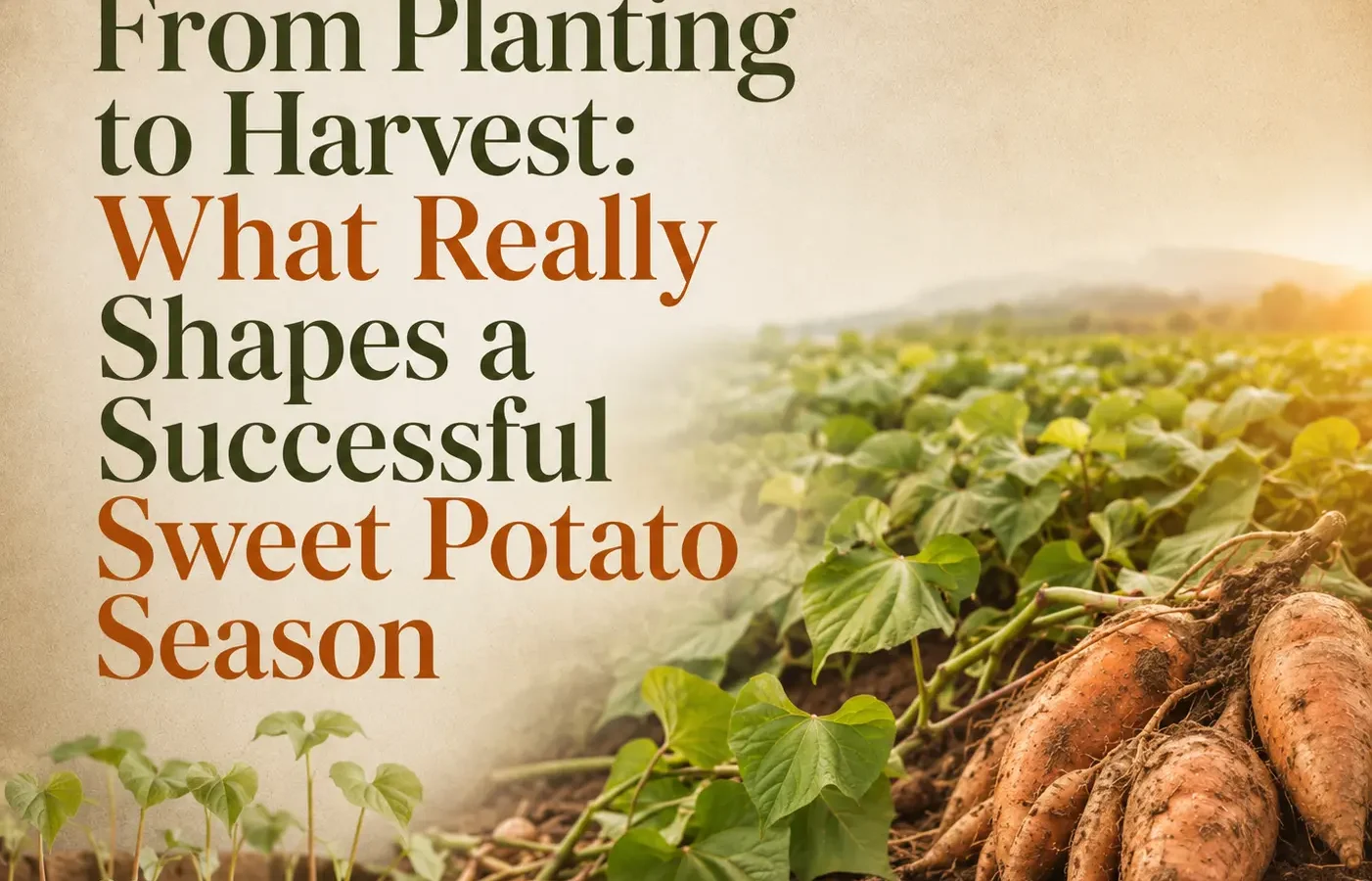
A successful sweet potato season depends on much more than choosing a planting date and waiting for the crop to mature. Temperature, sunlight, soil structure, irrigation, plant health, and changing weather all influence how roots develop throughout the growing cycle. For commercial growers, these factors ultimately affect far more than yield; they influence sizing, appearance, consistency, storage potential, and how much of the final crop can meet buyer specifications.
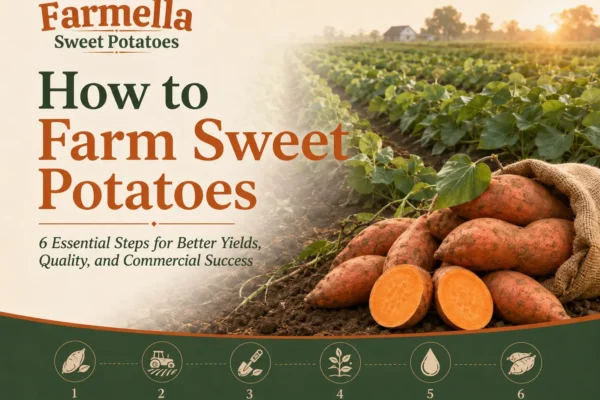
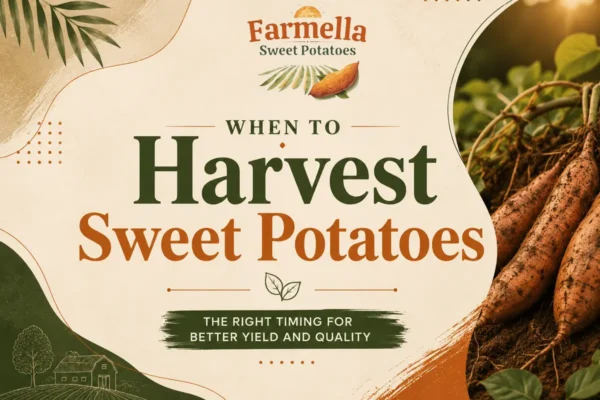
Understanding when to harvest sweet potatoes is an important part of the process, but harvest quality is largely shaped by what happens during the months beforehand. Maintaining suitable sweet potato growing conditions from establishment through maturity gives plants a stronger foundation for steady development and helps growers respond when field or weather conditions change. In this guide, we’ll follow the crop from planting through its main development stages and explore what turns an ordinary growing period into a productive, commercially successful season.
What Defines a Successful Sweet Potato Season?
A productive sweet potato season cannot be measured simply by whether the crop survives until harvest. Commercial success depends on how evenly plants establish, how consistently roots develop, and what proportion of the final harvest meets the size and quality requirements of the intended market. Growers therefore need to view the season as one connected production cycle in which decisions made early can continue influencing the crop months later.
More Than a Planting and Harvest Calendar
Planting and estimated harvest dates provide useful reference points, but agriculture rarely follows an exact calendar. Temperature changes, rainfall, soil moisture, variety, and field management can all speed up or slow down crop development.
Knowing how to farm sweet potatoes successfully means monitoring what is actually happening in the field. Throughout the growing cycle, farmers should pay attention to:
- Plant establishment and vine development.
- Soil moisture and drainage.
- Root-zone conditions.
- Weather patterns.
- Weed pressure.
- Signs of pests, disease, or environmental stress.
These observations make it easier to maintain suitable sweet potato growing conditions rather than following the same management schedule regardless of how the crop is developing.
How Climate Influences the Growing Cycle
Sweet potatoes favour warm conditions, but the balance matters. Temperatures that are too low may slow development, while excessive heat combined with insufficient moisture can place the crop under stress.
Climate can influence:
- Plant establishment.
- Root formation and sizing.
- Irrigation requirements.
- Development speed.
- Expected maturity.
Weather during the sweet potato season can therefore shift the expected harvest window, which is why growers need to evaluate crop maturity alongside calendar timing.
Why Seasonal Planning Matters for Commercial Growers
Commercial production adds another layer of planning. Harvest labour, grading capacity, packaging, storage, buyer orders, and delivery schedules all need to work together.
Planning ahead gives growers greater control over expected volumes and helps avoid operational pressure once harvesting begins. It also makes it easier to determine when to harvest sweet potatoes according to both crop maturity and commercial requirements.
The Sweet Potato Growing Conditions That Matter Most
The quality of the final harvest is strongly influenced by the environment in which the crop develops. Warmth alone cannot compensate for compacted soil, just as good soil cannot fully compensate for severe moisture stress. The best sweet potato growing conditions come from several factors working together throughout the growing cycle, giving roots enough space, moisture, warmth, and time to develop consistently.
Warm Temperatures and Sunlight
Sweet potatoes are naturally suited to warm growing environments. Adequate sunlight supports healthy vine growth, while favourable temperatures encourage steady development beneath the soil.
Suitable conditions can contribute to:
- Stronger early establishment.
- Healthy vegetative growth.
- More consistent root formation.
- Better maturity.
- Predictable seasonal development.
Periods of unusually cool weather may slow plant growth and extend the sweet potato season, while prolonged extreme heat can increase moisture requirements and expose plants to additional stress.
Loose and Well-Drained Soil
Because commercial roots develop underground, soil structure has a direct influence on their shape and ability to expand. Loose soil gives developing roots space to grow naturally, while effective drainage prevents excessive moisture from remaining around them.
Well-prepared soil can help support:
- More uniform root development.
- Better commercial shape.
- Reduced deformation.
- Healthier root-zone conditions.
- Easier harvesting.
Even when the vines appear healthy, compacted soil can restrict development below the surface. Maintaining strong sweet potato growing conditions therefore requires growers to pay as much attention to the soil as they do to the visible plant.
Consistent Moisture Without Waterlogging
Moisture needs change throughout the crop cycle, but extreme fluctuations should be avoided. Long dry periods may stress plants and interrupt development, while waterlogged soil can reduce aeration and create unsuitable conditions around the roots.
Consistent irrigation helps support healthy development while allowing growers to respond to changing temperatures and rainfall. Maintaining this balance throughout the sweet potato season also gives the crop a better chance of reaching harvest with uniform size and quality.
How the Early Growing Stage Shapes the Final Crop
The first weeks after planting may not produce a visible commercial crop, but they have a major influence on what happens later. Plants must establish successfully, develop healthy root systems, and begin growing without serious competition or environmental stress. Maintaining the right sweet potato growing conditions during this stage helps create a more uniform field and reduces problems that can become increasingly difficult to correct as the crop matures.
Establishing Healthy Plants
Successful growing sweet potatoes begins with healthy planting material and careful establishment. Newly planted slips need appropriate moisture and suitable soil conditions so they can recover quickly and begin developing new roots.
Strong establishment is supported by:
- Healthy planting material.
- Appropriate planting depth.
- Suitable spacing.
- Consistent early moisture.
- Effective weed management.
Uniform establishment is particularly valuable in commercial production because plants developing at very different rates can create uneven roots later in the sweet potato season.
Root Development During the First Weeks
Most of the early activity buyers eventually care about is happening beneath the surface. The developing root system creates the foundation from which the commercial storage roots will form.
During this period, growers should minimise conditions that restrict development, including:
- Compacted soil.
- Excessive moisture.
- Severe nutrient imbalance.
- Long periods of water stress.
- Strong competition from weeds.
Maintaining proper sweet potato growing conditions during these first weeks supports healthier root formation and gives the crop a stronger foundation for later sizing.
Preventing Early Crop Stress
Young plants are less established and can respond quickly to unsuitable conditions. Close monitoring allows growers to identify irrigation problems, pest activity, weed pressure, or weather-related stress before they affect a larger part of the field.
Early crop performance can eventually influence when to harvest sweet potatoes, because a field that establishes slowly or unevenly may not reach commercial maturity at the originally expected time. Correcting problems early helps keep development more consistent throughout the season.
Managing the Crop Through the Main Growing Period
Once the crop is properly established, attention shifts from early survival to steady root development and commercial quality. This middle stage of the sweet potato season requires consistent management because apparently healthy vines do not always guarantee equally strong development below the soil. Irrigation, nutrition, weeds, pests, and diseases all need to be monitored as the roots increase in size.
Irrigation as Roots Develop
Water requirements can change as the crop moves through different growth stages. Irrigation needs to provide enough moisture for continued development without creating saturated conditions around the root zone.
Good irrigation management includes:
- Checking soil moisture regularly.
- Adjusting watering according to weather.
- Avoiding prolonged dry periods.
- Preventing standing water.
- Checking drainage after heavy rainfall.
Maintaining stable moisture is one of the most important sweet potato growing conditions during active root development. Large fluctuations can create unnecessary stress and reduce consistency across the field.
Nutrient Management and Plant Health
Nutrition should support the entire plant rather than encourage excessive vine growth at the expense of commercial roots. A crop that looks extremely vigorous above ground is not necessarily producing the strongest harvest underneath.
Balanced nutrient management supports:
- Healthy foliage.
- Steady root formation.
- Better crop uniformity.
- Commercial sizing.
- Stronger overall yield quality.
Management decisions during this stage can also affect when to harvest sweet potatoes, because uneven development may result in roots reaching the required size at different times.
Weed, Pest, and Disease Monitoring
Weeds continue competing for moisture and nutrients throughout the growing period, while pests and diseases can reduce plant strength if problems are left unmanaged.
Growers should regularly inspect the field for changes in leaf appearance, uneven areas, damaged plants, or unusual development. Protecting crop health throughout the sweet potato season helps preserve the progress achieved during establishment and keeps more of the field moving toward harvest at a similar rate.
How Weather Can Change the Sweet Potato Season
Even a carefully planned sweet potato season can develop differently from expectations when weather patterns change. Temperature extremes, heavy rainfall, prolonged dry conditions, or unusual humidity can influence plant growth and root development. Successful growers therefore adapt management decisions to actual field conditions rather than relying on a fixed programme established before planting.
The Impact of Excessive Heat
Warm temperatures are generally favourable for sweet potatoes, but prolonged extreme heat can increase crop stress when soil moisture becomes insufficient.
During hotter periods, growers may need to:
- Monitor moisture more frequently.
- Adjust irrigation timing.
- Watch for visible plant stress.
- Check whether development remains uniform.
- Prevent extended dry periods.
These adjustments help protect suitable sweet potato growing conditions even when temperatures move beyond the normal range expected during the season.
Heavy Rain and Poor Drainage
Heavy rainfall creates almost the opposite problem. Saturated soil can reduce oxygen around developing roots and make field conditions unsuitable for steady growth.
Growers should monitor:
- Standing water.
- Drainage performance.
- Compacted areas.
- Soil condition after rainfall.
- Uneven plant growth.
Severe or prolonged rainfall may delay development and eventually change when to harvest sweet potatoes, particularly when parts of the field have responded differently to excessive moisture.
How Growers Respond to Changing Conditions
Flexibility is one of the most important parts of commercial crop management. Understanding how to grow sweet potatoes successfully also means adjusting irrigation schedules, field inspections, nutrient decisions, and harvest plans as weather conditions change throughout the season.
Rather than expecting every crop to mature according to the original calendar, growers should evaluate root development and overall crop condition throughout the sweet potato season. Maintaining appropriate sweet potato growing conditions as consistently as possible allows the plants to recover more effectively from weather changes and helps protect the size, quality, and uniformity expected at harvest.
The objective is not to create a season without challenges,that is rarely realistic in agriculture. The goal is to recognise changes early and respond in a way that keeps the crop moving toward commercial maturity with as little disruption as possible.
When to Harvest Sweet Potatoes for the Best Quality
Knowing when to harvest sweet potatoes is one of the most important decisions growers make during the production cycle. Harvest timing influences root size, skin strength, internal quality, storage performance, and the percentage of the crop that meets commercial standards. A successful sweet potato season therefore depends not only on how well the crop grows, but also on recognising the point when maturity and market requirements come together.
Signs That Roots Have Reached Maturity
Commercial maturity should be evaluated according to the crop itself rather than one fixed calendar date. Variety, climate, irrigation, soil conditions, and overall sweet potato growing conditions can all influence how quickly roots develop and when they are ready to leave the field.
Growers commonly evaluate:
- Root size and overall development.
- Skin firmness and condition.
- Uniformity across the field.
- Expected maturity period of the variety.
- Buyer specifications and required grades.
These indicators give growers a clearer picture of crop readiness and help determine when to harvest sweet potatoes without relying only on the expected number of growing days.
Why Harvesting Too Early Can Reduce Value
Early harvesting may result in smaller roots, weaker skin, inconsistent sizing, or a lower percentage of commercially usable produce. Even when the crop looks healthy above ground, the roots may still need additional time to reach the size and maturity required by buyers.
For companies supplying sweet potato wholesale markets, these differences matter because buyers expect shipments that match agreed specifications. Harvesting before the crop is ready can reduce saleable volumes and weaken the overall commercial return from the season.
What Happens When Harvest Is Delayed
Waiting too long creates a different set of risks. Roots may become oversized, develop irregular shapes, or experience surface problems that make grading more difficult.
The best sweet potato season is therefore not the longest one. Growers need to balance maturity, size, appearance, and storage potential so the crop reaches harvest at the point where quality and commercial value are strongest.
Why Harvest Timing Influences Shelf Life
Shelf life is shaped long before sweet potatoes enter a storage facility. The condition of the roots at harvest affects how well they handle curing, packing, storage, transportation, and final distribution. Even when sweet potato growing conditions have been carefully managed throughout the season, harvesting at an unsuitable stage can reduce the quality that reaches wholesalers, retailers, and international buyers.
Skin Quality and Root Maturity
Mature roots generally develop stronger skin, giving them better protection during lifting, handling, and storage. Roots harvested too early may be more vulnerable to scratches or pressure damage, while crops left too long can become less uniform.
Good maturity can support:
- Stronger skin condition.
- Better resistance during handling.
- More consistent commercial appearance.
- Improved storage performance.
- Lower risk of avoidable losses.
The environment in which roots develop matters as well. The 7 Nile Delta soil advantages help explain how suitable agricultural soil, drainage, and growing conditions can support healthy root formation throughout the sweet potato season.
Reducing Damage During Harvest
Knowing when to harvest sweet potatoes is only part of protecting shelf life. The harvesting method itself must minimise physical damage because cuts, bruises, and impacts can reduce storage potential even when the roots have reached ideal maturity.
Growers should focus on:
- Careful lifting from the soil.
- Gentle handling during collection.
- Avoiding unnecessary drops.
- Separating damaged roots.
- Limiting pressure during field transport.
Preparing Roots for Storage
Once the crop leaves the field, post-harvest management should begin quickly. Proper curing helps strengthen the skin, while controlled storage supports freshness and product stability.
Good sweet potato growing conditions establish strong roots, but appropriate post-harvest handling is what helps preserve that quality after harvesting. This becomes especially important for crops travelling through long international supply chains.
How Seasonality Influences Sweet Potato Supply
A sweet potato season affects more than crop development. It also determines when commercial volumes become available, how buyers schedule orders, and how exporters plan grading, packing, storage, and transportation. Successful supply therefore depends on connecting what happens in the field with what buyers need at different times of the year.
Planning Commercial Volumes Around Harvest
Exporters and commercial growers need a realistic understanding of expected harvest volumes before roots begin leaving the field. Production estimates help determine how much labour, packing capacity, storage space, and transport will be required.
Effective seasonal planning can help businesses:
- Coordinate harvest teams.
- Prepare packing operations.
- Confirm expected order volumes.
- Organise storage capacity.
- Schedule shipments more accurately.
A professional Egyptian sweet potato exporter should communicate realistic availability rather than promising volumes that may not match actual production.
Managing Buyer Demand Across the Season
Buyer requirements can change considerably throughout the year. Retailers may increase orders during periods of stronger consumer demand, while wholesalers may need additional supply when availability from other origins becomes limited.
Understanding when to harvest sweet potatoes and how expected volumes will develop allows exporters to give buyers clearer information about product availability. This makes purchasing plans more predictable for both sides.
Using Storage to Extend Market Availability
Storage can help extend commercial availability beyond the immediate harvest period. When roots have developed under suitable sweet potato growing conditions, reached the right maturity, and been handled correctly, storage gives suppliers more flexibility when matching stock with buyer demand.
Instead of viewing the sweet potato season as ending when field harvesting stops, commercial suppliers can use effective post-harvest management to support a longer and more stable market window.
How Egyptian Growing Conditions Support Reliable Seasons
Egypt’s agricultural environment provides several advantages for commercial sweet potato production. Warm temperatures, abundant sunlight, suitable farmland, and established farming experience contribute to sweet potato growing conditions that support consistent development across the season. When these natural advantages are combined with professional crop management, they can help growers produce dependable volumes for local and international markets.
Climate Advantages for Sweet Potato Production
Sweet potatoes favour warm conditions, making climate an important part of crop performance. Egypt provides an extended period of suitable temperatures and sunlight that can support plants from establishment through root maturity.
These conditions contribute to:
- Strong early plant establishment.
- Healthy vine development.
- Steady root formation.
- More predictable maturation.
- Better seasonal planning.
A stable climate can make the sweet potato season easier to manage, although irrigation and field monitoring remain essential when temperatures or rainfall patterns change.
Agricultural Soil and Root Development
Soil conditions are equally important because commercial roots develop below the surface. Suitable structure, drainage, and fertility allow roots to expand more naturally and achieve the shape and consistency required by commercial buyers.
Well-managed fields can support:
- Uniform root formation.
- Better commercial sizing.
- Healthy skin development.
- Improved crop consistency.
- Easier harvest preparation.
These factors also influence when to harvest sweet potatoes, since more uniform development allows growers to identify maturity and organise harvesting with greater confidence.
Seasonal Supply for International Markets
Favourable production conditions become commercially valuable when they are connected with proper planning, grading, packing, and export coordination. International buyers need suppliers who can translate strong agricultural potential into consistent quality and realistic volumes.
For buyers comparing seasonal supply, varieties, grades, or expected availability, contact our Farm Sweet team to discuss how Egyptian production can support your market requirements throughout the year.
Final Thoughts: A Strong Season Starts Before Planting
A successful sweet potato season begins long before the first roots are ready for harvest. Land selection, soil preparation, planting material, irrigation, nutrition, crop protection, and weather management all influence how evenly the crop develops. Maintaining suitable sweet potato growing conditions throughout these stages creates the foundation for healthier roots, stronger commercial quality, and more predictable production.
Harvest timing then becomes the point where all of those earlier decisions come together. Understanding when to harvest sweet potatoes allows growers to protect root maturity, sizing, skin condition, and storage performance rather than sacrificing quality by harvesting too early or waiting too long.
For commercial production, however, the process does not stop when roots leave the field. Curing, grading, packing, storage, documentation, and transportation all influence how much of the crop’s original quality reaches the buyer. This is particularly important when a sweet potato season supports wholesale and international orders that may travel through longer distribution channels.
At Farm Sweet, production and export preparation are treated as connected stages. Through our export services, carefully produced crops move from Egyptian fields into professional grading, packing, and international shipment while maintaining a focus on consistent specifications and dependable supply.
The strongest commercial results come when the entire cycle works together. Good sweet potato growing conditions support healthy development, correct harvest timing protects maturity, and professional post-harvest preparation preserves the crop’s value after it leaves the farm. When these stages are managed as one continuous process, growers and buyers gain a more reliable season and a stronger foundation for long-term supply.
FAQs: Growing Conditions and Harvest Timing for Sweet Potatoes
- When is sweet potato season?
The exact season varies according to climate, planting dates, variety, and region. Warm conditions are generally required throughout the main growing period.
- What are the ideal sweet potato growing conditions?
Sweet potatoes perform best with warm temperatures, sufficient sunlight, loose well-drained soil, and consistent moisture throughout crop development.
- When should growers harvest sweet potatoes?
Harvest timing depends on variety, crop maturity, market requirements, and growing conditions rather than one universal date.
- What happens if sweet potatoes are harvested too early?
Early harvesting may result in smaller, less mature roots and can reduce overall yield and commercial value.
- How does sweet potato season affect commercial supply?
Seasonality influences harvest volumes, availability, pricing, storage planning, and the periods when exporters can supply fresh products most effectively.