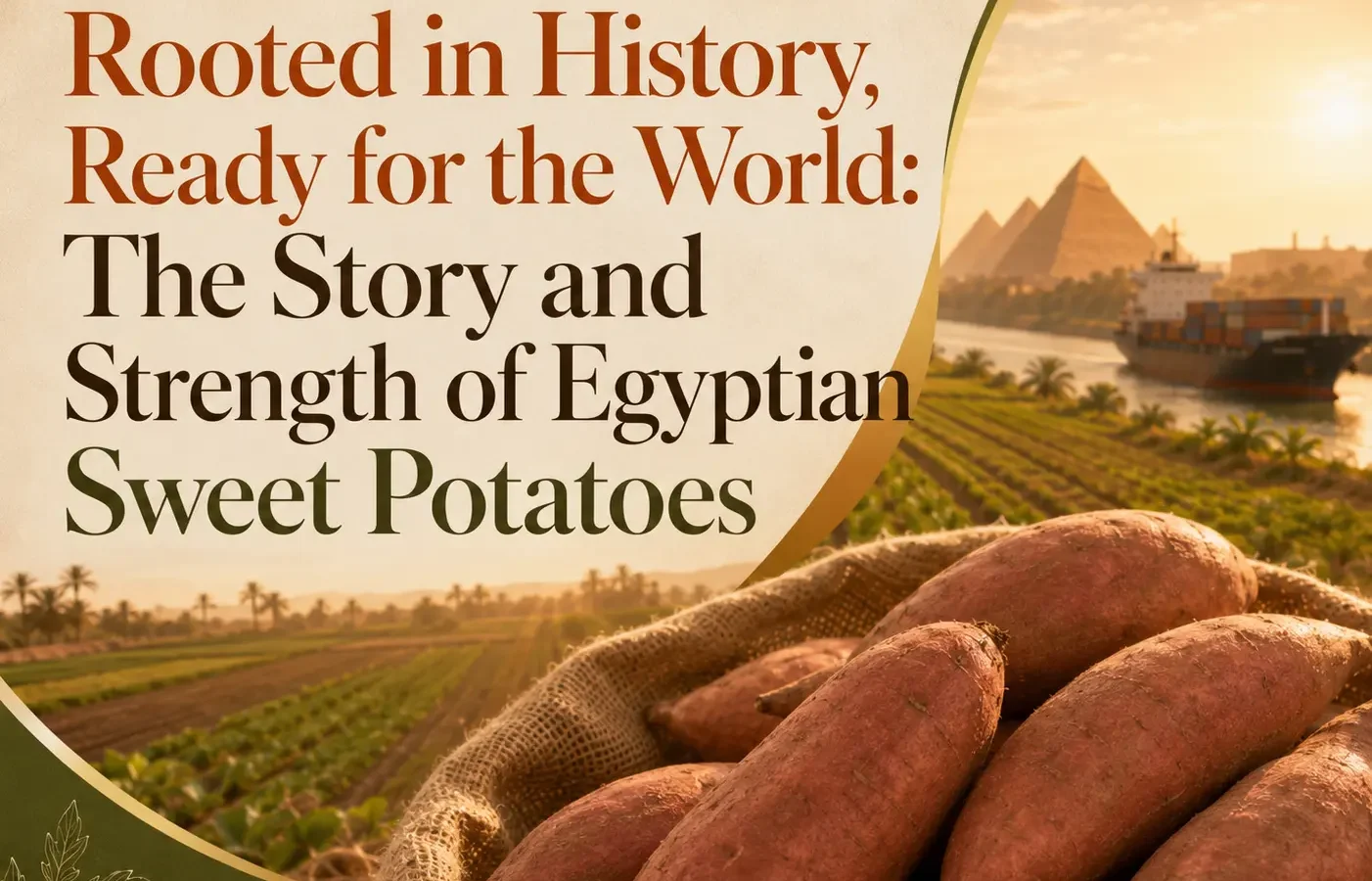
For generations, Egyptian sweet potatoes have been cultivated in some of the country’s most fertile agricultural regions, earning a strong reputation in both local and international markets. Today, they are recognized not only for their attractive appearance and consistent quality but also for their ability to meet the growing demands of wholesalers, retailers, and importers around the world. As global demand continues to rise, Egypt has become a trusted source of premium sweet potatoes that combine traditional farming expertise with modern production and export standards.
Behind this success lies a rich Egyptian sweet potato heritage built on decades of agricultural knowledge, favorable growing conditions, and a commitment to quality at every stage of production. These factors contribute to the many Egyptian sweet potato benefits, from reliable supply and excellent shelf life to outstanding flavor and commercial value. In this article, we’ll explore what makes Egyptian sweet potatoes stand out and why they continue to be a preferred choice in global markets.
What Makes Egyptian Sweet Potatoes Stand Out?
The global demand for Egyptian sweet potatoes continues to grow, and it’s no coincidence. Their reputation has been built on years of agricultural expertise, favorable growing conditions, and strict quality standards that meet the expectations of international buyers. From their appearance to their performance after harvest, Egyptian sweet potatoes offer several advantages that make them a preferred choice for wholesalers, retailers, and importers worldwide.
Strong Commercial Appearance and Quality
First impressions matter in the fresh produce industry, and Egyptian sweet potatoes consistently deliver a product that meets commercial expectations. Careful cultivation and harvesting practices help produce roots that are attractive, uniform, and ready for export.
Some of the characteristics buyers value most include:
- Uniform shape and size for easier grading and retail display.
- Smooth skin with minimal defects or blemishes.
- Vibrant flesh color that reflects freshness and quality.
- Strong visual appeal that enhances product presentation.
Achieving these standards begins in the field. Understanding when to harvest sweet potatoes is one of the most important factors in ensuring the roots develop the right size, texture, and appearance before entering the export process.
Reliable Performance After Harvest
Quality doesn’t end at harvest. Egyptian sweet potatoes are carefully handled to preserve their condition throughout storage and transportation, allowing buyers to receive products that maintain their value from origin to destination.
Proper post-harvest practices help ensure:
- Longer shelf life during storage and shipping.
- Better resistance to bruising and handling damage.
- Consistent firmness and freshness upon arrival.
- Reduced product loss across the supply chain.
These measures help wholesalers and retailers deliver high-quality produce while minimizing waste and maintaining customer satisfaction.
Versatility Across Different Markets
Another strength of Egyptian sweet potatoes is their ability to meet the needs of different industries and customer segments. Their consistent quality allows them to perform well across multiple distribution channels.
They are commonly supplied to:
- Supermarkets and retail chains.
- Wholesale distributors.
- Food service businesses and restaurants.
- Food manufacturers and processors.
With different varieties, sizes, and packaging options available, Egyptian sweet potatoes can be tailored to the requirements of each market, making them a reliable choice for buyers looking for flexibility without compromising on quality.
The Egyptian Sweet Potato Heritage
The success of Egyptian sweet potatoes is rooted in more than favorable growing conditions. It is the result of generations of farming experience, continuous improvement, and a deep understanding of the land. Over the years, Egyptian growers have combined traditional agricultural practices with modern production methods, creating a crop that is recognized worldwide for its quality, consistency, and reliability.
Generations of Agricultural Experience
Sweet potato cultivation has been part of Egypt’s agricultural tradition for decades, with farming knowledge passed from one generation to the next. This experience has helped growers understand how to produce crops that consistently meet commercial standards while adapting to changing market demands.
Key strengths built through generations of farming include:
- Understanding the ideal growing conditions for healthy root development.
- Applying proven cultivation techniques to improve crop quality.
- Managing fields efficiently throughout the growing season.
- Producing reliable harvests that support local and international markets.
This strong agricultural foundation continues to shape the quality that buyers expect from Egyptian sweet potatoes today.
How Traditional Knowledge Supports Modern Production
While farming practices have evolved, many traditional principles remain at the heart of successful sweet potato production. Today’s growers combine years of practical experience with modern irrigation systems, quality inspections, and advanced post-harvest handling to produce crops that meet international expectations.
This balance between tradition and innovation helps achieve:
- Consistent product quality across every harvest.
- Better crop management through modern farming techniques.
- Improved efficiency during harvesting and packing.
- Reliable supply for export markets.
Together, these practices contribute to the many Egyptian sweet potato benefits, allowing buyers to source products that combine authentic agricultural heritage with dependable commercial performance.
Preserving Heritage While Meeting Global Standards
As international markets continue to raise their expectations, Egyptian producers have successfully preserved their farming heritage while embracing global quality requirements. Every stage of the production process is designed to protect the crop’s natural quality while ensuring it complies with export standards.
This commitment includes:
- Following strict grading and quality control procedures.
- Using export-ready packaging that protects product freshness.
- Meeting international food safety and shipping requirements.
- Maintaining consistency across every shipment.
By respecting long-standing agricultural traditions while investing in modern production and export practices, Egyptian sweet potatoes continue to strengthen their reputation as a trusted choice for buyers around the world.
Growing Conditions Behind Egyptian Sweet Potatoes
The quality of Egyptian sweet potatoes begins long before harvest. Egypt’s natural environment provides ideal conditions for producing sweet potatoes with excellent appearance, texture, and flavor. Combined with careful farming practices, these growing conditions help ensure consistent harvests that meet the expectations of both local and international markets.
Warm Climate and Long Growing Seasons
Sweet potatoes thrive in warm temperatures, making Egypt an ideal location for cultivating this crop. The country’s climate provides the conditions needed for healthy plant development and uniform root growth throughout the season.
These favorable conditions help support:
- Strong root development and consistent sizing.
- Better color and overall appearance.
- Natural sweetness and balanced texture.
- Reliable harvests from season to season.
The combination of abundant sunshine and an extended growing period gives Egyptian growers the opportunity to produce sweet potatoes that meet commercial quality standards.
Fertile and Well-Drained Agricultural Soil
Healthy soil is another key factor behind the success of Egyptian sweet potatoes. Fertile, well-drained land allows the roots to develop evenly while reducing the risk of defects that can affect market value.
Well-managed agricultural soil contributes to:
- Uniform root shape and size.
- Healthy crop development throughout the season.
- Improved product quality at harvest.
- Better consistency across commercial shipments.
These natural advantages provide an excellent foundation for producing premium sweet potatoes suitable for export markets.
Irrigation and Field Management
Natural conditions alone are not enough to produce export-quality sweet potatoes. Careful irrigation, crop monitoring, and field management are essential for protecting crop health and maintaining consistency from planting through harvest.
Good field management includes:
- Applying irrigation according to the crop’s stage of development.
- Monitoring plant health throughout the growing season.
- Managing nutrients to support balanced root growth.
- Harvesting carefully to reduce bruising and surface damage.
These practices are supported by Farm Sweet’s quality control process, which helps ensure that the crop is monitored, handled, and prepared according to clear commercial standards. By combining responsible field management with consistent inspections, Egyptian sweet potatoes can maintain the appearance, freshness, and reliability expected by international buyers.
The Main Egyptian Sweet Potato Benefits
The commercial value of Egyptian sweet potatoes goes beyond taste and appearance. For international buyers, their main advantage lies in the combination of consistent quality, dependable post-harvest performance, and strong seasonal availability. These qualities help importers, wholesalers, and retailers plan their supply with greater confidence while reducing waste and maintaining reliable product standards.
Consistent Quality for Commercial Buyers
Buyers need sweet potatoes that arrive with predictable specifications from one shipment to the next. Careful cultivation, grading, and packing help maintain:
- Uniform size and shape.
- Healthy skin with minimal defects.
- Consistent flesh quality and colour.
- Reliable presentation for retail and wholesale markets.
This consistency makes it easier for businesses to meet customer expectations and manage repeat orders.
Strong Shelf Life and Transport Performance
One of the most important Egyptian sweet potato benefits is their ability to maintain quality during storage and long-distance transportation. Proper curing, handling, and ventilation help preserve:
- Firmness and freshness.
- Visual appeal throughout transit.
- Stronger resistance to handling damage.
- Better shelf-life performance after arrival.
These qualities are especially important when products are shipped across international supply chains.
Seasonal Supply Opportunities
Egyptian production can also support buyers during periods when supply from other origins is limited. Through reliable sweet potato export services, importers can access well-prepared products at commercially valuable times of the year.
This seasonal advantage helps businesses:
- Reduce supply gaps.
- Maintain product availability.
- Respond to changing market demand.
- Build more flexible sourcing plans.
Popular Egyptian Sweet Potato Varieties
One of the reasons Egyptian sweet potatoes continue to perform well in international markets is the availability of varieties that suit different customer preferences and commercial applications. Whether buyers prioritize sweetness, appearance, or cooking performance, selecting the right variety can make a significant difference. Thanks to the 7 Nile Delta soil advantages, including fertile land and ideal growing conditions, Egyptian growers can consistently produce premium varieties that meet global quality standards.
Beauregard Sweet Potatoes
Among the most widely recognized varieties, Beauregard sweet potatoes have earned a strong reputation for their balanced flavor and dependable quality. Their attractive appearance and versatility make them a preferred choice for many export markets.
Some of the qualities that distinguish Beauregard sweet potatoes include:
- Smooth copper-colored skin with vibrant orange flesh.
- Naturally sweet flavor and creamy texture.
- Uniform size and shape for easier grading and retail display.
- Excellent performance for baking, roasting, frying, and processing.
These characteristics make Beauregard a reliable option for wholesalers, retailers, and food service businesses looking for a variety with broad consumer appeal.
Bellevue Sweet Potatoes
Bellevue sweet potatoes are another premium variety appreciated for their consistency and commercial value. They are grown to meet the expectations of buyers who require products that perform well throughout storage, transportation, and retail distribution.
Their key advantages include:
- Uniform appearance that supports consistent grading.
- Smooth skin and high visual appeal.
- Firm texture that helps maintain quality during shipping.
- Reliable shelf-life performance for international markets.
These qualities allow Bellevue sweet potatoes to serve a wide range of wholesale and retail customers while maintaining the high standards expected from Egyptian exporters.
Matching Varieties with Buyer Requirements
There is no single variety that suits every market. The right choice depends on customer preferences, intended use, and commercial specifications. Experienced exporters work closely with buyers to recommend the variety that best aligns with their business needs.
When selecting a sweet potato variety, buyers often consider:
- Consumer preferences in the destination market.
- Retail, wholesale, or food-service requirements.
- Preferred size, shape, and flesh color.
- Packaging specifications and shipping conditions.
By offering multiple premium varieties and understanding the needs of different markets, Egyptian growers can provide flexible solutions that help buyers source products with confidence.
From the Field to Export Preparation
Preparing Egyptian sweet potatoes for international markets requires careful control at every stage after cultivation. The crop must be harvested at the right time, graded according to buyer specifications, and packed in a way that protects its freshness during storage and transportation. These steps help preserve quality while supporting the commercial reliability expected by importers, wholesalers, and retailers.
Harvesting at the Right Stage
Harvest timing directly affects size, skin condition, texture, and storage performance. Roots collected too early may not reach the required commercial size, while delayed harvesting can increase the risk of damage.
Careful harvesting helps producers achieve:
- Suitable maturity and consistent sizing.
- Stronger skin that withstands handling.
- Better flavour, texture, and internal quality.
- Improved shelf-life performance after packing.
The same attention is applied when preparing every Beauregard sweet potato, ensuring the variety maintains the appearance and quality buyers expect.
Professional Sorting and Grading
After harvest, sweet potatoes are inspected and separated according to agreed commercial standards. This process removes damaged or unsuitable roots before they reach the packing stage.
Sorting and grading typically consider:
- Size, weight, and overall shape.
- Skin condition and visible defects.
- Colour and product presentation.
- Buyer and destination-market specifications.
Consistent grading is one of the key Egyptian sweet potato benefits, as it allows buyers to receive predictable products across repeat shipments.
Packaging That Protects Quality
Packaging must protect the roots without restricting the airflow needed during storage and transit. Strong cartons, suitable ventilation, and careful stacking reduce pressure and unnecessary movement inside the shipment.
Effective export packaging supports:
- Better protection against bruising.
- Proper airflow around the product.
- Easier handling and distribution.
- Fresh, market-ready presentation upon arrival.
By combining the experience behind the Egyptian sweet potato heritage with modern export preparation, suppliers can protect product quality throughout the journey from the field to the destination market.
Why Global Buyers Choose Egyptian Produce
Global buyers look for more than a good product. They need reliable volumes, clear specifications, and professional coordination that keeps every shipment moving smoothly. This is where the Egyptian sweet potato heritage continues to create commercial value, combining experienced cultivation with modern export preparation and dependable supply planning.
Reliable Seasonal Volumes
Consistent availability allows importers and distributors to plan purchases with greater confidence. Strong production capacity and organized harvest schedules help suppliers meet repeat orders throughout the season.
For buyers, reliable volumes support:
- Better inventory planning.
- Fewer disruptions across retail and wholesale channels.
- Greater confidence when serving long-term customers.
- More flexibility during periods of increased demand.
This reliability is one of the most practical Egyptian sweet potato benefits, particularly for businesses that depend on steady seasonal supply.
Flexible Commercial Specifications
Every market has different expectations regarding size, shape, variety, packaging, and presentation. Experienced suppliers can adapt orders according to buyer requirements rather than offering one fixed specification.
Depending on the destination, buyers may request:
- Specific grading and sizing ranges.
- Retail-ready or wholesale packaging.
- Selected varieties for particular market preferences.
- Consistent colour, shape, and visual presentation.
For markets that prioritize uniform appearance and reliable shipping performance, the Bellevue sweet potato can be selected as part of a tailored commercial order.
Professional Export Coordination
A successful shipment depends on clear communication and accurate coordination from packing through delivery. Professional exporters manage the practical details that help reduce delays and protect product quality.
This includes:
- Preparing export documentation.
- Coordinating packing and shipping schedules.
- Providing shipment updates.
- Maintaining traceability and quality records.
By combining the experience behind the Egyptian sweet potato heritage with organized export management, suppliers can offer buyers a dependable partnership rather than a one-time transaction.
How Quality Control Protects Commercial Value
Quality control protects more than the product itself. It helps preserve buyer confidence, reduce unnecessary losses, and maintain the standards expected across repeat shipments. The experience behind the Egyptian sweet potato heritage is supported by structured inspections and handling procedures that help ensure every order is prepared for commercial distribution.
Inspections Before Packing and Shipment
Before packing, each batch is checked to identify roots that do not meet the required specifications. These inspections help confirm:
- Suitable size, shape, and skin condition.
- Consistent colour and visual appearance.
- Freedom from serious damage or defects.
- Compliance with buyer and market requirements.
Quality begins much earlier in the production cycle, which is why understanding how to farm sweet potatoes properly has a direct effect on the final condition of the crop.
Maintaining Consistency Across Orders
Commercial buyers need predictable results, not quality that changes from one shipment to another. Standardized grading and inspection processes help maintain:
- Consistent sizing across repeat orders.
- Reliable product presentation.
- Clear separation between grades.
- Greater confidence in long-term supply.
This consistency is one of the most valuable Egyptian sweet potato benefits for wholesalers and importers.
Reducing Waste and Buyer Risk
Strong quality control reduces the chance of unsuitable products reaching the customer. By identifying defects before shipment, suppliers can limit:
- Product rejection.
- Retail and distribution waste.
- Complaints related to inconsistent quality.
- Financial losses across the supply chain.
As a result, buyers receive products that are more dependable, market-ready, and commercially valuable.
Why Farm Sweet Is a Trusted Egyptian Supplier
Choosing the right supplier is just as important as choosing the right product. At Farm Sweet, we combine decades of agricultural expertise with modern packing and export practices to help buyers source premium sweet potatoes with confidence. Our focus on quality, consistency, and customer satisfaction has made us a trusted partner for wholesalers, importers, retailers, and distributors across international markets.
Export-Ready Products for Global Markets
Every shipment is prepared with export in mind. From the moment the crop is harvested until it is loaded for transport, each stage follows carefully managed procedures designed to preserve freshness and commercial quality.
Our export preparation includes:
- Careful harvesting at the optimal stage of maturity.
- Professional sorting and grading.
- Strict quality inspections before shipment.
- Compliance with international export standards.
This attention to detail is built on the same agricultural expertise behind how to grow sweet potatoes, where every decision made in the field contributes to the quality buyers receive at their destination.
Flexible Packaging and Reliable Logistics
Different markets require different packaging solutions. Farm Sweet works closely with customers to provide packaging and shipping options that align with their commercial requirements while protecting product quality throughout transit.
We offer:
- Packaging tailored to wholesale and retail markets.
- Secure packing that helps reduce handling damage.
- Efficient logistics planning and shipment coordination.
- Reliable delivery schedules to support supply chain planning.
These solutions help buyers receive products that arrive fresh, well-presented, and ready for distribution.
Long-Term Partnerships Built on Consistency
At Farm Sweet, we believe successful exports are built on long-term relationships rather than one-time transactions. We focus on delivering consistent quality, responsive communication, and dependable service with every order.
Our customers benefit from:
- Reliable product quality across repeat shipments.
- Transparent communication throughout the export process.
- Flexible solutions that adapt to changing market needs.
- A trusted partner committed to long-term business growth.
By combining the values of the Egyptian sweet potato heritage with modern export expertise, Farm Sweet continues to build lasting partnerships with buyers who value consistency, reliability, and professional service.
Final Thoughts: Heritage That Continues to Create Value
The growing reputation of Egyptian sweet potatoes is the result of more than favorable growing conditions. It reflects generations of farming expertise, a commitment to quality, and continuous investment in modern production and export practices. Together, these strengths have shaped the Egyptian sweet potato heritage, allowing growers to supply international markets with products that consistently meet commercial expectations.
For importers, wholesalers, and retailers, the Egyptian sweet potato benefits extend beyond the product itself. Reliable seasonal availability, consistent quality, professional grading, and dependable export preparation all contribute to stronger supply chains and greater confidence with every shipment. As global demand continues to grow, partnering with an experienced supplier becomes an important step toward long-term success.
If you’re looking for a trusted partner that combines agricultural experience with export expertise, contact our Farm Sweet team to learn how we can help you source premium sweet potatoes tailored to your market requirements.
FAQs: What Buyers Should Know About Egyptian Sweet Potatoes
- What makes Egyptian sweet potatoes different?
Egyptian sweet potatoes are valued for their commercial appearance, consistent quality, reliable shelf life, and suitability for international transport.
- What is the Egyptian sweet potato heritage?
The Egyptian sweet potato heritage reflects generations of agricultural experience combined with modern farming, grading, packing, and export practices.
- What are the main Egyptian sweet potato benefits?
Key benefits include seasonal availability, strong shelf-life performance, attractive appearance, consistent grading, and suitability for different commercial markets.
- Which Egyptian sweet potato varieties are suitable for export?
Beauregard and Bellevue are popular commercial varieties because of their appearance, flavour, internal quality, and reliable market performance.
- Why do international buyers source Egyptian sweet potatoes?
International buyers choose Egyptian suppliers for dependable seasonal volumes, professional grading, flexible packaging, export documentation, and consistent product quality.