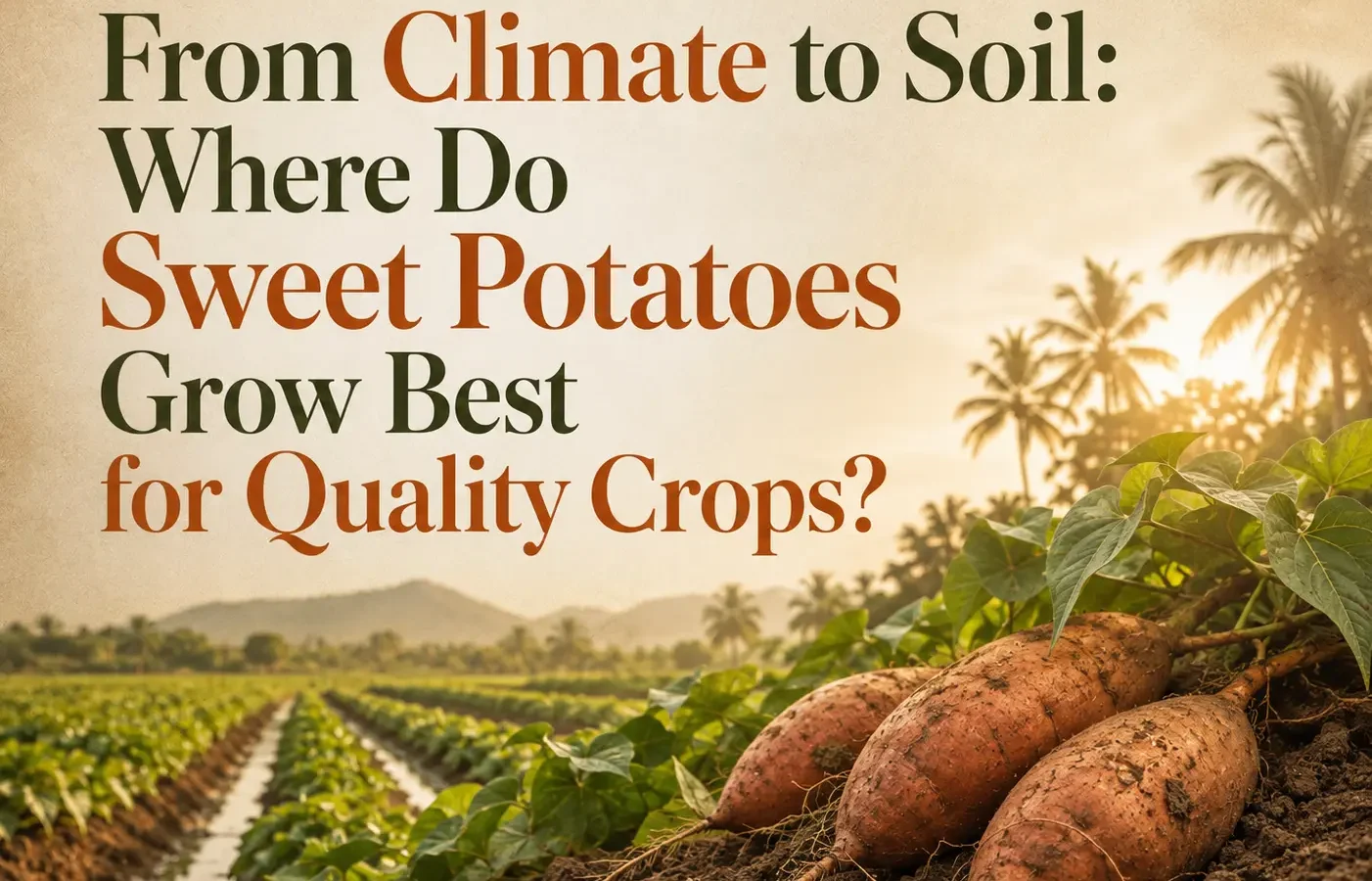
Understanding where do sweet potatoes grow best means looking beyond geography alone. Climate, sunlight, soil structure, drainage, irrigation, and crop management all influence how well sweet potatoes develop and how much of the final harvest reaches commercial quality. Regions with the right natural conditions can support strong production, but successful results still depend on how those conditions are managed throughout the growing cycle.
Egypt offers several advantages for producing farm fresh sweet potatoes, particularly in productive agricultural areas where soil and climate work together to support healthy root development. The Nile Delta soil advantages are especially relevant because suitable structure, fertility, and drainage can help create the conditions commercial growers need. Buyers and growers can explore the 7 Nile Delta soil advantages to understand why this region plays such an important role in Egyptian sweet potato production.
Where Do Sweet Potatoes Grow Best?
The question where do sweet potatoes grow best has no single answer because successful production depends on several conditions working together. Warm climates, long growing periods, suitable soil, and reliable water management all contribute to crop quality. These factors help growers produce farm fresh sweet potatoes with the shape, consistency, and appearance expected by commercial buyers.
Why Warm Climates Support Sweet Potato Production
Sweet potatoes perform best under warm conditions where plants can develop steadily without repeated cold stress. Suitable temperatures support vine growth and encourage the root development that determines the final commercial crop.
Warm climates can contribute to:
- Faster plant establishment.
- Stronger vine development.
- More consistent root formation.
- Longer productive growing periods.
- Better maturity before harvest.
Understanding how to grow sweet potatoes successfully means choosing a location where warmth supports development without exposing the crop to severe or prolonged heat stress.
The Role of Sunshine and Growing Period
Sunlight plays an important role in supporting healthy plant growth throughout the season. Longer periods of suitable temperatures and sunlight can give roots enough time to develop properly before harvest.
When evaluating where do sweet potatoes grow, growers should consider:
- Length of the warm season.
- Sunlight availability.
- Risk of early cold weather.
- Expected planting and harvest windows.
- Availability of irrigation during dry periods.
These conditions help shape the quality and consistency of farm fresh sweet potatoes at harvest.
Why Location Alone Does Not Guarantee Quality
A favourable region can provide strong potential, but location alone does not guarantee a premium crop. Poor irrigation, compacted soil, weak planting material, or inconsistent field management can reduce quality even in an ideal climate.
The best production areas combine natural advantages with professional crop management. This is why the Nile Delta soil advantages become commercially valuable only when they are supported by careful farming decisions throughout the season.
The Climate Sweet Potatoes Need for Healthy Growth
Climate is one of the most important factors when considering where do sweet potatoes grow successfully. Sweet potatoes are naturally suited to warm conditions, but the crop still needs a stable environment throughout establishment, root development, and maturity. Temperature extremes can affect growth, while predictable seasonal conditions help growers plan production more effectively and maintain the quality of farm fresh sweet potatoes.
Suitable Temperature Ranges
Warm temperatures support both plant growth and root formation. The crop needs enough heat to develop properly, especially during the early and middle stages of production.
Suitable conditions generally help:
- Plants establish quickly.
- Vines develop evenly.
- Roots form consistently.
- Crop maturity progress predictably.
- Harvest planning become easier.
The timing of the sweet potato season is therefore closely linked to temperature and the length of the warm growing period.
How Cold Conditions Affect Development
Cold temperatures can slow plant growth and delay root formation. Repeated exposure to unsuitable conditions may reduce uniformity and extend the time needed for the crop to reach commercial maturity.
When growers assess where do sweet potatoes grow, they should consider whether the region offers enough warm days for the crop to complete its growing cycle without unnecessary interruption.
Cold stress can also make it harder to achieve the consistent sizing buyers expect from farm fresh sweet potatoes.
Managing Heat and Environmental Stress
Although warmth is necessary, excessive heat can also create problems when soil moisture becomes limited. Growers need to monitor irrigation and crop condition carefully during hotter periods.
Good management may include:
- Checking soil moisture more frequently.
- Adjusting irrigation timing.
- Monitoring signs of plant stress.
- Protecting against prolonged dry periods.
- Reviewing development across the field.
These practices help growers make better use of favourable climates while reducing the risks associated with extreme conditions.
Why Soil Is Critical to Sweet Potato Production
Climate determines whether sweet potatoes can grow, but soil strongly influences how well the roots develop. When asking where do sweet potatoes grow best, soil structure, drainage, and fertility deserve just as much attention as temperature. Since the commercial roots form below the surface, the soil environment directly affects root expansion, shape, and final market quality.
Loose Soil and Root Expansion
Sweet potato roots need enough space to develop naturally. Loose soil reduces physical resistance and helps roots form with more consistent shapes.
Suitable soil can support:
- Better root expansion.
- Improved commercial sizing.
- Reduced deformation.
- Easier harvesting.
- More uniform crop quality.
Understanding how to cultivate sweet potato successfully means preparing soil so roots can grow without unnecessary restriction.
Why Drainage Matters
Poor drainage can create saturated conditions around the root zone, reducing aeration and increasing stress. Even productive soil may underperform if excess water cannot move away efficiently.
The Nile Delta soil advantages are valuable partly because good agricultural land can offer the combination of structure and drainage needed for reliable production when properly managed.
Fertility, Structure, and Commercial Root Quality
Soil fertility also affects plant health and root development, but nutrients need to be balanced. Excessive fertility can encourage top growth without producing the same improvement below the surface.
For growers targeting farm fresh sweet potatoes, the goal is to combine suitable soil structure with enough nutrients to support steady, uniform development rather than simply maximum vine growth.
The Nile Delta Soil Advantages for Sweet Potato Farming
The Nile Delta is one of Egypt’s most important agricultural regions, and its natural growing environment helps explain why the country can support commercial sweet potato production. The Nile Delta soil advantages include productive agricultural land, suitable structure, and the capacity to support carefully managed irrigation. When combined with professional crop management, these conditions can help growers produce consistent farm fresh sweet potatoes for local and international markets.
Fertile Agricultural Land
Fertile soil gives growers a strong foundation for crop development. Good agricultural land can support healthy vines while providing the root zone with the nutrients needed for steady growth.
This can contribute to:
- Strong plant establishment.
- Healthy root formation.
- Better crop uniformity.
- More consistent yield potential.
- Improved commercial quality.
These advantages become especially valuable when sweet potato farming practices are designed around balanced growth rather than excessive inputs.
Soil Structure That Supports Root Development
The physical structure of the soil matters because sweet potatoes need room to expand below the surface. Loose, workable ground can reduce root deformation and improve commercial shape.
This is one reason the Nile Delta soil advantages matter when considering where do sweet potatoes grow best for quality production. Suitable soil gives roots the space and support needed to develop more consistently.
How Local Conditions Support Commercial Production
Natural advantages alone are not enough. Irrigation, planting, nutrition, crop monitoring, and harvest timing all influence whether those conditions translate into market-ready products.
When local soil strengths are combined with professional management, growers have a better chance of producing farm fresh sweet potatoes that meet buyer expectations for size, appearance, and consistency.
How Irrigation Changes Growing Performance
Water management can determine whether favourable land and climate produce a strong crop or an inconsistent one. When evaluating where do sweet potatoes grow successfully, reliable irrigation is a critical part of the answer because moisture affects plant establishment, root development, nutrient uptake, and final sizing. Even areas with strong Nile Delta soil advantages still require careful water management throughout the season.
Maintaining Consistent Moisture
Sweet potatoes need enough moisture to support steady growth without creating excessive saturation. Consistency is especially important during establishment and active root development.
Good irrigation helps:
- Support healthy plants.
- Encourage steady root expansion.
- Reduce moisture stress.
- Improve crop uniformity.
- Protect commercial quality.
Understanding how to farm sweet potatoes means adjusting irrigation according to actual soil and weather conditions instead of relying on one fixed schedule.
Avoiding Waterlogging
Too much water can reduce oxygen around developing roots and interfere with healthy growth. Fields with poor drainage may retain excess moisture after irrigation or rainfall, creating uneven development.
Growers should monitor:
- Standing water.
- Soil saturation.
- Drainage speed.
- Uneven plant vigour.
- Areas with repeated moisture problems.
Proper irrigation management helps protect farm fresh sweet potatoes from quality problems that begin below the surface.
Supporting Nutrient Uptake and Root Formation
Water also helps plants access nutrients in the soil, which means irrigation and fertility management are closely connected. Too little moisture may limit nutrient uptake, while excessive water can create an unstable root-zone environment.
The strongest results come when irrigation supports the natural Nile Delta soil advantages rather than working against them. By maintaining suitable moisture and protecting soil structure, growers can support healthier development and produce more consistent sweet potatoes for commercial markets.
Why Field Management Matters Even in Ideal Locations
Even in regions with favourable climate and strong soil, field management still determines how much of that natural potential becomes commercial quality. Understanding where do sweet potatoes grow best is only part of the picture. Growers also need to manage varieties, nutrition, weeds, pests, and plant stress carefully if they want to produce consistent farm fresh sweet potatoes. The Nile Delta soil advantages create a strong foundation, but professional crop management is what turns that foundation into dependable results.
Variety Selection
Different varieties respond differently to climate, soil, irrigation, and market requirements. Choosing the right one helps growers match field conditions with the characteristics buyers expect.
Variety selection should consider:
- Local climate suitability.
- Root shape and size.
- Skin and flesh characteristics.
- Storage potential.
- Market demand.
For growers growing sweet potatoes commercially, the best variety is the one that performs well in the field and also fits the intended customer.
Nutrition and Crop Monitoring
Balanced nutrition supports healthy growth without encouraging excessive vines at the expense of root development. Regular crop monitoring also helps growers identify uneven areas before they become larger quality problems.
When evaluating where do sweet potatoes grow successfully, good soil must therefore be supported by careful nutrient management and field observation. The Nile Delta soil advantages can support strong production, but the crop still needs consistent management throughout the season.
Managing Weeds, Pests, and Plant Stress
Weeds compete for water and nutrients, while pests and environmental stress can weaken plants and reduce uniformity. Early action helps protect crop development and preserve the quality expected from farm fresh sweet potatoes.
Good field management focuses on preventing small problems from becoming commercial losses later.
How Growing Conditions Affect Farm Fresh Sweet Potatoes
The quality buyers see at harvest is closely connected to the conditions the crop experiences throughout the growing cycle. When growers ask where do sweet potatoes grow best, they are really asking which environments support the appearance, shape, consistency, and storage performance required for commercial markets. Suitable sweet potato growing conditions help growers produce farm fresh sweet potatoes that are more uniform and better prepared for distribution.
Appearance and Skin Quality
Healthy skin is important because it influences both visual appeal and how well roots tolerate handling. Poor moisture balance, compacted soil, or environmental stress can affect the condition of the outer surface.
Strong growing conditions can support:
- Smoother skin.
- Better visual consistency.
- Fewer surface defects.
- Stronger market presentation.
- Better resistance during handling.
The Nile Delta soil advantages can contribute to this quality when soil structure, irrigation, and field management are handled correctly.
Root Shape and Uniformity
Root shape depends heavily on the environment below the surface. Loose, well-drained soil allows roots to expand more naturally, while compaction may encourage irregular development.
Uniform farm fresh sweet potatoes are easier to grade, pack, and market. This is why maintaining suitable sweet potato growing conditions throughout the season matters as much as choosing the right growing region.
Freshness and Storage Performance
Freshness is influenced by crop health before harvest as well as post-harvest handling. Roots developed under stable conditions often enter curing and storage in stronger condition.
Understanding where do sweet potatoes grow best therefore includes thinking beyond the field. The best regions are those where production conditions support both harvest quality and reliable storage performance.
Where Sweet Potatoes Grow Around the World
Sweet potatoes are produced across many warm regions, from tropical and subtropical areas to Mediterranean climates. The answer to where do sweet potatoes grow depends on whether the climate provides enough warmth, sunlight, and growing time for the crop to mature properly. Different origins can produce high-quality farm fresh sweet potatoes, but climate, soil, production systems, and market access all influence how each region serves commercial buyers.
Major Tropical and Subtropical Production Regions
Warm climates naturally support sweet potato production because the crop benefits from a long frost-free growing period.
These regions often provide:
- Extended warm seasons.
- Strong sunlight.
- Suitable planting windows.
- Consistent crop development.
- Multiple production opportunities.
However, natural warmth still needs to be supported by suitable soil and irrigation.
Sweet Potato Production in Mediterranean Climates
Mediterranean climates can also support strong production when warm temperatures, suitable soils, and managed irrigation work together.
This is one reason Egypt has become relevant to international supply. An experienced Egyptian sweet potatoes exporter can take advantage of favourable growing conditions while also managing grading, packaging, and seasonal availability for global buyers.
Why Different Origins Serve Different Markets
Not every origin offers the same harvest window, varieties, sizing, or logistics advantages. Buyers may source from different countries at different times of year depending on availability and market requirements.
The Nile Delta soil advantages give Egyptian production a useful foundation, while commercial management helps convert that natural potential into consistent farm fresh sweet potatoes for international markets.
Why Egypt Is Well Positioned for Sweet Potato Production
Egypt combines warm growing conditions, productive agricultural land, and long-standing farming experience, making it a strong answer to the question where do sweet potatoes grow for commercial quality. The country’s climate supports a reliable growing period, while the Nile Delta soil advantages help create an environment where roots can develop with the size, shape, and consistency expected by buyers of farm fresh sweet potatoes.
Climate and Seasonal Advantages
Warm temperatures and strong sunlight support healthy growth throughout much of the production cycle. These conditions help growers plan planting and harvest periods more predictably.
Key advantages include:
- Long warm growing periods.
- Strong sunlight.
- Reliable crop development.
- Flexible seasonal planning.
- Suitable conditions for commercial production.
Agricultural Experience in the Nile Delta
Egyptian sweet potato production also benefits from generations of agricultural knowledge. The Egyptian sweet potato heritage reflects practical experience with local soils, irrigation, crop timing, and root production.
When this knowledge is combined with modern field management, the Nile Delta soil advantages become even more valuable because growers understand how to use local conditions effectively rather than relying on them alone.
Production for International Markets
For international buyers, strong growing conditions matter only when they are matched with reliable grading, handling, and supply planning. Egypt’s production environment gives growers the potential to deliver farm fresh sweet potatoes that meet commercial requirements across multiple markets.
That combination of agriculture and export preparation helps strengthen Egypt’s position as a dependable sourcing origin.
From Growing Conditions to Export Quality
Strong field conditions create potential, but export quality depends on how well that potential is protected after the crop matures. Knowing where do sweet potatoes grow best is therefore only one part of commercial production. Growers also need to harvest at the right stage, handle roots carefully, and maintain quality through storage and export preparation. The goal is to ensure that farm fresh sweet potatoes arrive in a condition that reflects the quality created in the field.
Harvesting at the Right Stage
Harvest timing affects root size, skin quality, and storage performance. Leaving crops in the ground too long or lifting them too early can reduce commercial value.
Growers should consider:
- Root maturity.
- Skin firmness.
- Buyer size requirements.
- Weather conditions.
- Storage plans.
The Nile Delta soil advantages support healthy development, but correct harvest timing is what helps preserve that quality.
Post-Harvest Handling and Storage
After harvest, roots need careful handling to reduce cuts, bruising, and unnecessary damage. Curing and storage conditions then help maintain freshness and prepare the crop for distribution.
Professional handling can support:
- Stronger skin.
- Better shelf life.
- Reduced product loss.
- More consistent shipment quality.
Protecting Quality During Export Preparation
Grading, packaging, documentation, and transport all play a role in maintaining export quality. Through our export services, Farm Sweet supports the movement of carefully prepared sweet potatoes from Egyptian farms to international markets while keeping consistency and product condition at the centre of the process.
This is where good sweet potato growing conditions, post-harvest discipline, and export management come together.
Final Thoughts: The Best Growing Regions Combine Nature and Management
The best answer to where do sweet potatoes grow is not simply a country or climate zone. Strong production comes from the combination of suitable weather, productive soil, reliable irrigation, and careful crop management. Natural advantages create the opportunity, but they only become valuable when growers use them consistently throughout the season.
The Nile Delta soil advantages give Egyptian growers a strong agricultural foundation, while professional field management helps turn those conditions into uniform, market-ready roots. This is what supports the production of farm fresh sweet potatoes with the appearance, size, freshness, and storage performance commercial buyers expect.
For international markets, that same principle continues beyond harvest. Grading, packaging, storage, and export coordination all influence how much of the original field quality reaches the buyer. Businesses looking to discuss varieties, seasonal availability, grading, or supply requirements can contact our Farm Sweet team to explore how Egyptian production can support their market.
Ultimately, the strongest growing regions are those where natural conditions and professional management work together. That combination is what transforms good land into dependable commercial supply.
FAQs: Sweet Potato Growing Regions, Soil, and Climate
- Where do sweet potatoes grow best?
Sweet potatoes generally perform best in warm climates with sufficient sunlight, loose well-drained soil, and consistent moisture throughout the growing period.
- Can sweet potatoes grow in different climates?
Yes, but crop performance depends heavily on temperature, season length, soil conditions, and field management.
- Why is the Nile Delta suitable for sweet potato production?
The region offers agricultural soil, favourable climate conditions, and established farming experience that can support healthy root development and commercial production.
- How do growing conditions affect farm fresh sweet potatoes?
Good growing conditions influence root shape, sizing, skin quality, texture, freshness, and how well the crop performs after harvest.
- Is good soil enough to produce high-quality sweet potatoes?
No. Soil must be supported by suitable irrigation, variety selection, nutrition, crop monitoring, careful harvesting, and post-harvest management.