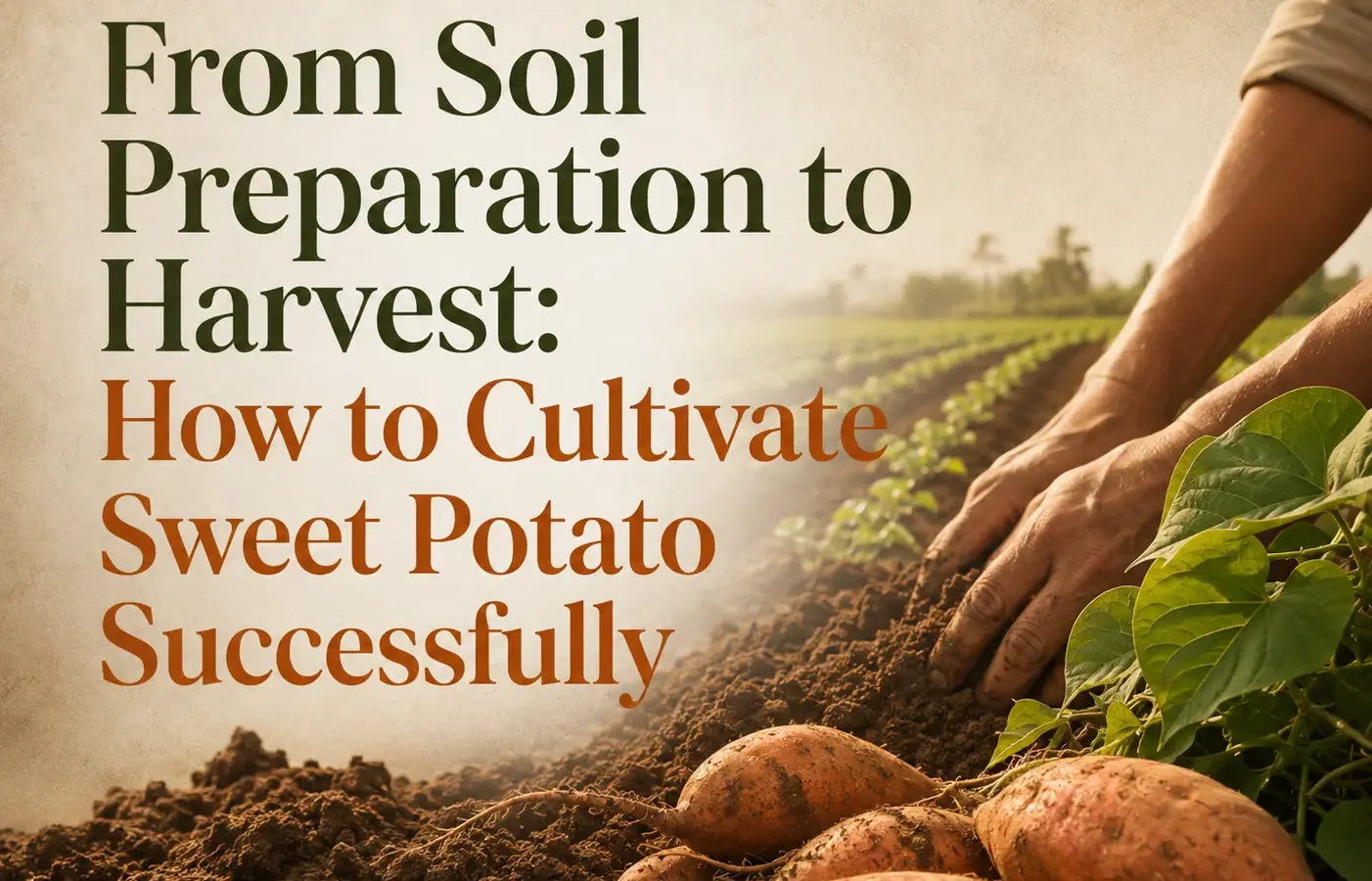
Understanding how to cultivate sweet potato successfully means looking at the crop as one connected production cycle. Strong results are built through careful land selection, proper soil preparation, healthy planting material, balanced irrigation, and consistent field management long before harvest begins. Each stage influences root development, crop uniformity, and the final quality growers can achieve.
For anyone involved in sweet potato cultivation, the goal should not be yield alone. Commercial success also depends on producing roots with the size, shape, appearance, and storage performance expected by buyers. This is where good sweet potato farming practices make a real difference. In this guide, we will move from the first decisions made before planting through the stages that help growers establish a healthier crop and build the foundation for a stronger harvest.
What Successful Sweet Potato Cultivation Really Requires
Successful sweet potato cultivation depends on how well the entire growing cycle is managed, not on one isolated farming decision. The crop develops underground, which means many quality problems can begin before they are visible above the soil. Growers need to think about root development, field conditions, timing, and commercial goals from the beginning rather than waiting until harvest to judge performance.
Why the Full Growing Cycle Matters
Every stage influences the next. Poor soil preparation can restrict root expansion, inconsistent irrigation can create uneven development, and delayed harvesting can reduce storage performance.
A well-managed growing cycle includes:
- Proper field preparation.
- Healthy planting material.
- Balanced irrigation and nutrition.
- Regular crop monitoring.
- Timely harvesting and careful handling.
Understanding how to grow sweet potatoes as one connected process helps growers make better decisions throughout the season instead of trying to correct problems at the end.
Understanding Root Development Before Planting
Sweet potatoes form their commercial roots below the surface, so the soil environment needs to support healthy expansion from the beginning. Loose structure, good drainage, adequate moisture, and suitable temperatures all contribute to stronger development.
This makes early planning especially important because root shape and size can be influenced long before harvest becomes visible.
Planning for Quality as Well as Yield
High yield is valuable only when a strong percentage of the crop meets commercial standards. Successful growers therefore plan for:
- Uniform sizing.
- Healthy skin quality.
- Consistent shape.
- Strong internal quality.
- Good storage potential.
For commercial sweet potato cultivation, quality and yield should be managed together rather than treated as separate goals.
Choosing the Right Land Before Planting
Land selection is one of the first major decisions when learning how to cultivate sweet potato successfully. Even a strong variety can struggle if the field has poor drainage, unsuitable soil structure, or limited sunlight. Choosing land that naturally supports root development makes crop management easier throughout the rest of the season.
Soil Structure and Drainage
Sweet potatoes perform best in soil that allows roots to expand without heavy resistance. Compacted or waterlogged fields can restrict development and increase the risk of misshapen roots.
Suitable land should offer:
- Loose soil structure.
- Efficient drainage.
- Good aeration around developing roots.
- Enough depth for uniform expansion.
- Minimal compaction.
These qualities are closely connected to the 7 Nile Delta soil advantages, where fertile agricultural land and suitable soil conditions support commercial sweet potato production.
Sunlight and Temperature Requirements
Warm conditions are essential throughout most of the growing cycle. Adequate sunlight supports plant development, while suitable soil and air temperatures help the roots establish properly.
Fields with strong sun exposure generally provide:
- Better vegetative growth.
- More consistent crop development.
- Reduced environmental stress.
- Stronger production potential.
Preparing the Field for Healthy Root Development
Once the right land has been selected, the field should be prepared to create an even growing environment. Removing debris, loosening compacted areas, and organising suitable rows can help roots develop more consistently.
Good land preparation gives sweet potato cultivation a stronger foundation and reduces avoidable problems later in the season.
How to Prepare Soil for Strong Sweet Potato Growth
Soil preparation has a direct effect on the size, shape, and overall commercial quality of the harvested roots. Because sweet potatoes develop beneath the ground, growers need to create a soil environment that allows them to expand freely while still receiving enough moisture, oxygen, and nutrients. This is one of the most important steps in understanding how to cultivate sweet potato effectively.
Creating Loose and Well-Drained Soil
Loose soil reduces physical resistance around developing roots. It also makes harvesting easier and lowers the risk of irregular growth caused by compaction.
Before growing sweet potatoes, field preparation should focus on:
- Breaking up compacted soil.
- Improving drainage.
- Removing stones and large debris.
- Creating raised rows when appropriate.
- Maintaining enough depth for root expansion.
Managing Soil Fertility
Fertility should support balanced growth rather than excessive vegetative development. Nutrient management needs to match the crop’s requirements throughout the season.
Good soil management supports:
- Healthy early establishment.
- Strong root development.
- Better crop uniformity.
- More consistent final quality.
Soil testing and careful nutrient planning can help growers avoid over- or under-application.
Avoiding Compaction and Poor Drainage
Compacted soil can force roots into irregular shapes, while poor drainage can create stressful conditions that reduce crop quality.
For successful sweet potato cultivation, growers should avoid working wet fields excessively and should monitor drainage after irrigation or heavy rainfall. Correcting these issues before planting is usually far easier than trying to manage them once the crop is established.
Selecting the Right Sweet Potato Variety
Variety selection influences almost every stage of production, from field performance to the quality buyers eventually receive. Different varieties respond differently to soil, climate, irrigation, and market requirements, so the best choice depends on more than yield potential alone.
Matching Variety with Climate and Soil
Some varieties perform better under specific environmental conditions. When learning how to cultivate sweet potato, growers should consider whether a variety is suited to the local temperature range, soil type, and growing period.
The right match can support:
- More uniform root development.
- Better crop consistency.
- Stronger adaptation to local conditions.
- Reduced production stress.
Considering Yield, Shape, and Market Demand
A high-yielding variety may not be commercially successful if its shape, flesh colour, or texture does not match buyer expectations.
Growers should compare:
- Yield potential.
- Root shape and size.
- Skin and flesh colour.
- Shelf-life performance.
- Consumer and buyer preferences.
Understanding the different varieties of sweet potatoes helps growers choose crops that suit both the field and the market they intend to serve.
Commercial Varieties for Different Buyers
Retailers, wholesalers, processors, and food-service businesses may each prefer different characteristics. A variety selected for supermarket presentation may not be the same one preferred for processing or bulk distribution.
Strong sweet potato cultivation therefore begins with choosing a variety that fits the final commercial purpose as well as the production environment.
How to Plant Sweet Potatoes for Better Establishment
Correct planting gives the crop the best chance to establish quickly and develop evenly. Healthy planting material, suitable spacing, and careful placement all influence how well the roots form during the early stages. These details are especially important for growers learning how to cultivate sweet potato for commercial production rather than small-scale home growing.
Selecting Healthy Planting Material
Strong plants begin with healthy slips or planting material. Damaged, weak, or stressed material can lead to uneven establishment and lower overall field performance.
Growers should look for:
- Healthy stems and leaves.
- Strong, disease-free planting material.
- Uniform plant condition.
- Good root or slip development.
Understanding how to farm sweet potatoes successfully starts with choosing planting material capable of establishing evenly across the field.
Correct Spacing and Planting Depth
Spacing affects competition between plants and the amount of room available for root development. Plants that are too close together may compete heavily, while excessive spacing can reduce field efficiency.
Correct planting should support:
- Consistent plant establishment.
- Suitable root expansion.
- Better field uniformity.
- Easier crop management.
Supporting Strong Early Growth
The first weeks after planting are important because this is when the crop establishes itself and begins developing the root system that will support later production.
Good early management includes:
- Maintaining appropriate soil moisture.
- Monitoring newly established plants.
- Replacing weak or failed plants when necessary.
- Managing weeds before competition becomes severe.
When early establishment is managed properly, sweet potato cultivation becomes more predictable throughout the rest of the season and growers have a stronger foundation for achieving both yield and commercial quality.
Managing Water and Nutrition Throughout the Season
Successful sweet potato cultivation depends on maintaining the right balance of moisture and nutrients from establishment through root development. Water shortages can slow growth, while excessive irrigation may create weak root systems or poor soil conditions. Nutrition must also be carefully managed so plants develop strong roots without producing excessive leafy growth at the expense of commercial yield.
Irrigation During Early Development
The early growing stage is especially important because newly established plants need enough moisture to develop a strong root system. Irrigation should keep the soil consistently moist without allowing it to become waterlogged.
Good early irrigation helps:
- Support plant establishment.
- Encourage healthy root formation.
- Reduce stress during hot periods.
- Improve crop uniformity across the field.
For growers learning how to cultivate sweet potato, monitoring soil moisture rather than following a fixed watering schedule usually leads to better results.
Avoiding Too Much or Too Little Water
Both extremes can reduce crop performance. Underwatering may restrict root expansion, while excessive irrigation can reduce oxygen around the roots and increase the risk of poor development.
Water management becomes increasingly important as the crop approaches maturity. Understanding when to harvest sweet potatoes also helps growers adjust irrigation toward the end of the season instead of maintaining the same routine until harvest day.
Balanced Nutrition for Healthy Roots
Nutrition should support steady development throughout the season. Excessive fertilization can encourage top growth rather than root formation, while nutrient deficiencies may reduce yield and quality.
A balanced programme should support:
- Healthy plant growth.
- Strong root development.
- Consistent sizing.
- Better final crop quality.
Protecting the Crop During Sweet Potato Cultivation
Even a well-established crop can lose quality if weeds, pests, diseases, or environmental stress are not managed effectively. Protecting plants throughout the growing period helps preserve the work already invested in soil preparation, planting, irrigation, and nutrition. Strong crop protection is therefore an essential part of professional sweet potato cultivation, especially when the final harvest is intended for commercial markets.
Managing Weeds and Competition
Weeds compete with sweet potato plants for water, nutrients, sunlight, and growing space. Early control is particularly important before the vines create enough ground cover to suppress new growth naturally.
Effective management helps growers:
- Reduce competition for nutrients.
- Improve irrigation efficiency.
- Maintain healthier crop development.
- Make field monitoring easier.
Monitoring Pests and Diseases
Regular field inspections allow growers to identify problems before they spread. Changes in leaf colour, plant vigour, or root development can indicate conditions that require attention.
Good monitoring includes checking:
- Leaf condition and plant growth.
- Signs of insect activity.
- Symptoms of disease.
- Areas developing differently from the rest of the field.
Responding to Environmental Stress
Temperature changes, excess rainfall, dry periods, and poor drainage can all influence crop performance. Maintaining suitable sweet potato growing conditions requires growers to respond quickly when the environment moves outside the crop’s ideal range.
Flexible irrigation, drainage management, and field monitoring help reduce stress and maintain healthier root development throughout the season.
Knowing When the Crop Is Ready for Harvest
Harvest timing is one of the most important decisions in learning how to grow sweet potatoes successfully. Roots need enough time to achieve suitable size and maturity, but leaving them in the soil for too long may increase the risk of damage or inconsistent quality. Growers should therefore evaluate the crop itself rather than relying only on a calendar date.
Signs of Root Maturity
Commercial maturity can vary according to variety, growing conditions, and buyer requirements. Growers commonly assess:
- Root size and development.
- Skin condition.
- Overall crop uniformity.
- Expected growing period.
- Market specifications.
For specialised grades such as a jumbo sweet potato, maturity becomes especially important because large size must still be accompanied by acceptable shape, skin quality, and internal condition.
Why Harvest Timing Changes Final Quality
Harvesting too early can result in undersized roots, while unnecessary delays may increase the chance of cracking, surface damage, or reduced storage performance.
Correct timing supports stronger:
- Product appearance.
- Shelf-life performance.
- Commercial sizing.
- Overall market value.
Avoiding Damage During Harvest
Mature roots can still lose value through rough handling. Harvesting equipment, lifting methods, and field workers should minimise cuts, bruising, and unnecessary impacts so the crop enters post-harvest preparation in the best possible condition.
Protecting Quality After Sweet Potatoes Leave the Field
The work involved in sweet potato cultivation does not end when roots are removed from the soil. Post-harvest handling can determine whether a well-grown crop reaches buyers in excellent condition or loses commercial value before distribution. Careful handling, curing, storage, and grading help protect freshness while preparing the crop for retail, wholesale, or export markets.
Handling Freshly Harvested Roots
Freshly harvested sweet potatoes are vulnerable to pressure and surface damage. Gentle handling helps preserve skin quality and reduces losses before packing.
Important practices include:
- Minimising drops and impacts.
- Separating visibly damaged roots.
- Moving the crop carefully between stages.
- Keeping harvested products protected from unsuitable conditions.
Curing and Storage
Curing supports stronger skin and helps prepare roots for storage. After curing, temperature, humidity, and airflow should be managed carefully to maintain product quality.
Proper storage can help:
- Reduce moisture loss.
- Protect texture.
- Extend shelf life.
- Improve transport performance.
Grading and Preparing Crops for Market
Before products are packed, roots should be sorted according to agreed commercial requirements. At Farm Sweet, our quality standards support consistent grading, appearance, and preparation before products move into distribution.
This stage ensures that the results of careful field management are preserved rather than lost after harvest.
Common Mistakes That Reduce Yield and Quality
Understanding how to cultivate sweet potato successfully also means recognising the mistakes that can undermine an otherwise promising crop. Many quality problems begin with small decisions made early in the season and become more difficult to correct as the plants mature.
Poor Soil Preparation
Compacted soil, inadequate drainage, or insufficient field preparation can restrict root development and increase irregular sizing.
Common consequences include:
- Misshapen roots.
- Uneven crop development.
- Reduced marketable yield.
- More difficult harvesting.
Inconsistent Irrigation
Irregular watering can create repeated periods of stress that affect root development and crop uniformity. Successful sweet potato cultivation requires irrigation to respond to soil conditions and plant needs rather than being applied without monitoring.
Delayed Harvesting and Rough Handling
Even a healthy crop can lose commercial value at the final stage. Harvesting too late or handling roots carelessly can increase bruising, cuts, cracking, and storage losses.
Avoiding these mistakes requires consistent attention throughout the full production cycle. Strong results rarely come from one perfect decision; they come from many good decisions made at the right time.
Final Thoughts: Better Cultivation Creates Better Commercial Results
Learning how to grow sweet potatoes successfully means managing the entire crop as one connected process. Soil preparation affects root development, planting decisions influence establishment, irrigation and nutrition shape growth, and harvest timing determines how much of that quality is preserved. Post-harvest handling then protects the results until the crop reaches the buyer.
For commercial growers, success should be measured by more than total yield. A strong harvest also needs consistent sizing, healthy appearance, reliable storage performance, and enough marketable roots to meet buyer specifications. When these factors are considered from the beginning, sweet potato cultivation becomes a more predictable and commercially valuable process.
At Farm Sweet, careful production is supported by professional grading, quality control, and market preparation to help turn strong crops into reliable commercial supply. If you would like to learn more about our production practices, available varieties, or supply options, contact our Farm Sweet team to discuss what your market requires.
FAQs: What Growers Should Know About Sweet Potato Cultivation
- How do you cultivate sweet potatoes successfully?
Successful cultivation requires loose, well-drained soil, warm temperatures, healthy planting material, proper irrigation, balanced nutrition, crop monitoring, and timely harvesting.
- What soil is best for sweet potato cultivation?
Sweet potatoes generally perform best in loose, well-drained soil that allows roots to expand without excessive resistance or waterlogging.
- How much water do sweet potatoes need while growing?
They require consistent moisture, particularly during establishment and root development, but excessive watering can negatively affect root quality.
- How long does it take to grow sweet potatoes?
The growing period varies by variety and conditions, but many commercial crops mature within roughly three to five months.
- What is the biggest mistake when learning how to grow sweet potatoes?
Treating one stage in isolation is a common mistake. Soil preparation, irrigation, nutrition, crop protection, harvest timing, and post-harvest care all influence the final result.