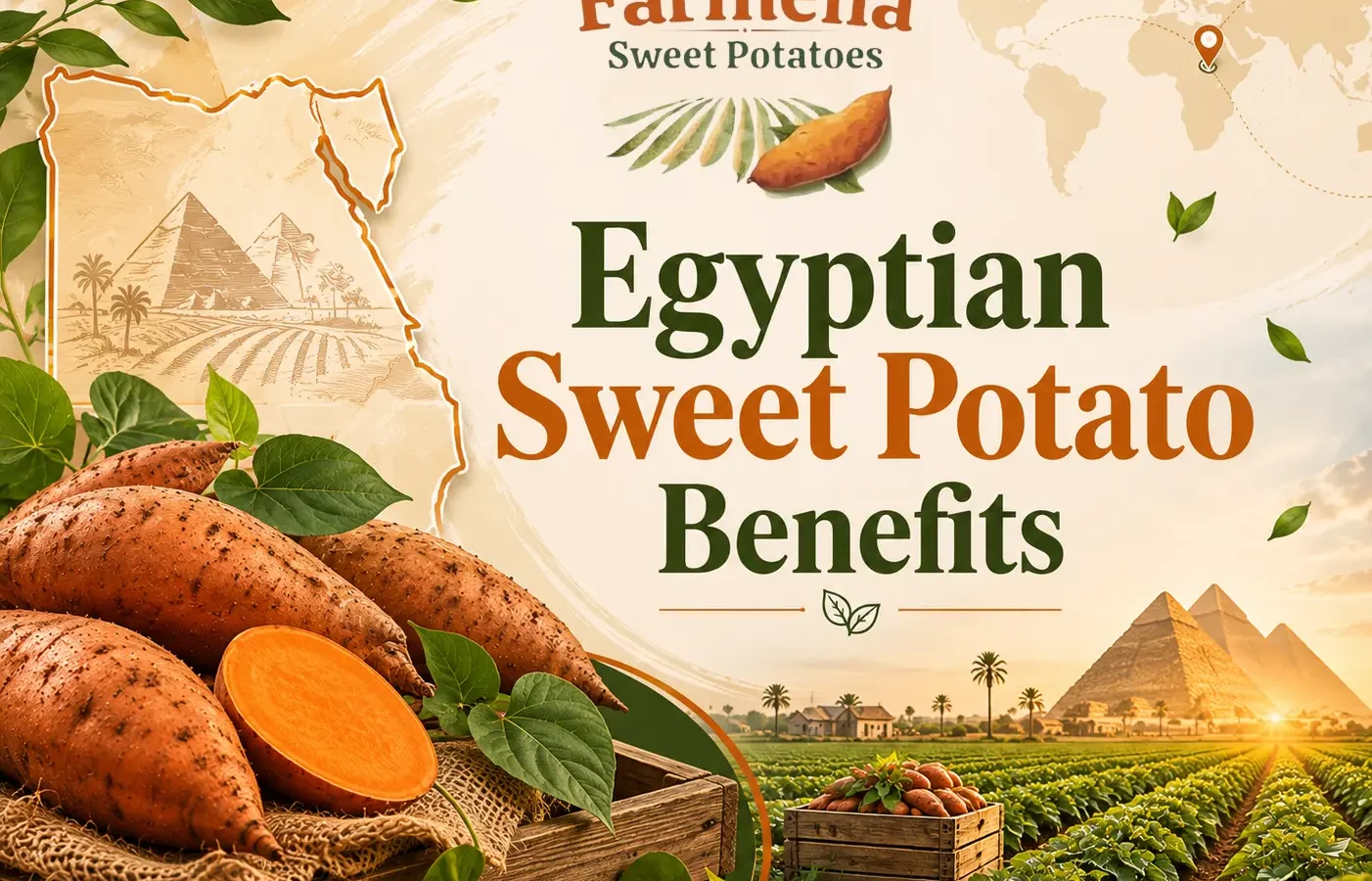
Global buyers are paying more attention to where their sweet potatoes come from, not just how they look when they arrive. Today, quality means steady sizing, clean appearance, good shelf life, and reliable supply. That’s why Egyptian sweet potato benefits are becoming more noticeable in international markets.
Egypt has the kind of growing conditions that support strong sweet potato production: warm weather, long sunlight hours, and experienced sweet potato farming practices. These factors help growers produce crops that are consistent in texture, appearance, and storage performance.
Commercial varieties like beauregard sweet potato plants also perform well under Egypt’s climate, making them attractive for buyers who care about quality and reliability.
In this blog, we’ll look at the main Egyptian sweet potato benefits, from nutrition and crop quality to export readiness and long-term market demand.
Understanding the Growing Global Interest in Egyptian Sweet Potato Benefits
Global demand for sweet potatoes has grown far beyond traditional markets. What was once considered a seasonal product is now part of everyday retail, restaurant menus, frozen foods, and health-focused meal plans. This shift is one of the main reasons Egyptian sweet potato benefits are receiving more international attention today.
Why Sweet Potatoes Are Becoming More Popular Worldwide
Consumers are changing the way they choose food products. More buyers now look for crops that combine nutrition, versatility, and natural ingredients.
Some of the main reasons sweet potatoes continue growing in popularity include:
- Higher fiber content compared to many processed foods
- Natural source of Vitamin A and antioxidants
- Flexible use in fresh, frozen, baked, and fried products
- Growing demand for healthier carbohydrate alternatives
Modern eating habits are also pushing supermarkets and food manufacturers toward crops that feel more natural and less processed. This shift has also increased demand for premium sweet potato varieties that can serve fresh markets, food service businesses, and food manufacturers alike. Reliable sweet potato farming systems help suppliers meet this increasing demand consistently.
How Egypt Built a Strong Position in Export Markets
Egypt gradually became a strong exporter because several production advantages work together naturally:
- Warm temperatures throughout long growing periods
- Stable sunlight exposure during the season
- Expanding sweet potato farming experience
- Improving storage and export systems
Commercial varieties like beauregard sweet potato plants also perform well under Egyptian conditions, helping exporters maintain more stable sizing, texture, and shelf-life quality for international buyers.
Nutritional Egyptian Sweet Potato Benefits That Attract Modern Consumers
Food preferences have changed noticeably in recent years. More consumers now pay attention to ingredient quality, nutritional value, and how natural a product feels before buying it. That shift is one reason many Egyptian sweet potato benefits continue attracting attention across global markets.
Why Sweet Potatoes Are Considered Nutrient-Dense
Sweet potatoes are widely recognized for offering both energy and nutritional value in one crop. They naturally contain:
- Fiber that supports digestion
- Vitamin A that supports eye health
- Vitamin C that supports immunity
- Antioxidants that help protect cells
- Natural carbohydrates that provide lasting energy
Unlike heavily processed foods, sweet potatoes remain closer to their natural form while still fitting into many modern diets. Reliable sweet potato farming also helps maintain more stable crop quality throughout production and storage.
Why Consumers Prefer Natural Carbohydrate Sources Today
Many consumers are becoming more selective about the foods they eat. Growing interest in natural food products has also encouraged more growers and home gardeners to learn how to grow sweet potatoes successfully. Instead of relying heavily on processed carbohydrates, buyers increasingly prefer products that feel simpler and more natural.
This growing demand is connected to:
- Health-conscious eating habits
- Interest in whole-food ingredients
- Demand for cleaner product labels
- Preference for nutrient-rich food options
Commercial varieties like beauregard sweet potato plants continue supporting this demand because they combine balanced sweetness, texture, and visual quality with strong nutritional appeal.
How Egyptian Climate Conditions Improve Sweet Potato Quality
Climate is one of the biggest factors influencing crop quality, especially with sweet potatoes. Stable weather conditions often help growers produce more consistent harvests with better texture, appearance, and storage performance. This is one reason many Egyptian sweet potato benefits are directly connected to the country’s growing environment.
Why Warm Temperatures Support Better Root Development
Sweet potatoes naturally perform best in warm conditions where growth can continue steadily without major interruptions. Stable temperatures usually help improve:
- Root sizing consistency
- Natural sweetness development
- Smooth internal texture
- Overall crop stability during the season
Cold stress or sudden weather changes often slow root development and affect quality later during harvest. Reliable sweet potato farming becomes much easier when the crop grows under stable warmth for long periods.
The Role of Sunlight and Growing Seasons in Crop Consistency
Long sunlight exposure gives sweet potato plants more time to support healthy root growth underground. Egypt’s extended growing seasons also help reduce some of the environmental stress that interrupts development in cooler regions.
These conditions often support:
- More predictable harvest quality
- Better root uniformity
- Improved shelf-life performance
- Stronger export consistency
Commercial varieties like beauregard sweet potato plants especially benefit from stable sunlight and warm growing seasons because they tend to develop more evenly under predictable field conditions. These conditions also help support reliable sweet potato export solutions by maintaining product quality throughout the supply chain.
Sweet Potato Farming Practices That Influence Final Crop Quality
Crop quality is not shaped by climate alone. The way fields are managed throughout the season also plays a major role in determining texture, sizing, shelf life, and overall consistency. Many long-term Egyptian sweet potato benefits come from maintaining stable sweet potato farming practices from planting to harvest.
Why Soil Preparation Matters in Sweet Potato Farming
Sweet potatoes usually grow best in loose, well-drained soil where roots can expand naturally underground. Poor soil preparation often creates problems that become visible later during harvest.
Good soil conditions help support:
- Better drainage after irrigation or rainfall
- More even root expansion
- Smoother skin appearance
- Reduced cracking and deformities
Heavy or compact soil can restrict root growth and increase irregular shapes. More uniform roots are also easier to sort and prepare according to sweet potato packaging standards required by many export markets.
Experienced sweet potato farming operations usually focus heavily on soil structure before planting begins.
How Irrigation Management Affects Sweet Potato Development
Balanced watering is one of the most important parts of healthy crop development. Sweet potatoes prefer stable moisture levels rather than sudden shifts between dry and overly wet conditions.
Proper irrigation management helps improve:
- Root consistency and sizing
- Stable plant growth
- Texture quality during development
- Reduced moisture stress underground
Commercial varieties like beauregard sweet potato plants especially benefit from controlled moisture conditions because stable growth supports stronger export quality and shelf-life performance.
Beauregard Sweet Potato Plants and Their Importance in Commercial Farming
Among commercial varieties, beauregard sweet potato plants remain one of the most widely recognized options in international markets. Growers, exporters, and distributors often prefer this variety because it combines reliable production with strong market appeal. These qualities continue supporting many important Egyptian sweet potato benefits across export-focused farming operations.
Why Beauregard Sweet Potato Plants Are Widely Preferred
This variety became commercially popular because it performs well in several areas at the same time. Buyers often value Beauregard sweet potatoes for their:
- Balanced natural sweetness
- Smooth internal texture
- Uniform root sizing
- Attractive skin appearance
- Strong storage and shelf-life performance
These characteristics make the variety suitable for retail markets, food service operations, and processing industries. Reliable sweet potato farming systems also help maintain more stable crop consistency throughout the season.
How This Variety Performs Under Egyptian Growing Conditions
Warm climates and long sunlight exposure create strong conditions for Beauregard development. Under Egyptian growing environments, the variety often benefits from:
- More stable root expansion
- Better sizing consistency
- Reduced environmental stress
- More predictable harvest quality
Because of these conditions, commercial growers can produce export-ready crops more consistently. This is one reason beauregard sweet potato plants continue playing an important role in Egypt’s growing position within global sweet potato markets.
The Connection Between Sweet Potato Farming and Export Performance
Export quality usually begins long before packaging or shipping. The condition of the crop during harvest, storage, and transportation often reflects how well the field was managed throughout the season. That’s why many Egyptian sweet potato benefits are closely connected to consistent sweet potato farming practices and careful post-harvest handling.
How Farming Conditions Affect Storage and Transportation Quality
Stable growing conditions help sweet potatoes maintain stronger texture and shelf-life performance after harvest. Poor moisture control, rough handling, or environmental stress during growth can increase bruising and reduce storage quality later on.
Well-managed farming systems often help improve:
- Skin strength during handling
- Texture stability during storage
- Reduced bruising during transportation
- Longer shelf-life performance
Commercial varieties like beauregard sweet potato plants are especially valued when they arrive with consistent appearance and minimal storage damage.
Why Consistency Matters in International Markets
International buyers usually prioritize suppliers capable of maintaining reliable quality across multiple shipments. Consistency affects both commercial presentation and long-term buyer confidence.
Importers often focus on:
- Uniform sizing and shape
- Clean external appearance
- Stable storage performance
- Predictable seasonal supply
Reliable sweet potato farming operations help exporters meet these expectations more consistently, especially in competitive markets where buyers depend heavily on stable product quality throughout the season.
Harvesting and Post-Harvest Practices That Protect Sweet Potato Quality
Even strong crops can lose value quickly if harvesting and storage are handled poorly. Sweet potatoes remain sensitive after harvest, especially when roots are exposed to rough handling, unstable temperatures, or poor storage environments. Protecting quality during this stage is one of the most important Egyptian sweet potato benefits supporting export performance.
Why Harvest Timing Affects Root Quality
Harvesting at the right stage helps sweet potatoes reach proper maturity before storage or transportation begins. Understanding when to harvest sweet potatoes is essential for protecting root quality and maximizing storage performance. Immature roots often have weaker skin and lower storage stability, while delayed harvesting can increase field damage and quality loss.
Proper timing usually helps improve:
- Root maturity and sizing
- Stronger skin development
- Better shelf-life performance
- Reduced bruising during handling
Reliable sweet potato farming systems often depend on careful field monitoring before harvest to maintain export-quality consistency.
The Role of Curing and Storage After Harvest
After harvesting, sweet potatoes usually go through a curing stage that helps strengthen the skin and protect long-term quality. Controlled storage conditions also play a major role in preserving appearance and texture.
Good post-harvest management often includes:
- Balanced humidity levels
- Stable airflow during storage
- Moderate storage temperatures
- Careful handling during transport
Commercial varieties like beauregard sweet potato plants especially benefit from proper curing and storage because they are expected to maintain strong appearance and shelf-life performance across international markets.
Common Challenges Growers Face During Sweet Potato Farming
Even under strong growing conditions, sweet potato farming still comes with challenges that can affect final crop quality. Small environmental problems often become much more noticeable later during harvest and storage. That’s why experienced growers usually focus on identifying issues early before they begin affecting important Egyptian sweet potato benefits like consistency, shelf life, and appearance.
Managing Moisture, Drainage, and Soil Stress
Moisture imbalance is one of the most common causes of crop quality problems. Excess water or poorly drained soil can weaken root development and increase storage risks later on.
Poor field conditions may lead to:
- Root rot and decay
- Cracking caused by moisture stress
- Uneven root sizing
- Reduced texture consistency
Reliable sweet potato farming systems often focus heavily on balanced irrigation and proper drainage to help stabilize root development throughout the season.
Preventing Uneven Root Development and Crop Damage
Root quality is also affected by spacing, soil structure, and environmental stress during growth. Overcrowded plants often compete for nutrients, sunlight, and underground space, which can reduce consistency.
Growers usually improve crop quality through:
- Proper spacing between plants
- Better airflow across the field
- Loose soil preparation
- Early monitoring of plant stress
Commercial varieties like beauregard sweet potato plants especially benefit from stable field conditions because more balanced growth usually supports stronger export quality and more predictable harvest performance.
Why Egyptian Sweet Potatoes Continue Performing Well in Export Markets
Egyptian sweet potatoes continue gaining stronger demand because buyers are looking for suppliers capable of combining quality, consistency, and reliable seasonal availability. These strengths have become some of the most recognized Egyptian sweet potato benefits in competitive international markets where presentation and shelf performance matter heavily.
The Importance of Uniform Appearance and Sizing
Export markets usually expect sweet potatoes to arrive with stable sizing, clean skin, and consistent shape. Uniform crops are easier to sort, package, and distribute across retail and food service industries.
Consistent appearance helps improve:
- Commercial presentation quality
- Packaging efficiency during export
- Buyer confidence across shipments
- Product consistency on retail shelves
Reliable sweet potato farming systems play a major role in maintaining these standards from harvest through transportation.
How Egyptian Exporters Maintain Reliable Seasonal Supply
Egyptian exporters continue improving handling and preparation systems to support international demand more effectively. Stable growing conditions also help growers maintain more predictable harvest periods throughout the season.
Strong export operations often focus on:
- Careful sorting and grading systems
- Stable storage environments
- Consistent seasonal supply schedules
- Reliable transportation preparation
Commercial varieties like beauregard sweet potato plants continue supporting export reliability because they often maintain stronger shelf-life performance and more stable quality during shipping and long-term storage.
The Future of Egyptian Sweet Potato Benefits in Global Agriculture
Global markets continue searching for suppliers capable of delivering stable quality, reliable supply, and crops that meet modern consumer expectations. Because of this, many Egyptian sweet potato benefits are becoming even more valuable as international demand keeps expanding across retail, food service, and processing industries.
Rising International Demand for Egyptian-Grown Crops
Egyptian sweet potatoes continue attracting attention in global markets because buyers increasingly prioritize consistency and long-term supply reliability.
Several factors are supporting this growing demand:
- Expanding interest in healthier food products
- Rising demand for natural carbohydrate sources
- Stronger export opportunities across international markets
- Reliable seasonal production periods
As more importers look for dependable suppliers, Egypt continues strengthening its position through stable crop quality and improving export systems. Commercial varieties like beauregard sweet potato plants also help support this growth because they combine visual appeal with strong shelf-life performance.
How Modern Sweet Potato Farming Supports Long-Term Quality
Modern sweet potato farming systems now focus much more heavily on consistency throughout the entire production cycle. Instead of concentrating only on harvest volume, growers increasingly prioritize long-term crop quality.
Improved farming systems often include:
- Better field monitoring during growth
- More controlled irrigation management
- Improved harvesting practices
- Careful storage and transportation handling
These developments help reduce crop stress, improve export consistency, and maintain stronger product quality across international supply chains. Reliable sweet potato farming practices will likely continue playing a major role in the future growth of Egyptian exports.
Final Thoughts: Why Egyptian Sweet Potato Benefits Continue Standing Out Globally
Global demand for sweet potatoes continues growing because buyers today expect much more than simple product availability. Markets now focus heavily on quality, consistency, nutrition, and reliable supply chains. That’s why many long-term Egyptian sweet potato benefits continue attracting international attention across retail, food service, and food manufacturing industries.
The Balance Between Nutrition, Quality, and Export Reliability
Egyptian sweet potatoes continue standing out because several advantages work together at the same time. Modern buyers increasingly value products that combine nutritional value with dependable commercial performance.
Some of the strongest advantages include:
- Natural source of fiber and vitamins
- Balanced sweetness and texture
- Strong shelf-life performance
- Reliable seasonal availability
- Consistent export quality standards
Warm growing conditions and experienced sweet potato farming practices also help maintain stable crop development throughout the season. This consistency becomes especially important for international buyers who depend on predictable sizing, appearance, and transportation performance.
Commercial varieties like beauregard sweet potato plants continue supporting export demand because they combine visual quality with strong storage stability and reliable market performance.
How Experienced Sweet Potato Farming Builds Buyer Confidence
Long-term export success usually depends on consistency more than anything else. Buyers prefer suppliers capable of maintaining quality across repeated shipments rather than only producing strong harvests occasionally.
Experienced sweet potato farming operations often build stronger buyer confidence through:
- Better field monitoring
- Stable irrigation management
- Careful harvesting practices
- Controlled storage conditions
- Reliable export preparation systems
As global demand continues expanding, Egypt’s combination of climate advantages, farming experience, and export-focused production will likely keep strengthening its position within international sweet potato markets for years to come.
For more information about varieties, export opportunities, and supply options, contact our Sweet Farm team for professional guidance.
FAQs
- What are the main Egyptian sweet potato benefits?
They include strong quality, good shelf life, consistent sizing, natural sweetness, and reliable export performance.
- Why do global markets prefer Egyptian sweet potatoes?
Because Egypt offers favorable climate conditions, experienced growers, and steady seasonal supply.
- Are Egyptian sweet potatoes good for export?
Yes, especially when properly harvested, cured, packed, and stored for international shipping.
- Why are Beauregard sweet potato plants popular?
They are valued for their reliable yield, smooth appearance, balanced flavor, and export consistency.
- How does sweet potato farming affect quality?
Good sweet potato farming improves root shape, texture, shelf life, and overall crop consistency.