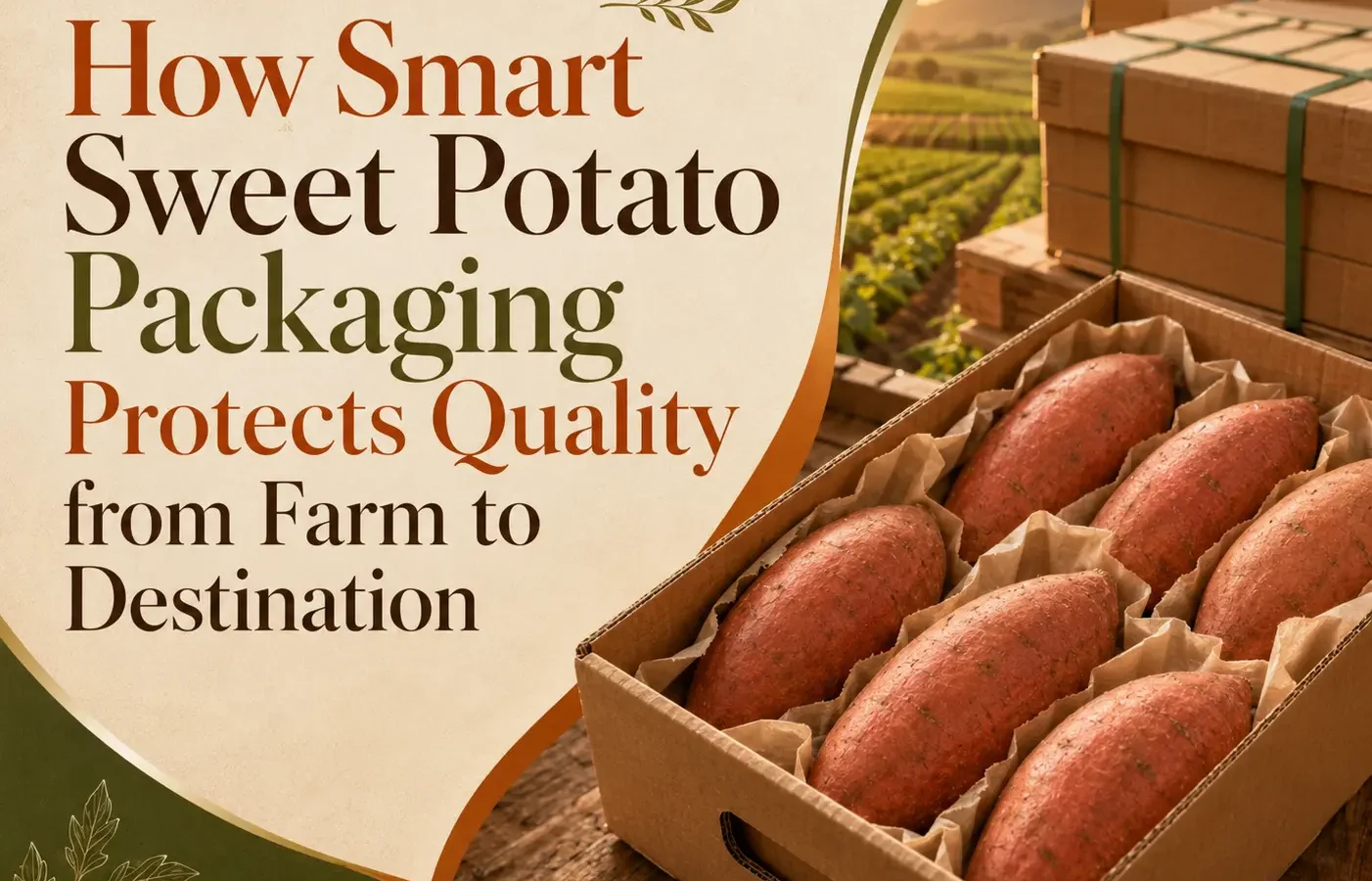
Effective sweet potato packaging does much more than hold the product during transport. It protects freshness, reduces the risk of bruising, supports ventilation, and helps sweet potatoes maintain their commercial quality from the packing facility to the final destination. For international buyers, the right packaging can influence shelf life, product presentation, and the overall value of every shipment.
This responsibility does not fall on packaging alone. An experienced sweet potato packer must understand how different sizes, order volumes, transport conditions, and destination markets affect the way products should be prepared. At the same time, dependable sweet potato suppliers need to combine careful handling with packaging formats that meet buyer specifications and protect the crop throughout storage and distribution. In this article, we will explore how smart packaging supports every stage of the export journey and how our packaging solutions help preserve quality until the shipment reaches its market.
Why Sweet Potato Packaging Matters
For fresh produce, packaging is much more than the final step before shipment, it is an essential part of preserving quality throughout the supply chain. From the moment sweet potatoes leave the packing facility until they arrive at their destination, the right packaging helps protect the product from damage, maintain its freshness, and ensure it reaches buyers in the best possible condition. For businesses involved in international trade, investing in effective sweet potato packaging is an important step toward delivering a consistent product and building customer confidence.
Packaging Protects Product Quality
Sweet potatoes pass through several handling stages before reaching retailers, wholesalers, or food-service businesses. Without suitable packaging, they are more vulnerable to bruising, pressure damage, and unnecessary product loss during transportation.
Well-designed packaging helps:
- Reduce physical damage during handling.
- Support proper ventilation throughout transit.
- Maintain product appearance.
- Protect sweet potatoes during storage and shipping.
These protective measures work alongside our quality standards to ensure every shipment meets the expectations of international buyers.
Freshness Starts with Proper Handling
Maintaining freshness begins long before products are loaded for export. Careful handling throughout sorting, grading, and packing helps preserve the natural quality of sweet potatoes while preparing them for long-distance transportation.
An experienced sweet potato packer focuses on:
- Gentle handling during packing.
- Careful product selection.
- Consistent grading before packaging.
- Proper preparation for export.
Together, these practices help maintain freshness and reduce unnecessary waste throughout the distribution process.
Packaging Supports Buyer Satisfaction
Packaging also plays an important role in the buyer’s experience. Products that arrive clean, uniform, and well protected are easier to inspect, store, and distribute, allowing wholesalers and retailers to operate more efficiently.
For international buyers, effective packaging contributes to:
- Better product presentation upon arrival.
- Greater consistency across shipments.
- Reduced handling losses.
- Increased confidence in their sweet potato suppliers.
When packaging is planned with both product protection and customer requirements in mind, it adds value throughout the entire supply chain, not just during transportation.
What Makes Professional Sweet Potato Packaging Effective?
Successful sweet potato packaging is designed to do more than prepare products for shipment. It must protect the crop throughout storage and transportation while preserving the freshness, appearance, and quality that buyers expect. Every decision, from the materials used to the way products are packed, plays a role in reducing damage and ensuring sweet potatoes arrive ready for wholesale distribution.
Choosing the Right Packaging Materials
Different export markets often have specific packaging requirements based on transportation methods, storage conditions, and customer preferences. Selecting the appropriate materials helps protect sweet potatoes while supporting efficient handling throughout the supply chain.
Effective packaging materials should:
- Provide adequate product protection.
- Withstand handling during transportation.
- Support ventilation where needed.
- Meet buyer and market specifications.
Using the right packaging from the beginning helps reduce unnecessary losses while maintaining the quality of every shipment.
Providing Proper Ventilation
Fresh produce continues to respond to its surrounding environment even after harvest. Proper airflow inside the packaging helps maintain product condition by reducing excess moisture and supporting stable storage throughout transportation.
Ventilation is especially important because it helps:
- Preserve product freshness.
- Reduce moisture build-up.
- Maintain overall product quality.
- Support longer transport periods.
The effectiveness of this stage also depends on harvesting at the right time. Understanding when to harvest sweet potatoes helps ensure the crop enters the packing process in the best possible condition for storage and export.
Protecting Products During Transport
Transportation exposes sweet potatoes to repeated handling and long travel distances. Professional packaging minimizes these risks by keeping products secure throughout every stage of the journey.
Well-designed packaging helps:
- Reduce bruising and physical damage.
- Keep products stable during transit.
- Maintain an attractive presentation upon arrival.
- Protect commercial value throughout distribution.
Together, these elements allow shipments to reach international buyers with the quality expected from premium Egyptian produce.
The Role of a Professional Sweet Potato Packer
Packing is one of the most important stages in the export process. A professional sweet potato packer does much more than place products into cartons, it ensures every shipment is carefully sorted, graded, inspected, and prepared according to the buyer’s requirements. This attention to detail helps maintain consistency while supporting smooth distribution across international markets.
Sorting Before Packing
Before sweet potatoes are packed, they are carefully sorted to remove products that do not meet export specifications. This creates more uniform shipments and ensures buyers receive products that match their agreed quality requirements.
Sorting focuses on:
- Overall appearance.
- Product condition.
- Shape and uniformity.
- Export suitability.
Careful selection at this stage improves consistency throughout the entire shipment.
Grading for Consistency
Grading helps organize sweet potatoes into consistent categories based on size and quality. Uniform grading makes packing more efficient while allowing wholesalers and retailers to receive products that are easier to market and distribute.
A structured grading process supports:
- Consistent shipment presentation.
- Accurate size classification.
- Better inventory planning for buyers.
- Reduced sorting after delivery.
These practices contribute to stronger customer confidence and more reliable wholesale supply.
Preparing Products for Export
Once products have been sorted and graded, they are prepared according to the specifications of each destination market. Packaging, labeling, and shipment preparation are carefully coordinated to help ensure a smooth export process.
Working closely with our export services, every shipment is prepared to meet international requirements while protecting product quality from the packing facility to its final destination. This coordinated approach allows sweet potato suppliers to deliver products that arrive safely, consistently, and ready for distribution.
How Sweet Potato Suppliers Maintain Packaging Standards
Effective packaging is built on consistency. International buyers expect every shipment to arrive with the same level of protection, presentation, and quality, regardless of order size or destination. This requires sweet potato suppliers to follow standardized packing procedures while remaining flexible enough to meet the specific requirements of different markets. By combining quality control with careful export preparation, suppliers can ensure that every shipment is packed to perform throughout the supply chain.
Following International Export Requirements
Every export market has its own standards for packaging, labeling, and product handling. Professional suppliers understand these requirements and prepare shipments accordingly to support smooth customs clearance and efficient distribution.
This includes:
- Using export-approved packaging materials.
- Following labeling requirements.
- Preparing products according to destination market standards.
- Meeting agreed buyer specifications.
These practices are one of the reasons that’s why Egypt is gaining ground in the sweet potato Italy market, as exporters continue to supply products that satisfy the quality and packaging expectations of international buyers.
Matching Customer Packaging Specifications
No two buyers have exactly the same packaging requirements. Retailers, wholesalers, and food-service distributors may request different carton sizes, product counts, labeling formats, or branding options depending on their operations.
A professional supplier works closely with customers to provide:
- Packaging formats suited to their market.
- Accurate product sizing.
- Customized labeling when required.
- Consistent presentation across every order.
Meeting these specifications helps buyers receive products that are ready for immediate distribution while reducing additional handling after arrival.
Maintaining Traceability and Quality Control
Reliable packaging standards depend on strong quality control throughout the packing process. Every shipment should be traceable from the field to the final packaged product, giving buyers greater confidence in product consistency and food safety.
Maintaining traceability helps:
- Monitor product quality.
- Support accurate shipment records.
- Improve consistency between orders.
- Strengthen long-term customer confidence.
By combining structured quality control with professional packing practices, suppliers can consistently deliver products that meet international wholesale expectations.
Common Packaging Challenges and How to Avoid Them
Packaging fresh produce for international markets comes with several challenges. Long transportation routes, repeated handling, and changing environmental conditions can all affect product quality if they are not carefully managed. Fortunately, many of these challenges can be minimized through proper planning, suitable packaging methods, and careful handling throughout the export process.
Preventing Bruising and Mechanical Damage
Sweet potatoes are handled multiple times before reaching their destination, making protection during packing and transportation essential. Even minor impacts can affect product appearance and reduce commercial value.
To minimize damage, exporters focus on:
- Gentle handling throughout packing.
- Strong, durable packaging materials.
- Proper product arrangement inside cartons.
- Secure loading during transportation.
These measures help preserve product quality from the packing facility to the buyer.
Reducing Moisture Build-Up During Shipping
Moisture accumulation during storage or transportation can affect product condition and shorten shelf life. Proper ventilation, suitable storage conditions, and careful packing all work together to reduce this risk.
These practices are most effective when they begin with healthy crops produced through proven agricultural methods. Understanding how to grow sweet potatoes using appropriate cultivation techniques helps create stronger, healthier roots that are better suited for storage, packing, and long-distance export.
Maintaining Consistency Across Every Shipment
Wholesale buyers expect every order to match the quality of previous deliveries. Consistency in packaging not only protects the product but also strengthens buyer confidence and supports long-term business relationships.
Maintaining this consistency requires:
- Standardized packing procedures.
- Uniform grading and sizing.
- Regular quality inspections.
- Continuous monitoring throughout preparation.
When these practices are applied consistently, packaging becomes an important part of delivering reliable sweet potato packaging solutions that support successful international trade.
Packaging Solutions for Different Export Markets
Every export market has its own packaging expectations. Retailers often focus on presentation and shelf appeal, while wholesalers prioritize efficiency, durability, and cost-effective transportation. To meet these varying requirements, sweet potato packaging should be flexible enough to accommodate different distribution channels without compromising product quality. Selecting the right packaging solution helps suppliers protect the crop, improve handling, and deliver products that match each buyer’s operational needs.
Retail Packaging Requirements
Retail-ready packaging is designed to protect sweet potatoes while presenting them in an attractive and organized way for consumers. The packaging should maintain freshness throughout transportation while making the products easy to display once they reach supermarket shelves.
Retail packaging often considers:
- Attractive product presentation.
- Appropriate pack sizes.
- Clear labeling.
- Protection during storage and handling.
The quality of the final product begins long before packing. Understanding how to farm sweet potatoes using proper cultivation practices helps produce healthier roots that maintain their appearance throughout the packaging and retail process.
Wholesale and Bulk Packaging Options
Wholesale customers typically require packaging that supports larger order volumes while protecting products during storage, transportation, and distribution. Durability and efficiency become just as important as presentation.
Bulk packaging solutions are designed to provide:
- Efficient pallet utilization.
- Protection during long-distance shipping.
- Easier warehouse handling.
- Consistent product organization.
An experienced sweet potato packer understands how to prepare bulk orders that balance product protection with logistical efficiency.
Customized Packaging for Buyer Needs
Every buyer operates differently, which is why packaging should be adaptable to individual market requirements. Some customers require specific carton dimensions, while others may request customized labeling or private branding.
Working closely with sweet potato suppliers allows buyers to customize packaging according to:
- Destination market requirements.
- Required carton sizes.
- Product count per package.
- Customer branding and labeling specifications.
Providing this level of flexibility helps buyers receive products that integrate smoothly into their existing distribution systems.
Why Farm Sweet Delivers Export-Ready Packaging
Export-ready packaging is the result of careful planning, experienced handling, and a commitment to quality at every stage of production. At Farm Sweet, packaging is treated as an essential part of the export process rather than the final step. From growing sweet potatoes under carefully managed conditions to preparing each shipment for international transportation, every stage is designed to protect product quality and support buyer satisfaction.
Careful Packing from Harvest to Shipment
Every shipment begins with carefully selected sweet potatoes that are sorted, graded, and packed according to international standards. Throughout this process, our team focuses on preserving freshness, minimizing handling damage, and maintaining consistency across every order.
Our packing process includes:
- Careful product selection.
- Accurate grading and sizing.
- Gentle handling throughout packing.
- Final inspection before shipment.
This attention to detail ensures products are prepared to perform throughout the export journey.
Flexible Packaging Options for Global Buyers
Different markets require different packaging solutions. Farm Sweet works closely with customers to provide packaging formats that match their operational requirements while maintaining product protection during transportation.
Our flexible packaging solutions support:
- Retail and wholesale markets.
- Bulk export orders.
- Customer-specific packaging requests.
- Market-specific labeling requirements.
This adaptability allows buyers to receive shipments prepared specifically for their business needs.
Quality That Travels with Every Shipment
Reliable packaging protects more than the product, it protects the confidence buyers place in every order. By combining professional packing practices with strict quality control, Farm Sweet helps ensure products arrive in excellent condition, ready for distribution.
As experienced sweet potato suppliers, we understand that successful sweet potato exports depend on consistency from harvest to delivery. That’s why every shipment is prepared with the same attention to quality, helping our partners build long-term confidence in every order they receive.
Final Thoughts: Packaging That Adds Value Beyond Protection
Effective packaging is about much more than protecting sweet potatoes during transportation. It plays a vital role in preserving freshness, maintaining product quality, supporting efficient handling, and ensuring products arrive ready for retail, wholesale, or food-service distribution. For international buyers, well-planned sweet potato packaging contributes to fewer losses, greater consistency, and a smoother supply chain from origin to destination.
Working with experienced sweet potato suppliers also means benefiting from professional packing processes that are tailored to the needs of different export markets. From selecting the right packaging materials to preparing products according to customer specifications, every detail helps protect the value of the shipment while strengthening buyer confidence. An experienced sweet potato packer understands that every market has unique requirements, and meeting those expectations is essential for building lasting business relationships.
At Farm Sweet, we believe packaging is an extension of the quality we produce in the field. Every shipment is carefully prepared to preserve freshness and meet international standards, ensuring our customers receive products they can rely on. If you’re looking for export-ready packaging solutions designed around your market requirements, contact our Farm Sweet team to discuss how we can support your next shipment with packaging that protects quality every step of the way.
FAQs: Sweet Potato Packaging
- Why is sweet potato packaging important?
Sweet potato packaging protects the produce during storage and transportation, helping maintain freshness, reduce damage, and ensure products arrive in excellent condition.
- What does a sweet potato packer do?
A sweet potato packer sorts, grades, and packs sweet potatoes according to commercial and export standards, ensuring each shipment meets customer specifications and quality requirements.
- How do sweet potato suppliers choose the right packaging?
Sweet potato suppliers consider factors such as the destination market, transportation method, customer requirements, and product size to select packaging that offers the best protection and presentation.
- What types of packaging are commonly used for sweet potato exports?
Depending on customer needs, sweet potatoes are commonly packed in ventilated cartons, mesh bags, or bulk packaging designed to protect the produce while allowing proper airflow during transport.
- How does proper packaging improve export quality?
Proper packaging reduces bruising, supports ventilation, maintains product quality throughout transit, and helps buyers receive fresh, market-ready sweet potatoes with minimal waste.