Successful growing sweet potatoes involves much more than planting a crop and waiting for harvest. The quality, appearance, storage performance, and market value of sweet potatoes are influenced by a series of decisions made throughout the entire growing season. From soil preparation and variety selection to irrigation management and harvest timing, every step plays a role in determining the final result.
Many growers focus heavily on yield, but high production alone does not guarantee success. Buyers increasingly look for sweet potatoes that offer consistent sizing, attractive appearance, strong shelf life, and reliable quality. This is why effective sweet potato cultivation requires careful attention to both crop development and post-harvest performance.
Understanding how sweet potatoes grow can help farmers identify the conditions that support healthy root formation and long-term crop consistency. Factors such as soil structure, moisture balance, nutrient availability, and environmental conditions all influence how the crop develops beneath the soil surface. Small improvements in these areas can often make a significant difference in overall harvest quality.
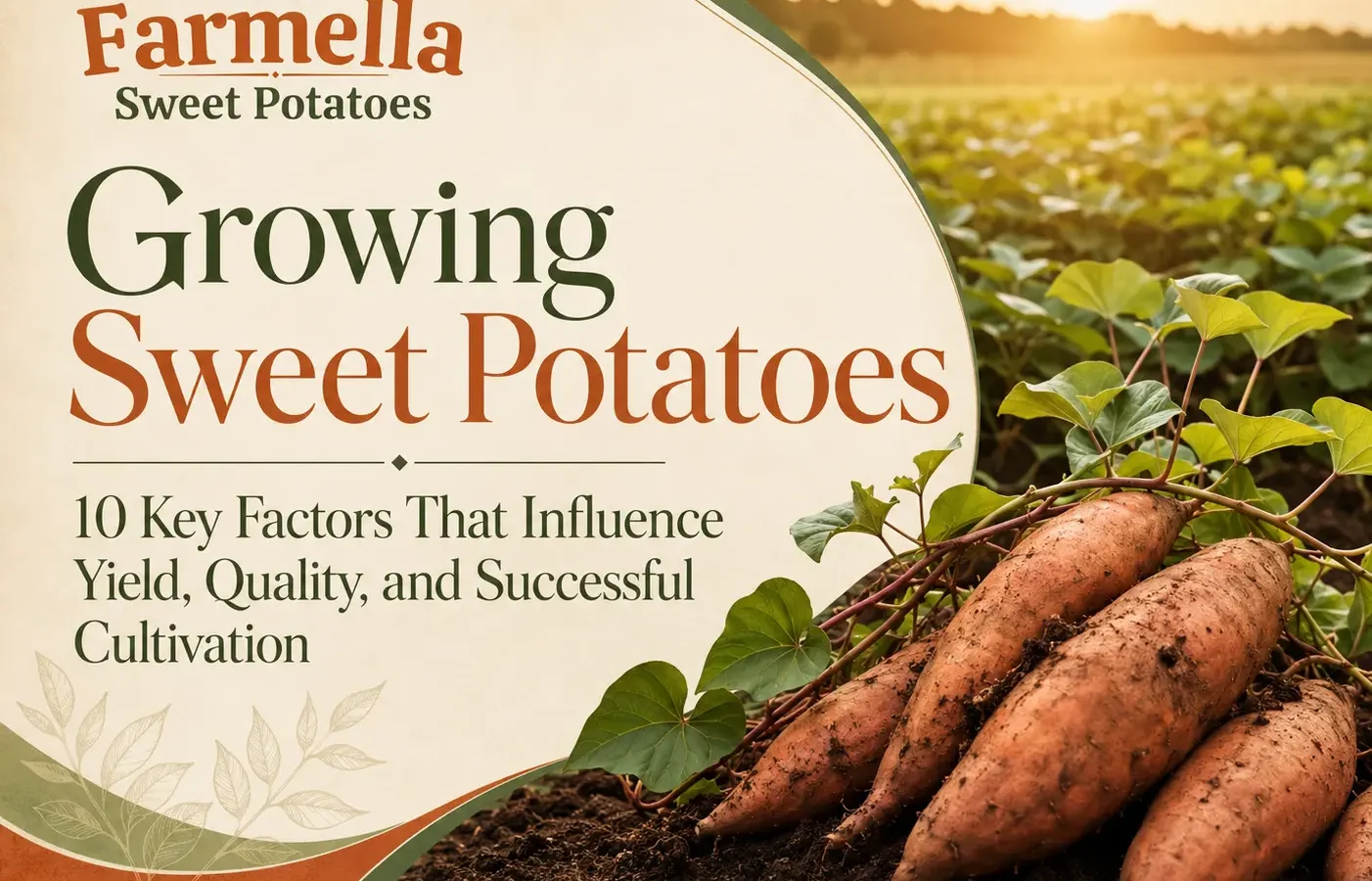
In this guide, we’ll explore ten key factors that influence successful growing sweet potatoes, from field preparation and irrigation to harvest management and storage practices. Whether you are new to sweet potato cultivation or looking to improve existing production methods, understanding these factors can help you achieve stronger harvests, better quality, and more consistent results throughout the season.
Understanding How Sweet Potatoes Grow
Successful growing sweet potatoes begins with understanding how the crop develops throughout the season. While sweet potatoes may seem simple to cultivate, their growth process is influenced by several environmental and management factors. From the moment planting begins until harvest, each stage contributes to root size, quality, and overall yield. This is why effective sweet potato cultivation requires growers to monitor crop development closely and provide the right conditions at the right time.
The Basic Growth Cycle of Sweet Potatoes
The sweet potato growth cycle starts when slips are planted in prepared soil. During the early stages, the plant focuses on developing roots and establishing healthy vines above the ground. As the season progresses, the roots begin to enlarge and store nutrients, eventually forming the sweet potatoes harvested later.
The growth cycle typically includes:
- Root establishment
- Vine development
- Root enlargement
- Maturity and harvest preparation
Understanding how sweet potatoes grow during each phase helps growers make better decisions regarding irrigation, nutrition, and crop management.
What Conditions Help Sweet Potatoes Grow Successfully
Several factors influence the success of sweet potato cultivation. Understanding the ideal sweet potato growing conditions helps growers create an environment that supports healthy root formation and long-term crop consistency. Warm temperatures, adequate sunlight, well-drained soil, and balanced moisture levels all contribute to healthy crop development.
Successful growing conditions often include:
- Loose, fertile soil
- Consistent moisture availability
- Good drainage
- Warm growing temperatures
- Proper field management
When these conditions are maintained, growers create an environment where sweet potatoes grow more consistently and develop stronger commercial quality.
Why Early Development Influences Final Yield
The first weeks after planting are often some of the most important. Strong early growth helps establish healthy roots and vigorous vines that support later crop development.
Early crop success can contribute to:
- Better root formation
- Improved nutrient uptake
- More consistent growth
- Higher potential yields
- Better harvest quality
For growers focused on growing sweet potatoes successfully, early field management often lays the foundation for the entire season’s results.
Factor #1: Choosing the Right Location for Sweet Potato Cultivation
Location is one of the first decisions that can influence the success of sweet potato cultivation. Even when growers use quality planting material and proper farming techniques, unsuitable environmental conditions can limit crop performance. The location determines how much sunlight the crop receives, the temperatures it experiences throughout the season, and how effectively roots can develop underground. For anyone focused on growing sweet potatoes, selecting the right growing environment creates the foundation for stronger yields and better-quality harvests. In fact, many resources explaining how to grow sweet potatoes identify location and climate as the first factors growers should evaluate before planting.
Why Climate Plays a Critical Role
Climate directly affects how sweet potato plants grow and mature. Sweet potatoes thrive in warm conditions and generally perform best when temperatures remain stable throughout the growing season.
Favorable climate conditions often provide:
- Longer growing periods
- Better root development
- Reduced environmental stress
- More consistent crop performance
- Improved harvest quality
These conditions allow sweet potatoes grow more efficiently while helping growers maintain consistency from planting through harvest. Regions with adequate sunlight and minimal temperature fluctuations often provide the best opportunities for successful production.
How Temperature Influences Root Development
Temperature plays a major role in the formation and enlargement of sweet potato roots. Warm soil encourages healthy growth, while prolonged periods of cold weather can slow development and reduce overall yield.
Proper temperature conditions help support:
- Faster root establishment
- More uniform root sizing
- Better nutrient uptake
- Improved crop vigor
- Higher yield potential
Understanding how sweet potatoes grow under different temperature conditions allows growers to make better planting decisions and reduce production risks. For successful growing sweet potatoes, choosing a location with suitable temperatures throughout the season is one of the most important factors influencing final crop quality.
Factor #2: Soil Conditions That Support Healthy Root Growth
Soil is one of the most important factors in sweet potato cultivation because the crop develops underground throughout most of its growth cycle. Even with favorable weather and proper irrigation, poor soil conditions can limit root expansion and reduce crop quality. Healthy soil helps create an environment where roots can develop evenly, absorb nutrients efficiently, and reach their full potential. Many of these benefits are similar to the well-known nile delta soil advantages that support strong root development and consistent crop performance. For growers focused on growing sweet potatoes, understanding soil characteristics is essential for achieving both higher yields and better market quality.
Why Well-Drained Soil Is Essential
Sweet potatoes require moisture to grow, but excessive water around the roots can create serious problems. Poor drainage often leads to waterlogged conditions that limit oxygen availability and increase the risk of root diseases.
Well-drained soil helps support:
- Healthier root development
- Better oxygen movement in the soil
- Reduced risk of root rot
- More consistent crop growth
- Improved harvest quality
These benefits create conditions where sweet potatoes grow more efficiently and maintain stronger commercial value throughout the season.
How Soil Structure Affects Sweet Potato Cultivation
The physical structure of the soil influences how easily roots can expand underground. Loose soil allows sweet potatoes to develop a more uniform shape, while compacted soil can restrict growth and create irregular root formation.
Good soil structure often contributes to:
- Better root expansion
- More uniform sizing
- Improved appearance
- Easier harvesting
- Higher market acceptance
For successful sweet potato cultivation, growers often focus on maintaining loose, fertile soil that promotes healthy root growth. Combined with proper moisture management, soil structure plays a major role in helping growing sweet potatoes result in stronger yields and more consistent crop quality.
Factor #3: Selecting the Right Variety for Your Goals
Not all sweet potatoes are the same. Different varieties are developed to offer specific characteristics related to size, appearance, sweetness, storage performance, and adaptability to growing environments. This is why variety selection is one of the most important decisions in sweet potato cultivation. Choosing the right variety helps growers align production with market requirements while improving the chances of achieving strong yields and consistent quality. Exploring different sweet potato varieties can help growers identify options that best suit their production goals and target markets. For anyone interested in growing sweet potatoes successfully, understanding the strengths of different varieties can make a significant difference throughout the season.
How Different Varieties Perform Under Different Conditions
Each variety responds differently to climate, soil conditions, irrigation practices, and growing seasons. Some varieties perform better in warmer environments, while others are selected for their storage stability or visual appeal. For example, Beauregard sweet potatoes are widely known for their consistent appearance, strong yields, and commercial reliability.
Factors that may influence variety performance include:
- Temperature conditions
- Soil type and structure
- Moisture availability
- Length of the growing season
- Resistance to environmental stress
Understanding how sweet potatoes grow under different conditions helps growers select varieties that are more likely to perform well in their specific production environment.
Why Variety Selection Impacts Marketability
Marketability is influenced by much more than yield alone. Buyers often look for sweet potatoes that meet specific requirements related to appearance, texture, flavor, and shelf life.
The right variety can help provide:
- More consistent sizing
- Better visual appearance
- Improved storage performance
- Greater buyer acceptance
- Higher commercial value
For growers focused on sweet potato cultivation, selecting varieties that match market expectations can improve profitability and reduce marketing challenges. When combined with proper field management, choosing the right variety helps ensure that growing sweet potatoes results in a crop that appeals to both local and international buyers.
Factor #4: Proper Planting Practices for Growing Sweet Potatoes
Even under favorable climate and soil conditions, planting mistakes can affect the performance of the crop throughout the entire season. Proper planting practices help create the foundation for healthy root development, efficient nutrient use, and strong yields. This is especially important for varieties such as Bellevue sweet potatoes, which benefit from uniform spacing and stable growing conditions. This is why experienced growers pay close attention to field layout, spacing, and planting techniques when growing sweet potatoes. Small adjustments at the beginning of the season can often have a significant impact on final crop quality and productivity.
Recommended Plant Spacing and Row Management
Plant spacing plays a major role in how effectively sweet potato plants use available resources. When plants have adequate space, they experience less competition for sunlight, water, and nutrients.
Good spacing and row management can help support:
- Better root development
- Improved airflow between plants
- More uniform crop growth
- Easier field maintenance
- Greater yield consistency
These practices create conditions where sweet potatoes grow more evenly throughout the season and develop stronger commercial quality. Proper row organization also helps improve irrigation efficiency and simplifies harvesting operations.
Common Planting Mistakes That Reduce Yield
Several planting mistakes can limit the success of sweet potato cultivation, even when other growing conditions are favorable. Overcrowding, uneven spacing, and poor field preparation often create challenges that affect crop performance later in the season.
Common mistakes include:
- Planting too closely together
- Using poorly prepared soil
- Inconsistent planting depth
- Poor irrigation planning
- Delayed field maintenance
Avoiding these issues helps improve crop establishment and supports healthier development from the earliest stages. For growers focused on growing sweet potatoes, proper planting practices are an important step toward achieving higher yields, better root quality, and more consistent harvest results.
Factor #5: Irrigation Management Throughout the Season
Water management is one of the most important aspects of sweet potato cultivation. Sweet potatoes require adequate moisture to support healthy growth, but the amount and timing of irrigation can significantly influence root development and final crop quality. Even when soil conditions and variety selection are ideal, poor irrigation practices can limit yield and reduce marketability. The reputation built through Egyptian sweet potato heritage reflects generations of farming experience that recognize the importance of proper water management. For growers focused on growing sweet potatoes, maintaining the right moisture balance throughout the season helps create stronger, more consistent harvests.
Why Consistent Moisture Supports Better Development
Sweet potatoes perform best when moisture levels remain relatively stable during their growth cycle. Consistent access to water allows plants to develop steadily without experiencing periods of excessive stress.
Proper moisture management helps support:
- Healthy root formation
- Improved nutrient absorption
- More uniform root sizing
- Better crop consistency
- Stronger yield potential
These conditions create an environment where sweet potatoes grow more efficiently and develop the characteristics buyers often look for in commercial markets. Consistency is especially important during periods of active root enlargement.
The Risks of Overwatering and Underwatering
Both excessive and insufficient irrigation can create challenges during sweet potato cultivation. Too much water may reduce oxygen availability around the roots, while too little moisture can slow development and affect crop quality.
Common irrigation-related problems include:
- Root rot and disease risks from overwatering
- Reduced root growth during dry periods
- Irregular root sizing
- Lower overall yields
- Reduced storage performance
Successful growing sweet potatoes requires monitoring soil moisture regularly and adjusting irrigation according to crop needs and environmental conditions. Maintaining a balanced approach helps protect crop health while supporting better quality and more reliable harvest results.
Factor #6: Nutrient Management During Sweet Potato Cultivation
Healthy crops require more than sunlight, water, and suitable soil conditions. Nutrients play a critical role in supporting plant growth, root development, and overall crop performance. This is why nutrient management is a key component of sweet potato cultivation. Providing the right nutrients at the appropriate stages of growth helps plants develop stronger root systems and maintain consistent growth throughout the season. For growers focused on growing sweet potatoes, balanced fertility programs can contribute directly to both yield and market quality.
Nutrients That Support Healthy Growth
Sweet potatoes rely on several essential nutrients to complete their growth cycle successfully. These nutrients support everything from vine development to root formation and overall plant health.
Important nutrients often help with:
- Root development and enlargement
- Leaf and vine growth
- Nutrient absorption efficiency
- Plant vigor throughout the season
- Overall crop productivity
When nutrient levels are properly managed, sweet potatoes grow more consistently and are better able to respond to changing environmental conditions. Regular soil monitoring can help growers identify nutrient needs before deficiencies affect crop performance.
How Balanced Fertility Improves Crop Quality
Balanced fertility is important because excessive or insufficient nutrients can negatively affect crop development. The goal is to support steady growth without encouraging conditions that reduce root quality.
Proper fertility management can contribute to:
- More uniform root sizing
- Improved crop consistency
- Better texture and appearance
- Higher yield potential
- Stronger market acceptance
For successful sweet potato cultivation, nutrient management should be viewed as a season-long process rather than a one-time application. When combined with proper irrigation and soil management, balanced fertility helps ensure that growing sweet potatoes results in healthier crops and more reliable harvest outcomes.
Factor #7: Managing Weeds, Pests, and Field Competition
Maintaining a healthy crop throughout the season requires more than proper soil preparation and irrigation. Weeds, pests, and excessive competition within the field can reduce crop performance and limit the effectiveness of other management practices. This is why early intervention is an important part of sweet potato cultivation. When growers address potential problems before they become widespread, plants can use available resources more efficiently and maintain stronger growth throughout the season. Effective field management helps protect both yield and crop quality while supporting more successful outcomes when growing sweet potatoes.
Why Early Field Management Matters
The early stages of crop development are often the most sensitive. During this period, young plants compete for sunlight, nutrients, water, and space. Uncontrolled weeds and other field issues can place unnecessary stress on developing crops.
Early management helps support:
- Stronger crop establishment
- Better nutrient availability
- Reduced competition for resources
- Healthier plant development
- Improved field uniformity
These conditions create an environment where sweet potatoes grow more consistently and are better able to reach their full production potential.
Preventing Yield Loss During the Growing Season
Yield loss often begins with small problems that are overlooked during the growing season. Regular field monitoring allows growers to identify issues early and respond before crop performance is affected.
Effective management practices can help reduce:
- Competition from weeds
- Crop stress caused by pests
- Uneven plant growth
- Reduced root development
- Quality-related harvest issues
Successful sweet potato cultivation depends on maintaining healthy field conditions from planting through harvest. By monitoring crops regularly and addressing challenges promptly, growers can protect yield potential and improve the chances of producing high-quality sweet potatoes that meet commercial market expectations.
Factor #8: Monitoring Crop Development Throughout the Season
Successful growing sweet potatoes requires ongoing observation throughout the growing season. Even when planting, irrigation, and nutrient management are handled correctly, changing environmental conditions can influence crop performance. Regular monitoring allows growers to track plant health, evaluate growth progress, and identify potential problems before they become serious. These quality management practices help growers maintain crop consistency and identify issues before they affect harvest performance. In many cases, early detection can help protect both yield and crop quality. This is why continuous field observation remains an essential part of effective sweet potato cultivation.
Signs of Healthy Sweet Potato Growth
Healthy crops typically show consistent development from planting through harvest. While growth rates may vary depending on environmental conditions, several indicators can help growers assess crop performance.
Signs of healthy growth often include:
- Strong vine development
- Uniform plant appearance
- Consistent leaf color
- Steady root enlargement
- Balanced growth across the field
When these conditions are present, sweet potatoes grow more efficiently and are more likely to achieve the quality standards expected in commercial markets. Regular inspections help confirm that the crop remains on track throughout the season.
Identifying Problems Before They Affect Yield
Many production challenges begin gradually and may not be immediately visible. Monitoring the field frequently helps growers identify issues before they significantly affect crop performance.
Regular observation can help detect:
- Nutrient deficiencies
- Moisture-related stress
- Uneven plant growth
- Pest or disease activity
- Environmental damage
Addressing these concerns early supports healthier crop development and helps maintain consistency throughout the field. For growers focused on sweet potato cultivation, proactive monitoring is one of the most effective ways to reduce risks and improve the chances of achieving successful results when growing sweet potatoes.
Factor #9: Harvest Timing and Crop Maturity
Harvest is one of the most important stages in sweet potato cultivation because it determines whether the crop reaches the market with its full quality potential. Even when growing conditions have been favorable throughout the season, harvesting too early or too late can affect root size, appearance, storage performance, and overall value. This is why growers pay close attention to crop maturity before beginning harvest operations. Understanding when to harvest sweet potatoes is essential for protecting both crop quality and storage performance. Understanding how sweet potatoes grow and mature helps farmers make better decisions that protect both yield and quality.
How Growers Know When Sweet Potatoes Grow to Full Maturity
Crop maturity is influenced by variety, climate, and growing conditions. While maturity periods can vary, growers often monitor several indicators to determine whether the crop is ready for harvest.
Common signs of maturity include:
- Adequate root sizing
- Healthy root development
- Consistent crop appearance
- Completion of the expected growing period
- Stable field conditions
By tracking these indicators, growers can better understand when sweet potatoes grow to their full potential and are ready to be harvested. Proper timing helps maximize both yield and market quality.
Why Harvest Timing Affects Storage Performance
Harvest timing has a direct impact on how well sweet potatoes perform after they leave the field. Roots that are harvested at the appropriate stage generally handle storage and transportation more effectively.
Proper harvest timing can contribute to:
- Better skin quality
- Improved storage performance
- Reduced risk of physical damage
- Greater shelf life
- Higher market acceptance
For successful growing sweet potatoes, harvest decisions should be based on crop maturity rather than convenience alone. When combined with good post-harvest practices, proper timing helps ensure that sweet potato cultivation results in a product that maintains its quality throughout storage, distribution, and final sale.
Factor #10: Post-Harvest Practices That Protect Crop Quality
Producing a healthy crop is only part of the journey. Once sweet potatoes are harvested, the way they are handled and stored becomes just as important as the growing process itself. Poor post-harvest management can reduce quality, shorten shelf life, and lower market value, even after a successful season of growing sweet potatoes. This is why post-harvest practices play a critical role in protecting the results of months of field work. Effective handling and storage help ensure that the benefits of proper sweet potato cultivation continue long after harvest. These efforts are strengthened by professional packaging solutions that help protect sweet potatoes during transportation and distribution.
Handling Sweet Potatoes After Harvest
Freshly harvested sweet potatoes are vulnerable to bruising, cuts, and other forms of physical damage. Careful handling helps preserve their appearance and maintain their commercial quality.
Good handling practices often include:
- Minimizing unnecessary movement
- Reducing physical impacts during transport
- Sorting and grading crops carefully
- Removing damaged roots when necessary
- Protecting crops from excessive environmental exposure
These practices help ensure that sweet potatoes grow into a market-ready product that retains its quality from the field to the buyer.
Storage Conditions That Preserve Quality
Storage plays a major role in maintaining sweet potato quality after harvest. Appropriate conditions help slow quality deterioration and support longer shelf life.
Proper storage can help provide:
- Better moisture retention
- Reduced quality loss
- Improved appearance over time
- Stronger storage performance
- Greater market flexibility
For growers focused on sweet potato cultivation, storage should be viewed as an extension of the production process rather than a separate stage. When combined with careful handling, effective storage practices help protect the value of the crop and maximize the benefits of growing sweet potatoes throughout the supply chain.
Common Challenges in Growing Sweet Potatoes
Even with proper planning and management, growers often face challenges that can affect crop performance throughout the season. Environmental conditions, soil variability, moisture fluctuations, and other external factors can influence both yield and quality. Understanding these risks is an important part of growing sweet potatoes successfully. While many challenges cannot be completely avoided, early planning and consistent field management can help reduce their impact. This is why experienced growers view risk management as an essential component of effective sweet potato cultivation.
Environmental Factors That Affect Production
Sweet potatoes are influenced by the conditions surrounding them throughout the growing season. Changes in weather or field conditions can create stress that affects crop development and final harvest quality.
Common environmental challenges include:
- Extended periods of drought
- Excessive rainfall
- Temperature fluctuations
- Poor drainage conditions
- Soil-related limitations
These factors can influence how sweet potatoes grow, affecting root formation, crop consistency, and overall productivity. Monitoring environmental conditions regularly allows growers to respond more effectively when challenges arise.
How Growers Reduce Quality and Yield Risks
Successful growers focus on prevention whenever possible. By maintaining strong management practices throughout the season, many common risks can be minimized before they affect crop performance.
Risk reduction strategies often include:
- Regular field inspections
- Proper irrigation management
- Balanced nutrient programs
- Timely weed and pest control
- Careful harvest planning
For successful sweet potato cultivation, consistency is often the best defense against unexpected challenges. By addressing issues early and maintaining healthy growing conditions, growers can improve their chances of achieving strong yields and high-quality results when growing sweet potatoes throughout the season.
Why Successful Sweet Potato Cultivation Depends on the Entire Production Cycle
Many people associate crop success with a single factor such as soil quality, irrigation, or harvest timing. In reality, successful sweet potato cultivation is the result of multiple stages working together throughout the season. Every decision, from field preparation to post-harvest handling, contributes to the final quality, yield, and market value of the crop. Many of the recognized Egyptian sweet potato benefits are the result of this complete production approach rather than a single farming factor. This is why experienced growers view production as a continuous process rather than a series of separate tasks. For anyone focused on growing sweet potatoes, understanding how these stages connect is essential for achieving consistent results year after year.
Connecting Soil, Water, Climate, and Harvest Management
Sweet potatoes depend on a balance of environmental and management factors throughout their development. When one area is neglected, overall crop performance can suffer even if other conditions are favorable.
Key factors that work together include:
- Soil structure and fertility
- Moisture management
- Climate conditions
- Nutrient availability
- Harvest timing
These elements influence how sweet potatoes grow, affecting root development, crop consistency, and storage performance. Managing them as part of a complete production system helps support healthier crops and stronger harvest outcomes.
Building Long-Term Consistency in Sweet Potato Production
Consistency is one of the most valuable goals in commercial farming. Buyers often expect reliable quality, predictable supply, and uniform products across multiple seasons.
Long-term consistency is supported by:
- Careful planning before planting
- Regular crop monitoring
- Timely management decisions
- Proper harvest practices
- Effective post-harvest handling
Successful sweet potato cultivation depends on maintaining attention to detail throughout the entire season. By treating every stage as part of a connected production cycle, growers can improve both yield and quality while increasing the likelihood of long-term success when growing sweet potatoes.
Why Choose Farm Sweet?
Finding a supplier is easy. Finding a supplier that consistently delivers quality, reliability, and professional support is much more difficult. At Farm Sweet, we understand that successful sweet potato cultivation requires attention to detail at every stage of production. From field preparation and crop management to harvesting and export preparation, our focus is on producing sweet potatoes that meet the expectations of local and international buyers. By combining agricultural expertise with quality-focused practices, we help ensure that every season of growing sweet potatoes results in products that are ready for commercial markets.
Expertise in Sweet Potato Cultivation
Years of experience play an important role in agricultural success. Farm Sweet applies proven farming knowledge and practical field management techniques to support healthy crop development throughout the season.
Our expertise includes:
- Field preparation and crop planning
- Irrigation and nutrient management
- Monitoring crop development
- Harvest and post-harvest practices
- Consistent quality control
This experience helps ensure that sweet potatoes grow under conditions that support strong yields and reliable quality.
Quality-Focused Growing Practices
Quality begins long before harvest. Every stage of production contributes to the final appearance, texture, and market performance of the crop.
Our approach focuses on:
- Maintaining healthy soil conditions
- Supporting balanced crop development
- Monitoring fields throughout the season
- Protecting quality during harvest
- Preserving freshness after harvest
These practices help strengthen the results of sweet potato cultivation while supporting long-term crop consistency.
Reliable Supply and Export Support
Buyers need more than quality products. They also require dependable supply and efficient export processes. Our professional export services help customers receive products efficiently while maintaining quality throughout the supply chain.
Farm Sweet supports customers through:
- Reliable seasonal availability
- Professional export preparation
- Consistent communication
- Flexible supply solutions
This helps ensure smooth transactions and dependable product delivery. If you would like to learn more about our products, growing practices, or supply capabilities, you can contact our Farm Sweet team for additional information and support.
Commitment to Consistent Crop Quality
Consistency is one of the most important factors in commercial agriculture. Our goal is to maintain high standards throughout every season of growing sweet potatoes.
By combining experience, careful management, and quality-focused production methods, Farm Sweet continues helping customers receive sweet potatoes that meet market expectations while supporting long-term business relationships.
Final Thoughts: Growing Sweet Potatoes Successfully Starts with Strong Foundations
Successful growing sweet potatoes is the result of many decisions working together throughout the season. While factors such as climate, soil, irrigation, and variety selection each play an important role, long-term success comes from managing the entire production cycle as a connected process. From planting and crop monitoring to harvesting and storage, every stage influences the final quality, yield, and market value of the crop. This is why experienced growers focus not only on production volume but also on consistency, efficiency, and overall crop performance.
Why Every Stage of Sweet Potato Cultivation Matters
Each phase of sweet potato cultivation contributes to the development of healthy roots and high-quality harvests. Strong soil conditions support early growth, balanced irrigation promotes root development, and proper harvest timing helps protect storage performance.
When growers pay attention to every stage, they often achieve:
- Better crop consistency
- Improved root quality
- Higher market acceptance
- Stronger storage performance
- More reliable harvest results
Understanding how sweet potatoes grow throughout the season allows growers to make better management decisions and respond more effectively to changing field conditions.
How Better Growing Practices Lead to Better Results
The most successful growers understand that quality is built over time. Small improvements in field preparation, irrigation management, nutrient planning, and crop monitoring can have a significant impact on final results.
Better practices often lead to:
- Stronger yields
- More uniform harvests
- Reduced production risks
- Improved product quality
- Greater long-term profitability
Ultimately, successful growing sweet potatoes begins with strong foundations and consistent management. By approaching sweet potato cultivation as a complete production system, growers can create the conditions that help sweet potatoes grow more efficiently while delivering the quality and reliability that modern markets expect.
FAQs: What Growers Should Know Before Growing Sweet Potatoes
- How long does it take for sweet potatoes to grow?
Most sweet potato varieties require approximately 90–150 days to reach maturity, depending on climate and growing conditions.
- What type of soil is best for sweet potato cultivation?
Sweet potatoes grow best in loose, well-drained soil that allows roots to expand freely and develop uniform shapes.
- How often should sweet potatoes be watered?
They need consistent moisture during development, but excessive watering can increase the risk of poor root quality and disease.
- What factors affect sweet potato yield the most?
Soil quality, climate, irrigation management, nutrient availability, variety selection, and harvest timing all influence yield.
- Why is harvest timing important when growing sweet potatoes?
Harvesting at the correct stage helps improve storage performance, root quality, appearance, and overall market value.