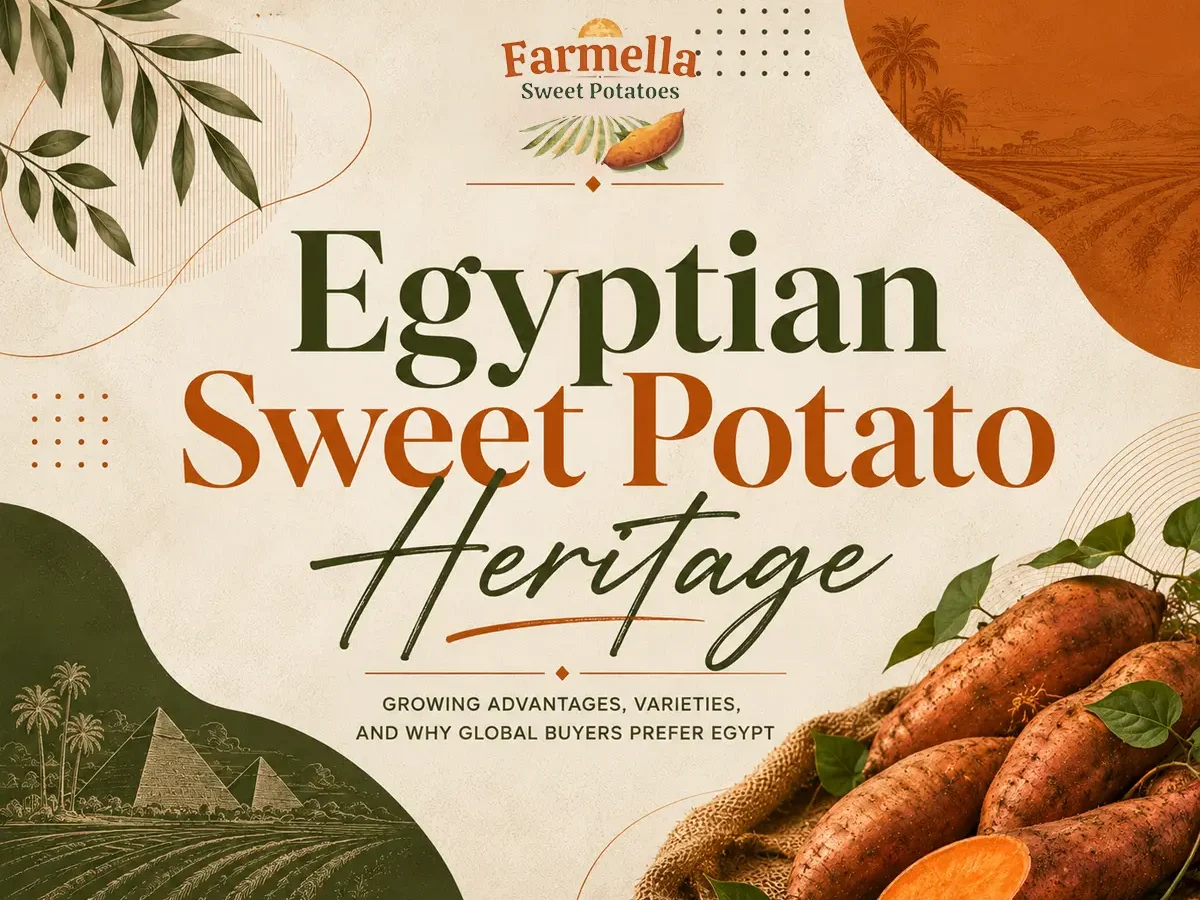
The story of Egyptian sweet potato heritage is about much more than history. It is a combination of favorable growing conditions, farming experience, crop selection, and the ability to consistently produce sweet potatoes that meet the expectations of local and international markets. Over the years, Egypt has developed a strong reputation for producing high-quality sweet potatoes that are valued for their appearance, texture, sweetness, and reliability.
Today, global buyers are paying closer attention to the factors behind sweet potato quality. From soil and climate advantages to the different varieties of sweet potatoes available for commercial production, every stage of cultivation plays a role in shaping the final product. Egypt also shares several agricultural characteristics with other African sweet potato producing regions, while maintaining unique advantages that support export success.
In this article, we’ll explore what defines Egyptian sweet potato heritage, the growing advantages behind Egyptian production, the different varieties available, and why buyers around the world continue choosing Egypt as a trusted source of sweet potatoes.
What Egyptian Sweet Potato Heritage Means in Modern Agriculture
When people hear the term Egyptian sweet potato heritage, they often think about tradition and long-standing farming practices. While history is certainly part of the story, heritage in modern agriculture means much more. Today, it reflects the combination of environmental advantages, farming knowledge, and production systems that continue shaping sweet potato quality across Egypt.
How Egypt Built Its Reputation in Sweet Potato Production
Egypt’s reputation as a sweet potato producer did not develop overnight. Over many years, growers refined cultivation practices and adapted them to local conditions, creating a production system capable of meeting both domestic and international demand.
Several factors helped build this reputation:
- Favorable growing conditions throughout the season
- Experience gained across generations of farming
- Increasing focus on export-quality production
- Consistent crop performance across different markets
As global demand increased, buyers began paying closer attention to product origin. This allowed Egypt to strengthen its position alongside other African sweet potato producing regions while developing its own identity in international markets.
Why Heritage Still Influences Crop Quality Today
Heritage continues to influence modern production because many successful farming practices are based on years of field experience. While technology and production methods have evolved, growers still rely on proven techniques that support crop consistency and quality.
Today, the value of Egyptian sweet potato heritage can be seen through:
- Better understanding of local growing conditions
- Improved crop management practices
- Reliable production of export-quality sweet potatoes
- Careful selection among the different varieties of sweet potatoes grown for commercial markets
This combination of experience and innovation helps Egyptian growers maintain the quality standards that global buyers continue looking for today.
The Growing Advantages Behind Egyptian Sweet Potatoes
The quality of a sweet potato is influenced long before it reaches storage facilities, packaging centers, or international markets. Much of that quality is shaped in the field through a combination of soil conditions, climate, and farming expertise. These sweet potato growing conditions influence root development, shelf life, and overall commercial quality. These factors are some of the strongest reasons why Egyptian sweet potato heritage continues to attract attention from buyers around the world. While many regions produce sweet potatoes, Egypt benefits from a unique combination of natural and agricultural advantages that support consistent production.
Why Egyptian Soil Supports Strong Root Development
Healthy root development is one of the most important factors affecting sweet potato quality. Egyptian agricultural regions contain soil conditions that allow roots to expand more freely underground, helping sweet potatoes develop a more uniform shape and appearance.
Strong root development often contributes to:
- More consistent sizing across harvests
- Better skin quality and smoother appearance
- Reduced deformities and irregular growth
- Improved marketability for export buyers
These advantages help Egyptian producers compete successfully alongside other African sweet potato growing regions while maintaining high-quality standards.
How Climate Influences Sweetness, Texture, and Shelf Life
Climate plays a major role in determining the characteristics buyers notice most. Warm temperatures and long growing seasons allow sweet potatoes to mature gradually, supporting balanced development throughout the crop cycle.
These conditions help improve:
- Natural sweetness
- Internal texture consistency
- Root density and quality
- Shelf-life performance after harvest
As a result, many of the different varieties of sweet potatoes grown in Egypt develop qualities that are highly valued in both retail and wholesale markets.
The Role of Farming Experience in Consistent Production
Natural advantages alone are not enough to produce reliable crops year after year. Experienced growers play a critical role in maintaining quality throughout the production process.
Years of farming knowledge help growers:
- Manage irrigation effectively
- Monitor crop development closely
- Select suitable planting and harvesting periods
- Maintain consistency across growing seasons
This combination of environmental advantages and practical expertise continues to strengthen Egyptian sweet potato heritage, helping growers deliver sweet potatoes that meet the expectations of modern global markets.
Different Varieties of Sweet Potatoes Grown in Egypt
Not all sweet potatoes are the same. Different varieties are developed and selected to meet specific market requirements, consumer preferences, and growing conditions. This is one reason why buyers often pay close attention to variety selection before placing orders. A key part of Egyptian sweet potato heritage is the ability to cultivate multiple varieties that serve different commercial purposes while maintaining consistent quality standards.
Why Variety Selection Matters for Buyers
For importers, wholesalers, and retailers, choosing the right variety can influence everything from customer satisfaction to storage performance. Different markets often prioritize different characteristics depending on their needs.
Buyers commonly evaluate varieties based on:
- Size and shape consistency
- Skin and flesh color
- Sweetness level
- Texture after cooking
- Shelf-life performance
Understanding these factors helps buyers select products that align with their target markets. Similar considerations are also important across many African sweet potato producing regions, where market preferences can vary significantly.
Characteristics That Differentiate Sweet Potato Varieties
Each variety offers a unique combination of qualities. Some are known for their sweeter flavor, while others are preferred for their appearance, storage stability, or processing suitability.
Common characteristics used to differentiate varieties include:
- External skin color
- Internal flesh color
- Moisture content
- Root shape and uniformity
- Storage and transportation performance
These differences explain why the different varieties of sweet potatoes available in Egypt can serve a wide range of commercial applications, from fresh produce markets to food processing industries.
Which Varieties Are Most Popular in Export Markets
Export markets often favor varieties that combine attractive appearance with reliable storage performance. Buyers typically look for products that maintain quality throughout transportation and display well on retail shelves.
Popular export varieties are usually valued for:
- Uniform sizing and shape
- Smooth skin quality
- Balanced sweetness and texture
- Strong shelf-life performance
Varieties such as beauregard sweet potatoes are often preferred because they combine these qualities with reliable appearance, balanced flavor, and strong market acceptance.
By producing multiple export-ready varieties, Egyptian growers continue strengthening the reputation of Egyptian sweet potato heritage while meeting the changing demands of international markets.
How Egyptian Sweet Potatoes Compare with African Sweet Potato Production
Sweet potatoes are grown across many parts of Africa, making the continent one of the world’s important production regions for this crop. Countries throughout Africa benefit from warm climates and long growing seasons that support sweet potato cultivation. However, while many regions share similar environmental conditions, differences in farming systems, infrastructure, and export capabilities can significantly influence final crop quality. Understanding these similarities and differences helps explain why Egyptian sweet potato heritage has gained recognition in international markets.
Similar Growing Conditions Across the Region
Many African sweet potato producing countries benefit from natural conditions that support healthy crop development. Warm temperatures, sufficient sunlight, and suitable growing seasons create an environment where sweet potatoes can thrive.
Some common advantages shared across the region include:
- Favorable temperatures for root development
- Long growing periods during the season
- Strong agricultural experience with root crops
- Increasing interest in export-oriented production
These conditions help support the cultivation of the different varieties of sweet potatoes grown throughout Africa, allowing producers to serve both local and international markets.
What Makes Egyptian Production Stand Out
While Egypt shares many environmental advantages with other African producers, several factors help distinguish its sweet potato industry. Years of export experience, established supply chains, and a strong focus on quality management have helped strengthen Egypt’s position in global markets.
Key advantages often include:
- More developed export infrastructure
- Consistent quality control practices
- Reliable production and supply schedules
- Strong focus on storage and post-harvest handling
In addition, growers continue building on the strengths of Egyptian sweet potato heritage by combining farming experience with modern production methods. This balance helps maintain the consistency, appearance, and shelf-life performance that many international buyers prioritize when sourcing sweet potatoes from Egypt.
Why Global Buyers Prefer Egyptian Sweet Potatoes
In competitive international markets, buyers rarely choose suppliers based on price alone. They look for products that can consistently meet quality expectations while arriving on time and maintaining their condition throughout transportation. This is where many advantages associated with Egyptian sweet potato heritage become particularly important. Through a combination of favorable growing conditions, production experience, and export-focused practices, Egypt has become a preferred sourcing destination for many importers around the world. These advantages are closely connected to the wider Egyptian sweet potato benefits that buyers consider when comparing supply origins.
Consistent Quality Across Seasons
One of the biggest concerns for buyers is consistency. Retailers, wholesalers, and food service businesses need products that maintain similar quality standards from one shipment to the next.
Egyptian sweet potatoes are often valued for:
- Consistent sizing and shape
- Reliable skin quality
- Balanced sweetness and texture
- Uniform appearance across harvests
This consistency helps buyers reduce uncertainty and maintain stable product standards throughout the year. Many of the different varieties of sweet potatoes grown in Egypt are selected specifically because they perform reliably under local growing conditions.
Reliable Supply and Export Readiness
Reliable supply is just as important as product quality. Buyers need confidence that orders can be fulfilled according to schedule, especially during peak demand periods.
Several factors support Egypt’s export readiness:
- Established export networks
- Organized production systems
- Experience serving international markets
- Efficient handling and logistics processes
Compared with some other African sweet potato producing regions, Egypt has developed strong export capabilities that help simplify the sourcing process for international buyers.
Strong Storage and Transportation Performance
Sweet potatoes often travel long distances before reaching their final destination. Because of this, storage stability and transportation performance play a major role in purchasing decisions.
Buyers frequently prioritize products that offer:
- Good shelf-life performance
- Reduced risk of damage during transport
- Stable texture and appearance after shipping
- Reliable storage quality throughout distribution
These qualities continue to strengthen the reputation of Egyptian sweet potato heritage, helping Egyptian sweet potatoes remain a trusted choice in global markets.
How Different Varieties of Sweet Potatoes Serve Different Markets
Not every market is looking for the same type of sweet potato. For example, bellevue sweet potatoes are often valued in markets where consistency, storage performance, and uniform presentation matter. Retailers, wholesalers, food manufacturers, and consumers often have different expectations regarding size, appearance, texture, and shelf life. This is one reason variety selection plays such an important role in commercial production. A major strength of Egyptian sweet potato heritage is the ability to grow and supply different varieties that meet the needs of multiple market segments while maintaining consistent quality standards.
Retail and Wholesale Requirements
Retail and wholesale buyers often focus heavily on appearance and consistency because these characteristics directly influence purchasing decisions. Products displayed on supermarket shelves or sold in bulk markets need to meet specific quality expectations.
Common requirements include:
- Uniform sizing and shape
- Smooth and attractive skin appearance
- Consistent color and texture
- Good shelf-life performance
The availability of different varieties of sweet potatoes allows suppliers to serve a wider range of customers, from local retailers to large international distributors.
Food Processing and Manufacturing Uses
Food processors often evaluate sweet potatoes differently than fresh produce buyers. Their focus is usually on performance during production rather than appearance alone.
Manufacturers may prioritize:
- Consistent internal texture
- Stable moisture content
- Reliable sweetness levels
- Processing efficiency
These requirements influence which varieties are selected for frozen foods, prepared meals, snacks, and other processed products. Similar considerations can also be found throughout many African sweet potato production systems that serve industrial markets.
Consumer Preferences Across Markets
Consumer preferences vary from one market to another. Some buyers prefer sweeter varieties, while others prioritize texture, cooking performance, or visual appearance.
Preferences often depend on:
- Cultural food habits
- Cooking methods
- Retail presentation standards
- Product availability
By cultivating multiple varieties and responding to changing market trends, growers continue strengthening Egyptian sweet potato heritage while supplying sweet potatoes that meet the diverse expectations of consumers around the world.
Quality Standards That Support Egypt’s Global Reputation
Building a strong reputation in international markets requires more than favorable growing conditions. Buyers expect consistent quality from planting through delivery, and suppliers must maintain standards at every stage of production. This is one reason Egyptian sweet potato heritage continues to earn recognition among global buyers. A combination of careful field management, responsible harvesting practices, and professional export preparation helps ensure that sweet potatoes arrive in excellent condition and meet market expectations.
Field Management and Harvesting Practices
Quality begins in the field. Throughout the growing season, farmers monitor crop development closely to support healthy root formation and maintain consistency across harvests.
Important field management practices often include:
- Monitoring irrigation and soil conditions
- Controlling weeds and field competition
- Tracking crop development throughout the season
- Selecting the appropriate harvesting period
Harvest timing is especially important because it can directly affect texture, appearance, and storage performance. Many of the different varieties of sweet potatoes grown in Egypt require careful timing to achieve their full market potential.
Proper harvesting practices also help:
- Reduce bruising and physical damage
- Protect skin quality
- Improve storage performance
- Maintain commercial appearance
Packaging, Handling, and Export Preparation
After harvest, careful handling becomes essential for preserving quality. Even high-quality sweet potatoes can lose value if they are not prepared properly for storage and transportation.
Key post-harvest priorities include:
- Careful sorting and grading
- Appropriate packaging methods
- Controlled storage conditions
- Protection during transportation
These procedures help maintain product quality throughout the supply chain while reducing the risk of damage. Similar quality goals exist across many African sweet potato export operations, but Egypt’s established export systems have helped strengthen buyer confidence over time.
By combining strong field practices with professional handling and export preparation, producers continue reinforcing the reputation of Egyptian sweet potato heritage in international markets.
The Future of Egyptian Sweet Potato Heritage in Global Agriculture
As global food markets continue evolving, producers face increasing pressure to deliver products that combine quality, consistency, sustainability, and reliable supply. While agriculture is constantly changing, the strengths behind Egyptian sweet potato heritage continue providing a solid foundation for future growth. The challenge is not simply maintaining production levels but preserving the qualities that have helped Egyptian sweet potatoes earn recognition in international markets while adapting to new buyer expectations.
Preserving Traditional Strengths
Many of the advantages associated with Egyptian sweet potato production come from years of farming experience and a deep understanding of local growing conditions. These strengths remain valuable even as technology and agricultural practices continue advancing.
Key traditional advantages include:
- Knowledge passed through generations of growers
- Strong understanding of local soil and climate conditions
- Proven cultivation and harvesting practices
- Experience producing export-quality crops
These foundations help maintain consistency across growing seasons while supporting the cultivation of the different varieties of sweet potatoes demanded by modern markets.
Preserving these strengths allows growers to continue building on the success of Egyptian sweet potato heritage while maintaining the quality standards buyers have come to expect.
Meeting Modern Market Expectations
Today’s buyers expect more than good-looking products. They increasingly focus on supply reliability, quality assurance, traceability, and long-term partnerships with trusted suppliers.
Modern market expectations often include:
- Consistent product quality
- Reliable year-to-year supply
- Professional export preparation
- Efficient logistics and communication
These expectations are influencing sweet potato industries worldwide, including many African sweet potato producing regions that continue expanding their presence in global trade.
By combining traditional farming strengths with modern production systems, Egyptian growers are well positioned to meet future market demands. This balance between experience and innovation will continue helping Egypt strengthen its reputation as a trusted source of high-quality sweet potatoes for international buyers.
Why Choose Farm Sweet for Egyptian Sweet Potatoes?
Finding a supplier is easy. Finding a supplier that can consistently deliver quality, reliability, and professional support is much more challenging. At Farm Sweet, we combine the strengths of Egyptian sweet potato heritage with modern production and export practices to help buyers receive products that meet their expectations season after season. Our focus is not only on growing sweet potatoes but also on building long-term partnerships based on trust, consistency, and dependable service.
Consistent Quality Rooted in Egyptian Sweet Potato Heritage
Quality begins long before harvest. Our production approach is built on proven farming knowledge, careful crop management, and a strong understanding of local growing conditions.
We focus on:
- Consistent crop quality across harvests
- Careful monitoring throughout the growing season
- Reliable sizing, appearance, and texture
- Export-ready sweet potatoes that meet market requirements
By combining traditional agricultural expertise with modern production methods, we continue supporting the reputation of Egyptian sweet potato heritage in international markets.
Access to Different Varieties of Sweet Potatoes
Every market has different requirements. Some buyers prioritize sweetness and appearance, while others focus on storage performance, processing suitability, or specific size ranges.
Farm Sweet supplies different varieties of sweet potatoes to serve a wide range of commercial needs, including:
- Retail markets
- Wholesale distribution
- Food service businesses
- Food processing operations
This flexibility allows buyers to source products that align with their market demands and customer preferences.
Reliable Export, Packaging, and Supply Support
Successful exports require much more than quality production. Products must be handled, packed, and prepared carefully to maintain their condition throughout transportation.
Our export support includes:
- Professional sorting and grading
- Export-focused packaging solutions
- Careful handling and storage procedures
- Reliable shipment preparation and coordination
These systems help ensure products arrive in excellent condition regardless of destination.
A Trusted Partner for Long-Term Buyers
At Farm Sweet, we believe successful business relationships are built on consistency and communication. Buyers need confidence that their supplier can deliver quality products while providing dependable support throughout the process.
That commitment has helped us serve customers seeking premium Egyptian sweet potatoes as well as buyers sourcing products from the wider African sweet potato market. By prioritizing reliability, transparency, and long-term cooperation, we aim to become a trusted partner for businesses looking for sustainable supply solutions.
To discuss varieties, export support, or supply options, contact our Farm Sweet team for professional guidance.
Final Thoughts: Why Egyptian Sweet Potato Heritage Continues to Matter
As global markets become more competitive, buyers are paying closer attention to the factors that influence product quality, consistency, and long-term supply reliability. This is why Egyptian sweet potato heritage remains highly relevant today. It represents more than a history of cultivation, it reflects the combination of favorable growing conditions, farming experience, quality-focused production, and the ability to meet modern market expectations. These strengths continue helping Egyptian sweet potatoes maintain a strong position in international trade while serving a wide range of commercial applications.
The Connection Between Heritage, Quality, and Market Demand
The success of Egyptian sweet potatoes is closely tied to the foundations that have shaped production over time. Heritage influences how growers manage crops, select varieties, and maintain quality throughout the growing season.
Several factors continue supporting market demand:
- Favorable soil and climate conditions
- Proven farming expertise
- Reliable production systems
- Access to different varieties of sweet potatoes
- Strong focus on export quality
Together, these advantages help maintain the consistency and performance that buyers increasingly expect in competitive markets.
Why Global Buyers Continue Choosing Egypt
Global buyers are not simply looking for sweet potatoes; they are looking for dependable suppliers capable of delivering quality products year after year. Egypt has earned this trust through a combination of production experience, export readiness, and a commitment to maintaining high standards.
Many buyers continue choosing Egypt because of:
- Consistent product quality
- Reliable seasonal availability
- Strong storage and transportation performance
- Established export capabilities
- Growing international recognition
While many regions contribute to the global African sweet potato industry, Egypt continues to distinguish itself through its ability to combine tradition with innovation. As market expectations continue evolving, the strengths behind Egyptian sweet potato heritage will remain an important advantage for growers, exporters, and buyers alike.
FAQs:
- How Does Egyptian Sweet Potato Heritage Affect Export Quality?
This is better because it connects the keyword to something practical: quality, consistency, handling, and buyer expectations, without repeating the soil point.
- Why do global buyers prefer Egyptian sweet potatoes?
Global buyers prefer Egyptian sweet potatoes because they offer consistent quality, good sizing, strong shelf life, and reliable export availability.
- What makes Egyptian soil suitable for sweet potatoes?
Egyptian soil is often light and well-drained, which helps sweet potatoes grow more evenly with smoother shape, better texture, and fewer deformities.
- Are there different varieties of sweet potatoes grown in Egypt?
Yes, Egypt produces different varieties of sweet potatoes for retail, wholesale, food service, and export markets, depending on buyer needs.
- How does Farm Sweet support sweet potato buyers?
Farm Sweet supports buyers through consistent quality, suitable varieties, reliable packaging, export support, and smooth supply coordination.