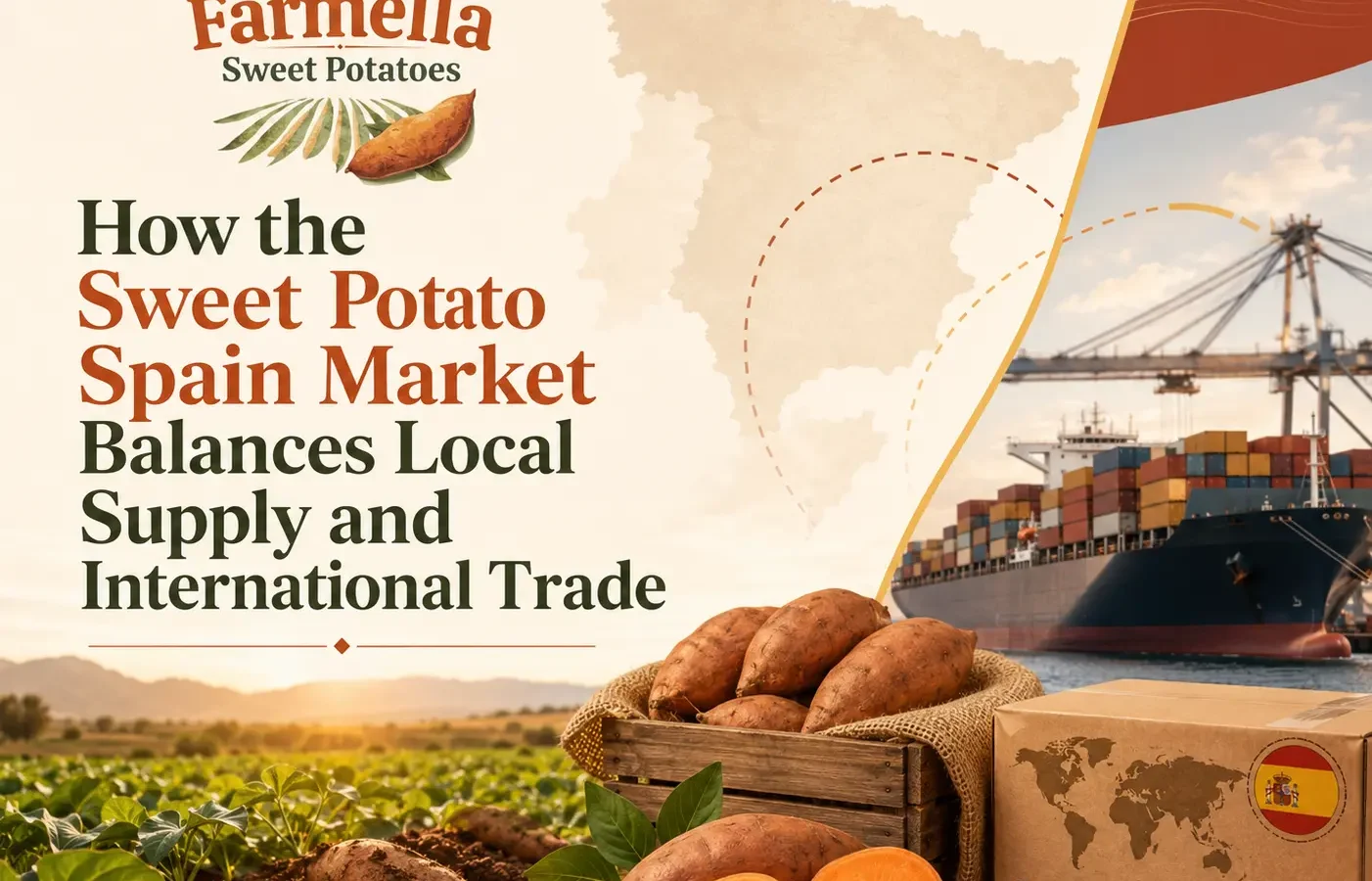
Spain has become one of Europe’s most important players in the sweet potato industry. Alongside domestic production, the sweet potato Spain market also relies on international trade to keep products available throughout the year. This balance between local harvests and imports creates valuable opportunities for buyers and exporters alike.
In this blog, we’ll explore:
- Why Spain combines local production with international sourcing.
- What drives sweet potato import Spain throughout the year.
- How European buyers evaluate potential suppliers.
- Why choosing the right sweet potato exporter is becoming increasingly important.
For Egyptian exporters, understanding how the Spanish market operates goes beyond identifying another destination. It means recognising when supply gaps appear, what buyers expect from their suppliers, and how consistent quality can create long-term business opportunities. As demand continues to evolve, exporters that combine reliable seasonal supply with professional export standards are well positioned to become trusted partners in the Spanish market. Buyers can also explore our sweet potato products to compare the varieties available for different commercial requirements.
Understanding the Sweet Potato Spain Market
The sweet potato Spain market is shaped by both domestic farming and international trade. Spain produces high-quality sweet potatoes locally, while imports help buyers maintain broader availability and meet different commercial requirements throughout the year.
Why Spain Is Both a Producer and an Importer
Local production supports supermarkets, wholesalers, restaurants, and food manufacturers. However, demand can vary by season, region, variety, and required volume.
Imports help the market by:
- Supporting supply during different seasonal periods
- Providing specific sizes, varieties, or grades
- Helping buyers maintain consistent stock
- Serving growing retail and food-service demand
How Demand and International Trade Support Market Stability
As sweet potatoes become more familiar to consumers, buyers need dependable access to quality products. Sweet potato import Spain complements local supply rather than replacing it. This approach also creates opportunities for suppliers backed by the Egyptian sweet potato heritage, where generations of farming experience support today’s export industry.
A reliable sweet potato exporter helps Spanish buyers manage availability, maintain agreed standards, and reduce supply disruptions. Together, domestic production and international sourcing create a more flexible and stable market.
Why Sweet Potato Import Spain Remains Essential
Domestic production gives the sweet potato Spain market a strong foundation, while imports add the flexibility buyers need throughout the year. Sweet potato import Spain supports the market during seasonal transitions, changing demand, and periods when specific commercial requirements are harder to meet locally.
Filling Seasonal Gaps and Supporting Buyer Demand
Imports help retailers, wholesalers, and food-service businesses maintain dependable stock by providing:
- Additional volumes during seasonal gaps
- Specific sizes, grades, or varieties
- Supply for supermarkets and wholesale markets
- Products suited to restaurants, hotels, and processors
Among the varieties supplied to international buyers, Beauregard sweet potatoes are valued for their appearance, consistency, and reliable commercial performance.
Maintaining Consistent Availability Throughout the Year
Continuous availability allows buyers to plan promotions, menus, and distribution without relying on one production window alone.
A dependable sweet potato exporter complements Spanish farming through accurate supply planning, agreed quality standards, and reliable delivery schedules. This balance protects availability while giving buyers more flexibility across changing seasons and market conditions.
What Spanish Buyers Look for in a Sweet Potato Exporter
Spanish buyers need more than an attractive price. A dependable sweet potato exporter must consistently meet the agreed product, volume, and delivery requirements across repeat orders.
Consistent Quality, Grading, and Reliable Deliveries
Buyers commonly expect:
- Uniform size, shape, and appearance
- Accurate commercial grading
- Clean, healthy skin
- Reliable volumes across multiple shipments
- On-time delivery according to schedule
These standards help retailers, wholesalers, and food-service businesses plan confidently within the sweet potato Spain market.
Why Communication and Traceability Matter
Clear communication helps buyers track production, packing, shipping, and arrival dates. Exporters should also support buyers through a documented quality control process, accurate specifications, shipment updates, and complete traceability records.
For businesses involved in sweet potato import Spain, transparency reduces misunderstandings and supports faster problem-solving. When consistent quality is matched with reliable communication and documented traceability, suppliers are more likely to earn repeat orders and build long-term buyer relationships.
How Local Production and Imports Work Together
The sweet potato Spain market performs best when domestic production and international supply support each other. Local growers provide an important foundation for the market, while imports add flexibility during changing seasons, shifting demand, and periods when buyers need specific volumes or product specifications.
Complementing Domestic Supply Across Different Periods
Sweet potato import Spain does not replace local production. Instead, it helps buyers maintain continuity by providing:
- Additional volumes during seasonal transitions
- Specific grades, sizes, or varieties
- Supply for retail, wholesale, and food-service channels
- Greater flexibility when demand changes
This balanced approach allows buyers to plan more confidently throughout the year.
Building a More Resilient Supply Chain
A reliable sweet potato exporter strengthens the market by helping reduce supply disruptions and supporting consistent availability. Many buyers also recognise the Egyptian sweet potato benefits, including dependable seasonal supply, strong storage performance, and consistent export quality. When local farms and international suppliers work together, Spanish buyers gain a more stable supply chain that can respond to changing commercial needs without placing pressure on one source alone.
Quality Standards That Influence Sweet Potato Import Spain
Quality standards play a major role in purchasing decisions within the sweet potato import Spain market. Buyers need products that comply with food safety requirements while maintaining a consistent appearance and performance throughout storage, transport, and sale. Strong quality management also helps reduce commercial risks for both importers and exporters.
Food Safety, Traceability, and Commercial Grading
Spanish buyers typically expect suppliers to provide:
- Compliance with food safety standards
- Full product traceability
- Uniform sizing and commercial grading
- Clean, healthy, defect-free sweet potatoes
- Consistent quality across every shipment
These standards make it easier for retailers and wholesalers to manage inventory and maintain customer satisfaction.
How Quality Reduces Commercial Risks
A professional sweet potato exporter helps buyers minimise rejected shipments, product complaints, and unnecessary waste. These standards are further supported by the Nile Delta soil advantages, which contribute to healthy crop development before grading and export preparation begin. For businesses supplying the sweet potato Spain market, consistent quality is more than a competitive advantage, it builds trust, protects long-term business relationships, and creates greater confidence with every order.
Packaging and Logistics for the Spanish Market
Packaging and logistics directly affect how well sweet potatoes arrive, store, and perform in the sweet potato Spain market. For international shipments, every stage matters, from packing and loading to transport, storage, and final delivery. Poor handling can reduce freshness, damage appearance, and lower commercial value.
Protecting Quality with the Right Packaging
Professional sweet potato packaging solutions should:
- Reduce bruising and pressure damage
- Allow proper ventilation
- Support safe stacking during transport
- Protect skin quality and presentation
- Match retail or wholesale requirements
Retailers may prefer smaller, presentation-ready formats, while wholesalers usually need larger cartons designed for efficient handling.
Why Efficient Logistics Preserve Freshness
Strong logistics support successful sweet potato import Spain by reducing delays and limiting unnecessary handling. A reliable sweet potato exporter coordinates shipping, documentation, storage conditions, and delivery schedules carefully.
When packaging and logistics work together, buyers receive fresher products, experience fewer losses, and gain a longer selling window.
How a Sweet Potato Exporter Builds Long-Term Buyer Confidence
Choosing a sweet potato exporter is rarely based on one successful shipment. Spanish buyers look for suppliers who can consistently meet agreed standards, respond to changing requirements, and support their business over time. Trust is built through reliable performance, not occasional success.
Consistency, Flexibility, and Reliability
Long-term partnerships are strengthened when exporters consistently provide:
- The same quality across every shipment
- Reliable volumes throughout the season
- Sizes and grades that match buyer specifications
- Flexible packaging for different market channels
- Clear communication before and after delivery
When buyers know they can expect the same standard every time, purchasing becomes simpler and more predictable.
This consistency is especially valuable in the sweet potato Spain market, where retailers and wholesalers depend on dependable supply to meet customer demand. Buyers comparing European sourcing models can also look at the sweet potato Netherlands market, where reliable imports and regional redistribution play an important role in maintaining supply across multiple countries. By combining quality, flexibility, and reliable service, exporters create lasting business relationships that lead to repeat orders and long-term commercial growth.
Market Trends Shaping the Future of Sweet Potato Spain
The sweet potato Spain market is evolving as buyers place greater value on quality, responsible sourcing, and long-term product performance. Price and availability remain important, but purchasing decisions are increasingly influenced by how sweet potatoes look, how well they store, and whether suppliers can meet changing expectations across retail, wholesale, and food-service channels.
Rising Demand for Premium Produce
Spanish buyers are showing stronger interest in sweet potatoes that offer clear commercial advantages, including:
- Uniform sizing and professional grading
- Clean skin and attractive presentation
- Reliable shelf life after delivery
- Consistent taste, texture, and internal quality
- Stable availability across multiple orders
Commercial varieties such as Bellevue sweet potatoes help suppliers meet growing expectations for consistency, presentation, and shelf-life performance. Premium produce helps retailers reduce waste, maintain stronger displays, and deliver a better customer experience.
Sustainability and Responsible Sourcing
Importers are paying closer attention to how sweet potatoes are produced, prepared, and delivered. A responsible sweet potato exporter should demonstrate:
- Clear product traceability
- Transparent farming and handling practices
- Accurate quality and export documentation
- Packaging that protects quality and reduces waste
- Efficient transport and supply coordination
How Consumer Preferences Continue to Evolve
Consumers are becoming more selective about the products they buy. Their decisions are increasingly influenced by:
- Product origin
- Nutritional value
- Freshness and appearance
- Convenience
- Responsible production practices
These changing preferences encourage businesses involved in sweet potato import Spain to choose suppliers that combine strong product quality with transparent, reliable, and professional export processes.
Why Egyptian Sweet Potatoes Complement the Spanish Market
Egyptian sweet potatoes offer Spanish buyers a dependable way to strengthen supply without replacing local production. Their seasonal availability, export quality, and suitability for long-distance transport make them a practical option for the sweet potato Spain market, especially when buyers need consistent volumes and clearly defined commercial specifications.
Favorable Growing Conditions and Seasonal Advantages
Egypt’s climate and agricultural conditions support the production of sweet potatoes with strong commercial characteristics, including:
- Uniform root development
- Healthy skin and appearance
- Reliable size ranges
- Good storage performance
- Seasonal availability that complements European supply periods
These advantages help support sweet potato import Spain during changing market conditions.
Export Experience That Meets European Standards
Professional sweet potato export services ensure that European buyers receive consistent quality, accurate documentation, and dependable shipment coordination.
- Professional sorting and grading
- Food safety and traceability
- Accurate export documentation
- Packaging suited to European distribution
- Clear communication throughout the shipment process
Supporting Spanish Buyers with Reliable Supply
Reliable seasonal volumes allow Spanish importers to plan purchases, protect product availability, and serve retail, wholesale, and food-service buyers more confidently. Consistency across repeat shipments also helps create stronger, longer-term commercial partnerships.
Why Choose Farm Sweet?
Choosing the right sweet potato exporter means partnering with a supplier that understands the expectations of European buyers. At Farm Sweet, we combine Egyptian farming expertise with professional export practices to deliver sweet potatoes that meet the quality, consistency, and reliability required by the sweet potato Spain market.
Export-Ready Quality from Farm to Shipment
Every order is prepared to meet commercial requirements through:
- Export-ready farm fresh sweet potatoes
- Professional sorting and commercial grading
- Strict quality-control inspections
- Compliance with international export standards
- Consistent product specifications across shipments
These processes help Spanish buyers receive products that are ready for retail, wholesale, and food-service distribution.
Reliable Packaging, Export Coordination, and Long-Term Partnership
Farm Sweet supports sweet potato import Spain with services designed to simplify international trade, including:
- Flexible packaging for different distribution channels
- Accurate export documentation
- Reliable shipment coordination
- Consistent seasonal supply
- Responsive communication throughout the export process
As a trusted sweet potato exporter, we focus on building long-term partnerships by delivering dependable quality and reliable service with every shipment.
Final Thoughts: Building Stronger Trade in the Sweet Potato Spain Market
The future of the sweet potato Spain market does not depend on choosing between local production and international supply. It depends on using both effectively. Domestic growers provide a strong market foundation, while imports offer the flexibility needed to support changing seasons, buyer requirements, and year-round availability.
Why Local Production and International Supply Can Grow Together
A balanced supply model helps Spanish buyers:
- Maintain consistent stock across different seasons
- Access additional sizes, grades, and varieties
- Respond to changing retail and food-service demand
- Reduce pressure on a single supply source
- Plan purchasing with greater confidence
In this model, sweet potato import Spain complements local farming rather than competing with it.
How Quality, Reliability, and Partnership Drive Long-Term Success
Lasting trade relationships are built through consistent quality, accurate grading, reliable volumes, and clear communication. A professional sweet potato exporter must deliver these standards across repeat shipments, not only the first order.
When buyers and exporters plan supply together, both sides gain greater stability, stronger trust, and better opportunities for long-term growth.
To discuss varieties, seasonal availability, packaging options, or shipment requirements, Contact our Farm Sweet team.
FAQs: Understanding the Sweet Potato Spain Market
- Why does Spain import sweet potatoes if it also produces them?
Spain produces sweet potatoes locally, but imports help maintain consistent availability, support year-round demand, and meet commercial requirements during different supply periods.
- What do Spanish buyers expect from a sweet potato exporter?
Spanish buyers generally look for consistent quality, uniform sizing, reliable deliveries, proper packaging, food safety, and clear communication.
- How does sweet potato import Spain support the local market?
Imports complement domestic production by providing additional supply when demand exceeds local availability or when buyers require continuous stock.
- What quality standards are important in the sweet potato Spain market?
Key standards include product traceability, food safety, commercial grading, uniform sizing, freshness, and strong shelf-life performance.
- Why are Egyptian sweet potatoes suitable for the Spanish market?
Egyptian sweet potatoes offer favorable growing conditions, reliable seasonal availability, export-ready quality, and consistent supply that aligns with the expectations of Spanish importers.