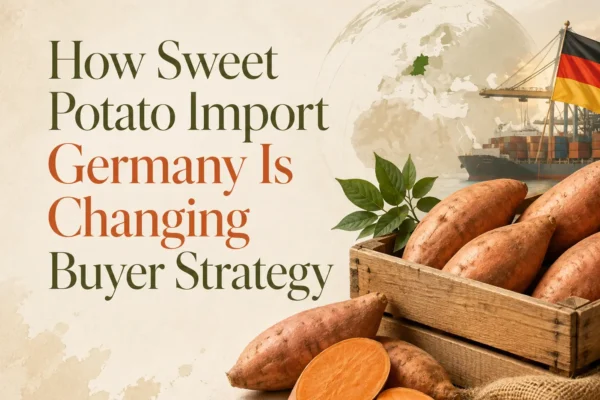
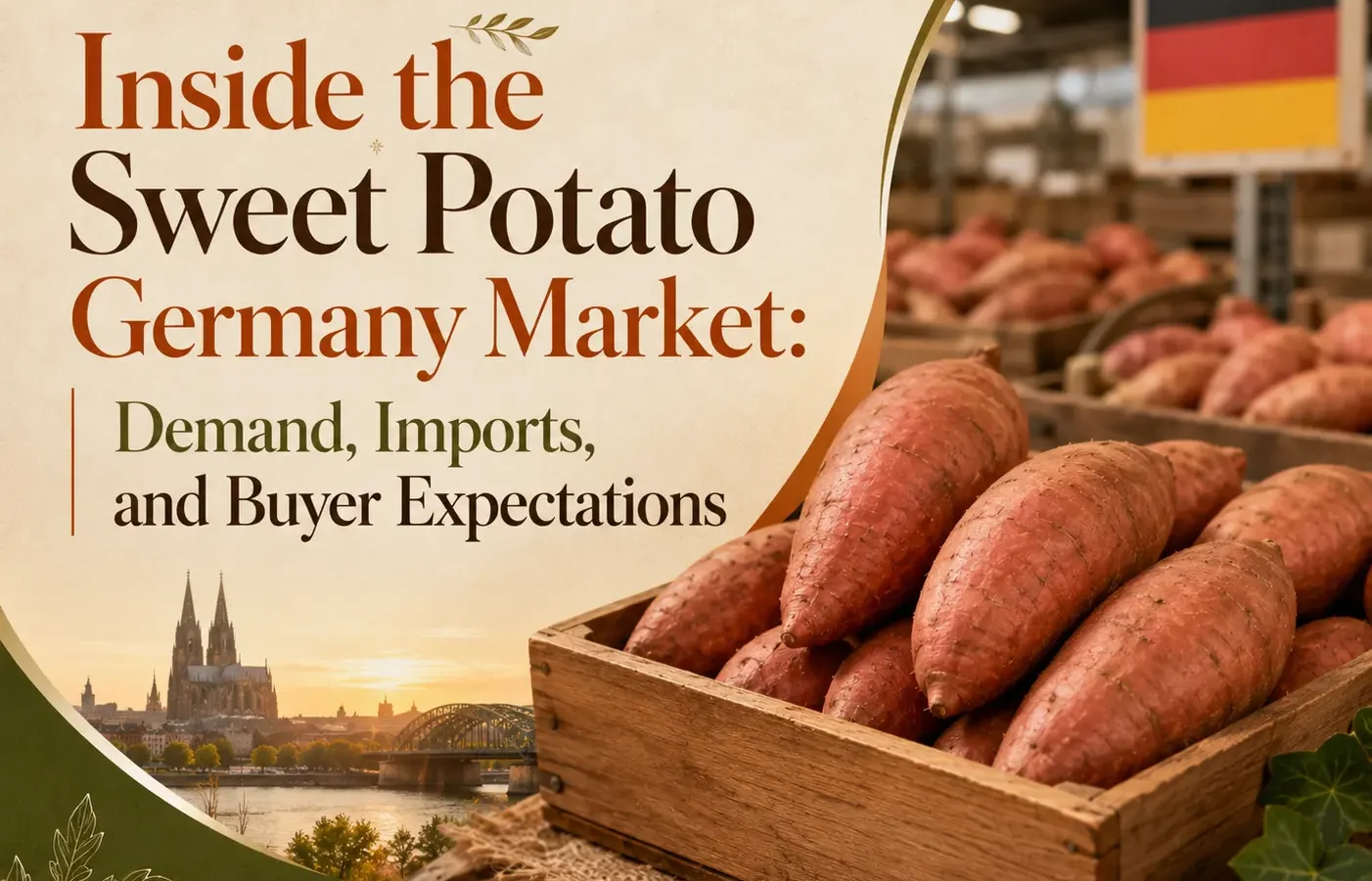
The sweet potato Germany market is growing, but German buyers are becoming more selective. They want more than availability, they expect reliable quality, strong shelf life, clear specifications, and consistent supply.
Key factors shaping the market include:
- Rising consumer demand
- Greater use in retail and food service
- Dependence on imported supply
- Stronger quality and traceability requirements
- Growing interest in long-term supplier partnerships
For businesses involved in sweet potato import Germany, success depends on understanding what buyers value most.
This blog will explore:
- Current sweet potato import trends
- Buyer expectations
- Quality and packaging requirements
- Logistics and pricing factors
- Why Egyptian sweet potatoes can fit the German market
The goal is simple: to help suppliers understand how to compete more effectively in the sweet potato Germany market.
Understanding the Sweet Potato Germany Market Today
The sweet potato Germany market has evolved rapidly over the past decade. What was once considered a niche product is now a regular feature in supermarkets, restaurants, and food manufacturing. As demand continues to grow, Germany has become one of Europe’s most important destinations for imported sweet potatoes, creating new opportunities for international suppliers.
Why Sweet Potatoes Are Gaining Attention in Germany
German consumers are increasingly choosing sweet potatoes because they fit a variety of cooking styles and modern eating habits.
Demand is supported by:
- Greater interest in nutritious foods
- Versatile use across different meals
- Rising popularity in retail and food service
- Year-round product availability
This growing demand continues to strengthen the sweet potato Germany market, giving buyers more reason to explore our sweet potato products when comparing varieties and specifications for different commercial channels.
How Consumer Habits Are Changing Market Demand
Today’s buyers expect more than simply finding sweet potatoes on supermarket shelves. They also value:
- Consistent product quality
- Fresh appearance
- Reliable availability
- Sustainable sourcing
- Longer shelf life
These changing expectations continue to shape sweet potato import trends across Europe.
Why Germany Relies on International Supply
Germany’s domestic production cannot meet growing consumer demand throughout the year. As a result, sweet potato import Germany remains essential for maintaining stable supply to retailers, wholesalers, and food-service businesses. Importers increasingly seek suppliers that can consistently deliver premium-quality products while meeting strict commercial standards.
What Is Driving Sweet Potato Import Germany Demand?
Demand for sweet potato import Germany is being shaped by several parts of the food market at once. Supermarkets need regular stock, wholesalers need dependable volumes, and restaurants need products that perform consistently in preparation. Together, these buyers are creating stronger demand for reliable imported supply.
The Role of Retailers, Wholesalers, and Food-Service Buyers
Each buyer group has different priorities:
- Retailers need attractive, uniform sweet potatoes for shelf display
- Wholesalers look for volume, stable quality, and efficient distribution
- Food-service buyers value consistent sizing, texture, and cooking performance
These combined needs continue to strengthen the sweet potato Germany market.
Why Year-Round Availability Matters
Demand does not stop when local or regional supply becomes limited. Reliable sweet potato export services help importers access products throughout the year so their customers can maintain stable menus, stock levels, and sales.
Year-round supply supports:
- Fewer stock shortages
- Better purchasing plans
- More consistent retail availability
- Stronger buyer–supplier relationships
This is one of the most important sweet potato import trends shaping purchasing decisions.
How Product Versatility Supports Market Growth
Sweet potatoes can be baked, roasted, mashed, fried, or used in processed foods. This versatility makes them suitable for households, restaurants, catering businesses, and food manufacturers.
As more sectors use the product, sweet potato import Germany demand becomes broader and less dependent on one type of buyer.
Sweet Potato Import Trends Shaping the German Market
Current sweet potato import trends show that German buyers are becoming more selective. Importers no longer focus only on price and availability. They also assess whether suppliers can deliver consistent quality, reliable volumes, and products that remain in good condition throughout storage and distribution.
Growing Interest in Consistent, Premium-Quality Produce
Premium quality is becoming more important across the sweet potato Germany market. Buyers increasingly look for products with:
- Uniform sizing
- Smooth, healthy skin
- Fresh appearance
- Strong shelf life
- Reliable internal quality
Varieties such as Bellevue sweet potatoes can support these expectations by offering the uniform appearance and dependable commercial performance buyers increasingly look for in premium produce. Consistency helps retailers reduce waste and gives wholesalers greater confidence when planning larger orders.
Why Buyers Are Building Longer-Term Supplier Relationships
Short-term purchasing can create uncertainty around quality and availability. For this reason, many businesses involved in sweet potato import Germany prefer suppliers who can meet agreed standards across repeated shipments.
Long-term relationships offer:
- More predictable supply
- Clearer quality expectations
- Better communication
- Easier seasonal planning
- Reduced sourcing risks
How Supply Reliability Is Becoming a Competitive Advantage
Reliable supply can be just as valuable as product quality. Importers need confidence that orders will arrive on time and match agreed specifications.
Among the most important sweet potato import trends is the growing preference for suppliers who can combine premium produce with dependable delivery. In the sweet potato Germany market, reliability increasingly helps strong suppliers stand out from competitors.
What German Buyers Expect from Sweet Potato Suppliers
Choosing a supplier is about more than comparing prices. Businesses involved in sweet potato import Germany want partners who can consistently deliver products that meet commercial standards and arrive in excellent condition. From grading and freshness to communication and reliability, every stage of the supply chain influences buying decisions. Suppliers that consistently meet these expectations are more likely to secure long-term business in the sweet potato Germany market.
Uniform Sizing, Appearance, and Product Consistency
German buyers expect shipments that are uniform and ready for distribution. Consistency simplifies storage, merchandising, and inventory management.
Key expectations include:
- Uniform sizing
- Smooth, clean skin
- Consistent shape
- Minimal defects
- Even quality across every shipment
Established commercial varieties such as Beauregard sweet potatoes can also help buyers achieve the familiar appearance, sizing, and product characteristics required for consistent retail and wholesale programmes. These characteristics are becoming increasingly important as sweet potato import trends continue to favour premium products.
Freshness, Shelf Life, and Storage Performance
Freshness directly affects product quality after arrival. Sweet potatoes that maintain their appearance and texture during storage provide greater value to retailers and wholesalers.
Buyers typically look for:
- Strong shelf life
- Firm texture
- Fresh appearance
- Good storage performance
- Low risk of spoilage
Clear Specifications and Reliable Communication
Professional communication is just as important as product quality. Importers expect suppliers to provide accurate product specifications and keep them informed throughout the ordering process.
Reliable suppliers typically offer:
- Clear grading standards
- Transparent product information
- Accurate shipment schedules
- Responsive communication
- Consistent order fulfilment
For suppliers serving the sweet potato Germany market, combining dependable service with high-quality products creates stronger partnerships and supports long-term success in sweet potato import Germany.
Quality Standards in the Sweet Potato Germany Market
Quality expectations in the sweet potato Germany market continue to rise as retailers, wholesalers, and food-service businesses seek products that perform well throughout the supply chain. Buyers are looking beyond appearance, they also evaluate food safety, traceability, grading accuracy, and overall consistency. Meeting these standards is essential for suppliers involved in sweet potato import Germany, as it helps build trust and supports long-term commercial relationships.
Why Food Safety and Traceability Matter
German importers want confidence in the products they purchase. Traceability allows every shipment to be tracked throughout the supply chain, while strong food safety practices help protect both businesses and consumers.
Key priorities include:
- Compliance with food safety requirements
- Product traceability
- Hygienic handling practices
- Transparent production records
- Consistent quality assurance
These measures reflect the growing sweet potato import trends towards greater transparency and accountability.
The Importance of Sorting and Grading
Accurate sorting and grading ensure that every shipment meets agreed commercial specifications. Consistent grading also improves handling, merchandising, and customer satisfaction.
Professional grading focuses on:
- Uniform sizing
- Consistent shape
- Smooth skin quality
- Minimal defects
- Even product presentation
How Quality Control Reduces Commercial Risk
A structured quality control process helps identify issues before products are shipped, reducing the risk of rejected deliveries, customer complaints, and unnecessary waste.
For suppliers serving the sweet potato Germany market, effective quality control provides several benefits:
- More consistent shipments
- Lower product losses
- Greater buyer confidence
- Stronger long-term partnerships
- Better competitiveness in sweet potato import Germany
As buyer expectations continue to evolve, maintaining high quality standards is becoming one of the most important factors for success in the German market.
Packaging Requirements for Sweet Potato Import Germany
Packaging plays a major role in sweet potato import Germany because it must protect the crop from the packing facility to its final destination. Poor packaging can lead to bruising, moisture loss, pressure damage, and lower shelf appeal. For suppliers targeting the sweet potato Germany market, the right format should combine protection, ventilation, efficient handling, and professional presentation.
How Packaging Protects Sweet Potatoes During Transport
Sweet potatoes may pass through several loading, storage, and distribution stages before reaching the buyer. Strong packaging helps maintain product quality throughout this journey.
Effective packaging should:
- Reduce movement inside the container
- Protect roots from pressure damage
- Allow suitable airflow
- Support safe stacking
- Preserve freshness and appearance
These priorities reflect sweet potato import trends that increasingly favour lower product loss and better shipment performance.
Choosing Packaging Formats for Different Buyer Needs
Professional sweet potato packaging solutions should reflect the needs of each buyer and sales channel. Importers may request different weights, materials, or pack sizes depending on how the product will be distributed.
Common considerations include:
- Retail-ready packs
- Larger wholesale cartons
- Food-service formats
- Buyer-specific weights
- Labelling and traceability needs
Why Presentation Matters in Retail and Wholesale Markets
Packaging also influences how buyers and customers judge the product. Clean, well-organised packs make quality easier to inspect and improve retail presentation.
For sweet potato import Germany, professional packaging provides more than protection. It supports efficient handling, reinforces product quality, and helps suppliers build a stronger position in the sweet potato Germany market.
Logistics and Storage Challenges in Sweet Potato Imports
Long-distance transport can place significant pressure on product quality. For businesses involved in sweet potato import Germany, successful delivery depends on more than moving the shipment from one country to another. Sweet potatoes must remain fresh, firm, and market-ready throughout loading, transit, storage, and final distribution.
Maintaining Quality During Long-Distance Shipping
The longer the journey, the greater the risk of physical damage and quality loss.
Suppliers and importers must manage:
- Careful loading and unloading
- Stable transport conditions
- Strong packaging
- Limited product movement
- Fast handling at each stage
These steps help protect shipments entering the sweet potato Germany market.
The Role of Temperature, Humidity, and Airflow
Storage conditions directly affect freshness and shelf life. Poor control can lead to moisture loss, skin damage, or reduced market value.
Key factors include:
- Stable temperature
- Balanced humidity
- Adequate ventilation
- Clean storage areas
- Regular shipment checks
These priorities continue to shape modern sweet potato import trends, but storage performance also begins with the quality developed in the field. The 7 Nile Delta soil advantages help explain how Egypt’s agricultural environment supports healthy crop development before sweet potatoes ever enter storage or transport.
How Importers Reduce Product Losses
Importers reduce waste by combining good logistics with careful quality checks. Common practices include:
- Inspecting shipments on arrival
- Removing damaged roots
- Rotating stock efficiently
- Monitoring storage conditions
- Planning distribution carefully
For sweet potato import Germany, strong logistics and storage management help protect quality, reduce losses, and improve profitability across the supply chain.
How Sweet Potato Import Trends Affect Pricing and Buyer Decisions
Pricing in the sweet potato Germany market depends on much more than supply and demand. Importers consider product quality, seasonal availability, consistency, and supplier reliability before making purchasing decisions. While competitive pricing is important, businesses involved in sweet potato import Germany increasingly recognise that long-term value comes from dependable supply rather than the lowest initial cost.
Why Buyers Compare More Than Price Alone
Experienced buyers evaluate the complete offer instead of focusing solely on price. A lower-cost shipment may become more expensive if it results in quality issues or product losses.
Buyers commonly compare:
- Product quality
- Uniform sizing
- Shelf life
- Packaging standards
- Supplier reliability
These factors continue to shape sweet potato import trends across Germany and the wider European market.
The Impact of Seasonality, Quality, and Availability
Supply conditions change throughout the year, influencing both pricing and purchasing strategies. Buyers often adjust their sourcing decisions based on seasonal availability and expected product performance.
Important pricing factors include:
- Seasonal production
- Product quality
- Market availability
- Storage performance
- Consistency between shipments
How Strong Supply Performance Creates Better Long-Term Value
Reliable suppliers help buyers reduce operational risks while improving planning and inventory management. The Egyptian sweet potato benefits, including dependable seasonal availability, strong freshness, and export suitability, can also create greater long-term value for buyers seeking consistent supply.
For companies involved in sweet potato import Germany, long-term value comes from suppliers who consistently deliver high-quality products, maintain agreed specifications, and adapt to changing market conditions. In today’s sweet potato Germany market, dependable performance has become just as valuable as competitive pricing.
Why Egyptian Sweet Potatoes Fit German Market Needs
Egypt has become an increasingly important supplier to European markets thanks to its favourable growing conditions, reliable seasonal production, and export experience. For businesses involved in sweet potato import Germany, Egyptian sweet potatoes offer a combination of quality, freshness, and consistency that aligns well with evolving buyer expectations. As the sweet potato Germany market continues to expand, many importers are looking for suppliers who can deliver dependable products throughout the season.
Favorable Growing Conditions and Seasonal Supply
Egypt’s climate supports the production of high-quality sweet potatoes while helping meet seasonal demand in European markets.
Key advantages include:
- Warm growing conditions
- Fertile agricultural land
- Reliable harvesting seasons
- Consistent production volumes
- Export-ready supply
These strengths are closely connected to the Egyptian sweet potato heritage, where long-standing agricultural experience continues to support modern production and international supply. These strengths allow Egyptian growers to respond effectively to changing sweet potato import trends.
Strong Freshness and Storage Performance
Freshness is essential for successful exports. Proper harvesting, handling, and storage practices help preserve product quality throughout transportation.
German buyers value sweet potatoes that offer:
- Firm texture
- Smooth, healthy skin
- Long shelf life
- Strong storage performance
- Consistent quality on arrival
These characteristics help reduce waste and improve customer satisfaction.
Why Egypt Is Becoming More Relevant to Sweet Potato Germany Buyers
As buyer expectations continue to increase, many importers are placing greater importance on suppliers who can consistently deliver premium products. Egypt’s combination of production capacity, export expertise, and reliable supply makes it a strong partner for sweet potato import Germany. By providing consistent quality and dependable seasonal availability, Egyptian producers continue to strengthen their position in the growing sweet potato Germany market.
How Importers Can Choose the Right Sweet Potato Supplier
Choosing the right supplier is one of the most important decisions in sweet potato import Germany. A competitive price may attract attention, but long-term success depends on quality, reliability, and the supplier’s ability to meet agreed specifications across every shipment. Importers should evaluate the full offer, not just one sample or one successful delivery.
Questions to Ask Before Placing an Order
Before confirming a supplier, buyers should ask:
- What sizing and grading standards are followed?
- How is quality checked before shipment?
- What packaging options are available?
- Can the supplier meet seasonal volume requirements?
- How are delays or quality issues handled?
Clear answers help importers reduce uncertainty in the sweet potato Germany market.
Red Flags in Quality, Sizing, and Delivery Claims
Buyers should be cautious when suppliers provide vague or inconsistent information.
Common warning signs include:
- Unclear product specifications
- Inconsistent sizing between samples and shipments
- Unrealistic delivery promises
- Limited traceability
- Poor communication
These issues can create losses and weaken buyer confidence.
Why Consistency Matters More Than One Good Shipment
One strong order does not prove long-term reliability. Importers need suppliers who can maintain the same quality, grading, packaging, and delivery performance over time.
As sweet potato import trends continue to favour dependable partnerships, consistency has become a major competitive advantage. For businesses involved in sweet potato import Germany, the best supplier is not simply the one who performs well once, but the one who delivers reliably season after season.
Why Choose Farm Sweet for the German Market?
Supplying the sweet potato Germany market requires more than producing high-quality crops. Buyers expect consistency, professional export processes, reliable logistics, and a supplier who understands international trade requirements. At Farm Sweet, we combine modern farming practices with strict quality standards to deliver sweet potatoes that meet the expectations of German importers, wholesalers, retailers, and food-service businesses.
Export-Ready Sweet Potatoes for German Buyers
Our sweet potatoes are carefully prepared for international markets, ensuring every shipment is ready for commercial distribution.
We focus on:
- Export-quality produce
- Uniform sizing
- Fresh appearance
- Strong shelf life
- Consistent seasonal supply
This allows us to support businesses involved in sweet potato import Germany with confidence.
Consistent Quality and Professional Grading
Every shipment is sorted and graded to meet commercial specifications, helping buyers receive products that perform consistently across retail and wholesale channels.
Our quality process includes:
- Accurate grading
- Strict quality inspections
- Consistent product presentation
- Careful handling practices
- Reliable quality control
Reliable Packaging, Logistics, and Supply Coordination
Protecting product quality continues long after harvest. We use suitable packaging and organised export coordination to help sweet potatoes arrive in excellent condition while supporting efficient distribution throughout the supply chain.
A Long-Term Partner for Sweet Potato Import Germany
At Farm Sweet, we believe successful partnerships are built on consistency, transparency, and reliability. By combining premium products with dependable service, we help customers source high-quality sweet potatoes season after season. Businesses looking to discuss varieties, commercial grades, seasonal volumes, packaging, or shipment requirements can contact our Farm Sweet team to find the right supply solution for the German market.
Final Thoughts: What the Future Holds for the Sweet Potato Germany Market
The future of the sweet potato Germany market will depend on more than growing demand. German importers are likely to place greater value on suppliers who can combine product quality with reliable availability, clear specifications, and professional export support.
Why Demand Is Likely to Keep Evolving
Sweet potatoes continue to appeal to different parts of the food market, from household shoppers to restaurants and food manufacturers.
Future demand may be shaped by:
- Changing consumer eating habits
- Wider use in food service and processing
- Demand for year-round availability
- Greater interest in premium produce
- New product and packaging formats
These factors will continue to influence sweet potato import trends and create opportunities for adaptable suppliers.
How Quality and Reliability Will Shape Future Import Decisions
As the market develops, buyers will become more selective about who they work with. Competitive pricing will remain important, but it will not replace consistent performance.
Importers will increasingly favour suppliers that offer:
- Uniform quality across shipments
- Dependable seasonal volumes
- Strong freshness and shelf life
- Accurate grading and packaging
- Clear communication and delivery planning
For businesses involved in sweet potato import Germany, lasting success will come from building dependable supply relationships rather than competing on price alone. Suppliers that understand German buyer expectations and maintain consistent standards will be better positioned to grow within the evolving sweet potato Germany market.
FAQs: What Importers Should Know About the Sweet Potato Germany Market
- Why does Germany import sweet potatoes?
Germany imports sweet potatoes because domestic production is limited and buyers need consistent supply throughout the year.
- What do German buyers look for in imported sweet potatoes?
They usually prioritise freshness, uniform sizing, good shelf life, food safety, reliable packaging, and consistent delivery.
- What are the main sweet potato import trends in Germany?
Current trends include stronger demand for premium quality, dependable supply, traceability, and long-term supplier relationships.
- How should sweet potatoes be packaged for the German market?
They should be packed in strong, ventilated packaging that protects the roots during storage and transportation.
- Why are Egyptian sweet potatoes suitable for German buyers?
Egyptian sweet potatoes offer favorable seasonal availability, consistent quality, strong storage performance, and export-ready supply.