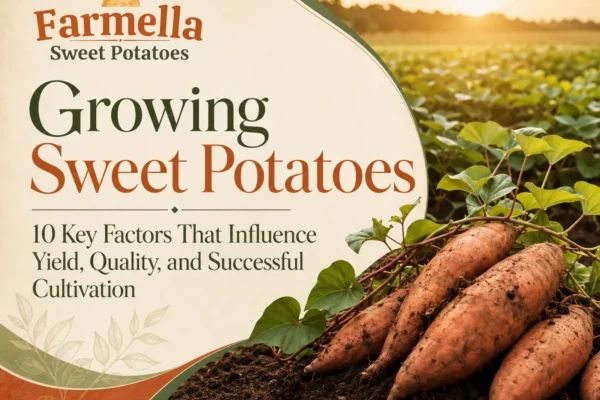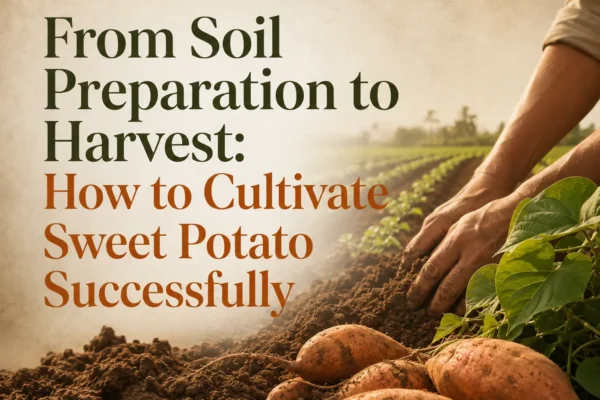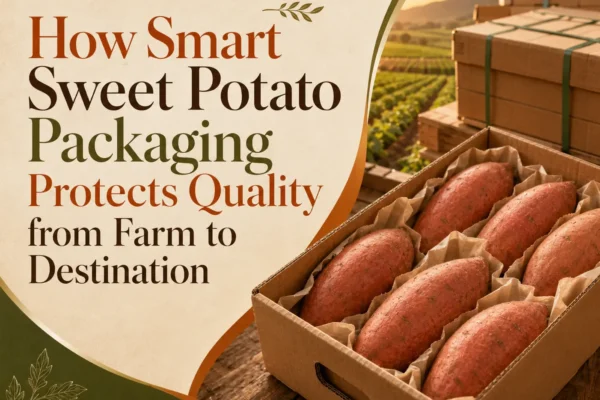
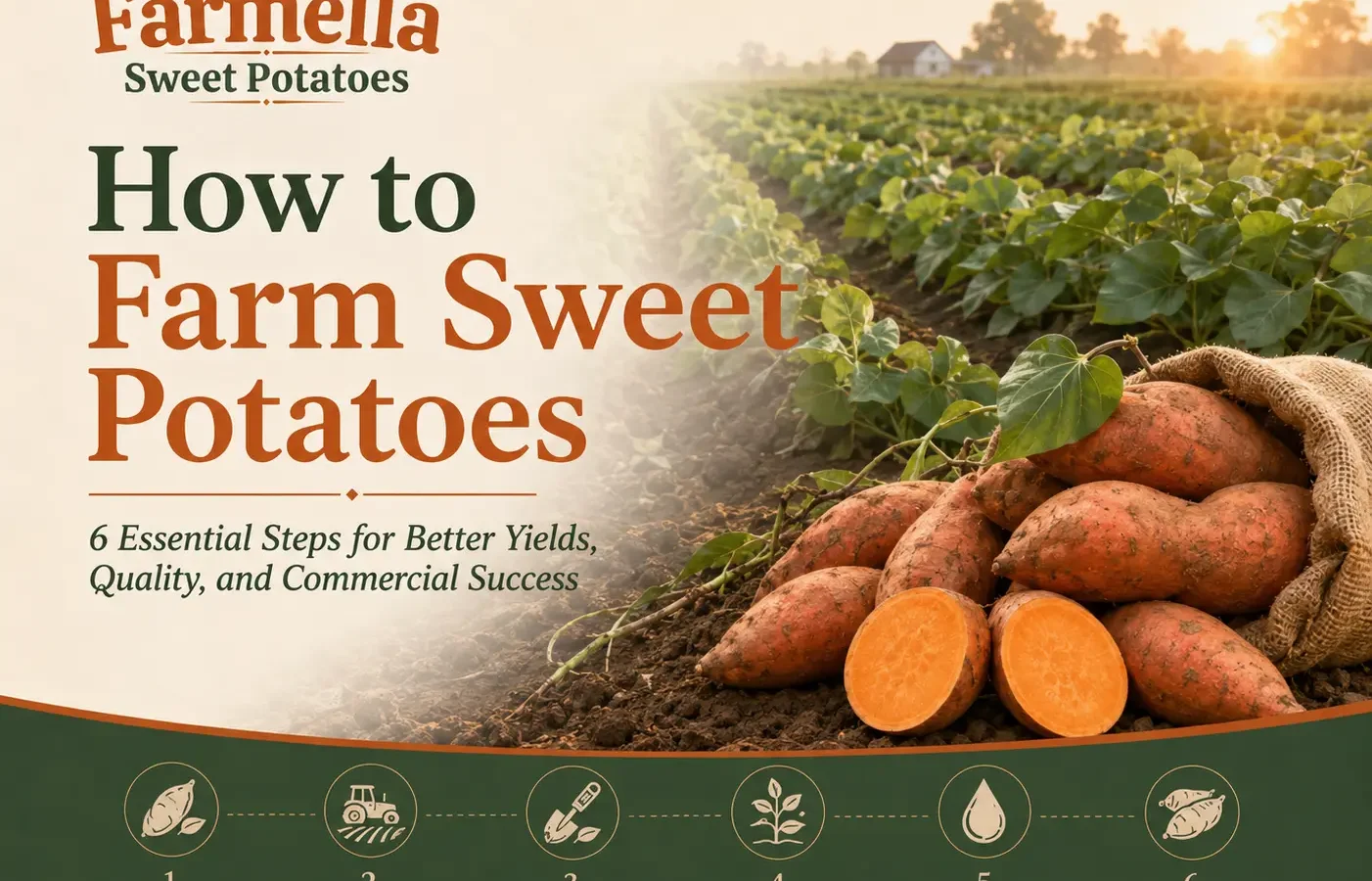
Learning how to farm sweet potatoes successfully requires more than planting slips and waiting for harvest. Strong results depend on managing the full production cycle, from soil preparation and variety selection to irrigation, crop protection, harvesting, and storage.
Each stage affects important commercial qualities such as:
- Root size and shape
- Yield consistency
- Skin and internal quality
- Freshness after harvest
- Storage and transport performance
Producing farm fresh sweet potatoes also requires regular field monitoring. Poor drainage, inconsistent watering, overcrowding, or delayed harvesting can reduce quality even when the crop appears healthy above ground.
This guide explains six essential steps for improving sweet potato production:
- Preparing the right soil
- Selecting a suitable variety
- Managing water and nutrition
- Protecting the crop during growth
- Harvesting at the right stage
- Preserving quality after harvest
By understanding how to farm sweet potatoes as one connected process, growers can reduce avoidable losses, improve crop consistency, and produce roots that better meet the expectations of retailers, wholesalers, and export buyers.
To see how these practices translate into commercial varieties, explore our sweet potato products.
Understanding How to Farm Sweet Potatoes
Before planting begins, growers need to understand that successful how to farm sweet potatoes practices involve much more than choosing a field and planting slips. Sweet potatoes are highly responsive to their growing environment, meaning that soil quality, climate, irrigation, and field management all influence the final harvest. A successful crop is built through careful planning, consistent monitoring, and timely decisions from the first day of planting until harvest.
What Makes Sweet Potato Farming Unique
Unlike many crops, sweet potatoes develop their edible roots underground. This means growers cannot judge crop quality simply by looking at the plants above the surface.
Successful production depends on:
- Healthy root development
- Well-drained, fertile soil
- Consistent moisture levels
- Warm growing temperatures
- Careful field management
These factors work together to produce farm fresh sweet potatoes with better appearance, texture, and market value.
The Conditions Every Successful Crop Needs
Every successful crop starts with the right growing environment. Warm weather, loose soil, adequate sunlight, and balanced irrigation all help support healthy root formation and consistent yields.
Providing these conditions allows growers to:
- Improve crop uniformity
- Support healthy plant growth
- Reduce environmental stress
- Produce higher-quality harvests
Why Planning Matters Before Planting
Understanding how to grow sweet potatoes starts with proper planning before planting even begins. Selecting the right variety, preparing the soil, and planning irrigation all contribute to a smoother growing season and better harvest results.
Understanding how to farm sweet potatoes starts with proper planning. When growers establish the right conditions from the beginning, they are more likely to produce farm fresh sweet potatoes that meet both commercial standards and buyer expectations.
Step #1: Prepare the Right Soil Before Planting
The first step in learning how to farm sweet potatoes successfully is preparing the soil before planting. Since sweet potatoes develop beneath the surface, the condition of the soil directly affects root shape, size, and overall quality. Even the best variety cannot reach its full potential if it is planted in unsuitable soil. Investing time in soil preparation creates the foundation for healthier crops and more consistent harvests.
Building Healthy Soil for Strong Root Growth
Healthy soil allows roots to expand freely while providing the nutrients and oxygen needed for steady development.
Good soil preparation should focus on:
- Loosening compacted soil
- Improving drainage
- Maintaining balanced soil fertility
- Removing stones and debris
- Creating raised rows where appropriate
These practices encourage stronger root development and help produce farm fresh sweet potatoes with more uniform size and appearance.
Creating the Best Environment for Farm Fresh Sweet Potatoes
The right sweet potato growing conditions create the foundation for healthy crop development throughout the season. Warm soil, adequate moisture, and good airflow all contribute to stronger plants and healthier roots.
When these conditions are maintained, growers can benefit from:
- Better crop establishment
- More consistent root growth
- Improved harvest quality
- Higher commercial value
Common Soil Preparation Mistakes
Several common mistakes can affect crop performance before planting even begins.
These include:
- Planting in compacted soil
- Poor drainage management
- Ignoring soil fertility
- Preparing the field too late
Avoiding these issues is an important part of how to farm sweet potatoes successfully. Well-prepared soil gives the crop the best possible start and increases the likelihood of producing high-quality, market-ready sweet potatoes.
Step #2: Choose the Right Variety for Your Market
One of the most important decisions when learning how to farm sweet potatoes is selecting a variety that matches your target market. Different sweet potato varieties offer different characteristics, including root size, skin colour, flesh colour, sweetness, storage performance, and yield potential. Choosing the right variety helps growers meet buyer expectations while improving crop consistency and long-term profitability. Instead of selecting a variety based solely on yield, growers should also consider where and how the crop will be sold.
Why Variety Selection Matters
The variety you plant influences both field performance and commercial success. Selecting the right variety can help growers produce crops that are easier to market and more attractive to buyers.
Important factors to consider include:
- Yield potential
- Root size and uniformity
- Skin and flesh colour
- Shelf life and storage performance
- Market demand
Matching the variety to production goals increases the likelihood of producing farm fresh sweet potatoes that satisfy customer expectations.
Why Beauregard Sweet Potato Is Popular Worldwide
Among the many commercial varieties available, the Beauregard sweet potato has become one of the most widely grown. It is recognised for its attractive appearance, consistent yields, smooth skin, and balanced sweetness, making it suitable for both domestic and international markets.
Growers often choose this variety because it offers:
- Reliable crop performance
- Uniform root shape
- Good storage potential
- Strong consumer appeal
Matching Varieties with Customer Demand
Retailers, wholesalers, processors, and exporters often have different product requirements. Understanding these expectations helps growers choose varieties that are more likely to succeed in their target markets.
When growers align variety selection with customer demand, how to farm sweet potatoes becomes a more strategic process that supports stronger sales, improved quality, and greater commercial success.
Step #3: Manage Water and Nutrition Correctly
Proper irrigation and nutrient management are essential for anyone learning how to farm sweet potatoes successfully. Even when the right variety is planted in healthy soil, poor water management or unbalanced nutrition can reduce yield, affect root development, and lower crop quality. Throughout the growing season, sweet potatoes require steady care to support healthy growth without creating unnecessary stress. Maintaining the right balance helps produce stronger plants and more consistent harvests.
Irrigation Throughout the Growing Season
Sweet potatoes perform best when they receive consistent moisture, especially during the early stages of root development. Both overwatering and underwatering can negatively affect crop performance.
Good irrigation management helps:
- Support healthy root formation
- Improve nutrient absorption
- Encourage uniform crop growth
- Reduce plant stress
- Improve harvest consistency
These practices contribute to producing farm fresh sweet potatoes with better quality and stronger market appeal.
Nutrient Management for Healthy Development
Healthy crops rely on balanced nutrition throughout the growing season. Providing the right nutrients at the right time helps plants develop stronger roots while supporting overall plant health.
A good nutrient management program can improve:
- Root development
- Plant vigour
- Crop uniformity
- Yield potential
- Overall quality
Avoiding Common Growth Problems
Many production issues can be prevented through regular monitoring and timely management. Growers should inspect fields frequently to identify problems before they begin affecting crop performance.
Common issues include:
- Inconsistent irrigation
- Nutrient deficiencies
- Poor drainage
- Weed competition
- Environmental stress
Successful growing sweet potatoes requires continuous monitoring so irrigation, nutrition, and field conditions remain balanced throughout the season.
By managing water and nutrition together, growers can strengthen how to farm sweet potatoes practices while producing healthier crops and higher-quality harvests that better meet commercial expectations.
Step #4: Protect the Crop During Growth
Successfully learning how to farm sweet potatoes means protecting the crop throughout the growing season, not just preparing the soil and planting correctly. Weather conditions, weeds, pests, and diseases can all affect plant health and reduce both yield and quality if left unmanaged. Regular field inspections and timely action allow growers to address potential problems early, helping the crop develop under the best possible conditions until harvest.
Managing Weather, Weeds, and Pests
Although many environmental factors cannot be controlled, growers can reduce their impact through proper field management. Keeping weeds under control and monitoring for pests helps plants use water and nutrients more efficiently.
Effective crop protection includes:
- Monitoring weather conditions regularly
- Controlling weeds before they spread
- Inspecting crops for pests and diseases
- Maintaining proper irrigation to reduce plant stress
- Responding quickly to developing issues
These practices help produce farm fresh sweet potatoes with stronger quality and greater market consistency.
Monitoring Crop Health
Routine field monitoring allows growers to identify changes in plant growth before they become serious problems. Healthy plants are more likely to develop uniform roots and achieve better yields.
Regular inspections help growers evaluate:
- Plant vigour and leaf colour
- Crop uniformity
- Moisture levels
- Signs of pest or disease activity
Preventing Quality Loss Before Harvest
Protecting crop quality is an ongoing process that continues until harvest day. Small problems that go unnoticed can affect root size, appearance, and storage performance.
By monitoring fields consistently and taking corrective action when needed, growers strengthen their how to farm sweet potatoes practices while increasing the likelihood of harvesting healthy, market-ready sweet potatoes that meet commercial buyer expectations.
Healthy crops also benefit from our 7 Nile Delta soil advantages, which support strong root development, better soil structure, and consistent growing conditions.
Step #5: Harvest at the Right Time
Harvest is one of the most important stages in how to farm sweet potatoes because it determines whether months of careful work result in a high-quality crop. Harvesting too early may reduce root size and maturity, while waiting too long can increase the risk of damage and reduce storage performance. Choosing the right time and using careful harvesting techniques help preserve both quality and commercial value. Growers who pay close attention to crop maturity are more likely to produce farm fresh sweet potatoes that satisfy buyers and perform well during storage and transportation.
Knowing When Sweet Potatoes Are Ready
Crop maturity varies depending on the variety, climate, and growing conditions. Rather than relying on a fixed calendar date, growers should assess the condition of the crop before harvesting.
Common signs that sweet potatoes are ready include:
- Well-developed root size
- Uniform crop growth
- Healthy root formation
- Completion of the expected growing period
- Stable field conditions
Recognising these indicators helps growers harvest at the most suitable stage.
Why Harvest Timing Matters
Harvest timing directly influences both product quality and shelf life. Harvesting at the correct stage helps maintain the characteristics buyers expect.
Proper timing can improve:
- Root appearance
- Storage performance
- Market value
- Product consistency
- Transport durability
Protecting Crop Quality During Harvest
Careful harvesting, supported by a documented quality process, is just as important as harvesting at the right time because it helps preserve product appearance, freshness, and commercial value.
By combining proper timing with careful handling, growers strengthen their how to farm sweet potatoes practices while producing farm fresh sweet potatoes that remain attractive, fresh, and ready for local or export markets.
Step #6: Preserve Quality After Harvest
The final stage in learning how to farm sweet potatoes is protecting the crop after it leaves the field. Even well-grown roots can quickly lose value if they are bruised, exposed to unsuitable storage conditions, or prepared poorly for transport. Post-harvest management helps preserve appearance, texture, freshness, and shelf life, ensuring that months of careful production lead to a market-ready crop.
Proper Handling Practices
Freshly harvested roots are sensitive to cuts and pressure damage. Careful handling helps maintain the quality buyers expect from farm fresh sweet potatoes.
Good handling practices include:
- Lifting roots carefully
- Minimising drops and impacts
- Removing damaged sweet potatoes
- Sorting roots by size and quality
- Keeping harvested crops protected from harsh conditions
Storage That Maintains Freshness
Suitable storage conditions help slow moisture loss and preserve root quality. Good ventilation, stable temperatures, and controlled humidity all contribute to stronger storage performance.
Proper storage supports:
- Better skin condition
- Longer shelf life
- Reduced product loss
- Greater transport stability
Preparing Sweet Potatoes for Market
Before delivery, sweet potatoes should be graded, packed, and organised according to buyer requirements. Varieties such as Beauregard sweet potato may also need specific sizing and presentation standards for different markets.
Alongside Beauregard, the Bellevue sweet potato is another commercial variety that benefits from proper grading, sizing, and presentation before shipment.
By treating post-harvest care as part of how to farm sweet potatoes, growers can protect product quality and deliver farm fresh sweet potatoes that remain attractive, consistent, and commercially valuable.
Why Farm Fresh Sweet Potatoes Start with Better Farming
The quality of a sweet potato is determined long before it reaches a packing facility or supermarket shelf. Every decision made during production, from soil preparation and variety selection to irrigation, crop monitoring, and harvest timing, affects the final product. This is why understanding how to farm sweet potatoes is essential for growers who want to produce premium crops. Careful farming practices also allow commercial varieties such as Beauregard sweet potato to reach their full potential, delivering the size, appearance, and storage performance that buyers expect. Strong farming methods are the foundation of producing farm fresh sweet potatoes that consistently meet market standards.
These farming practices are built on the Egyptian sweet potato heritage, where generations of agricultural experience continue to support premium-quality production for international markets.
How Good Farming Improves Quality
Quality is built throughout the growing season rather than at harvest alone. When growers apply good agricultural practices consistently, crops are more likely to develop evenly and maintain their freshness after harvest.
Effective farming contributes to:
- Better root development
- More uniform sizing
- Improved skin appearance
- Stronger storage performance
- Greater market value
These benefits are particularly noticeable in commercial varieties like Beauregard sweet potato, which responds well to proper field management and balanced growing conditions.
What Buyers Expect from Professional Growers
Whether purchasing locally or internationally, buyers look for suppliers who can consistently deliver high-quality products. They often expect:
- Uniform crop quality
- Reliable supply
- Proper grading and sorting
- Fresh, market-ready products
- Professional handling and packaging
Well-managed farm fresh sweet potatoes, including Beauregard sweet potato varieties, help build buyer confidence and encourage long-term business relationships.
Long-Term Benefits of Consistent Farming
Consistency is one of the greatest advantages a grower can offer. By following proven methods for how to farm sweet potatoes, growers can improve productivity while maintaining quality season after season. Reliable farming practices not only produce better harvests but also strengthen the reputation of both the grower and the Beauregard sweet potato varieties they supply to commercial markets.
Why Choose Farm Sweet?
At Farm Sweet, we believe that exceptional sweet potatoes begin with exceptional farming. From preparing the land to delivering the final product, every stage of our production process is carefully managed to ensure consistency, freshness, and quality. Our experience in how to farm sweet potatoes allows us to supply crops that meet the expectations of wholesalers, retailers, and international buyers. Whether you’re looking for farm fresh sweet potatoes or premium Beauregard sweet potato varieties, we are committed to delivering products you can trust season after season.
Expertise in Sweet Potato Farming
Our team combines agricultural knowledge with practical field experience to produce sweet potatoes that perform well in both local and export markets.
Our expertise includes:
- Soil preparation and field management
- Variety selection and crop planning
- Irrigation and nutrient management
- Crop monitoring throughout the season
- Harvest and post-harvest handling
These practices help us consistently produce high-quality Beauregard sweet potato crops alongside other commercial varieties.
Premium Farm Fresh Sweet Potatoes
Quality begins in the field. Our farming methods are designed to produce farm fresh sweet potatoes with excellent appearance, texture, and storage performance.
We focus on:
- Uniform sizing and grading
- Fresh, carefully harvested crops
- Strong shelf-life performance
- Reliable product consistency
- Premium Beauregard sweet potato production
Reliable Export and Quality Standards
International buyers need more than great products, they need dependable supply and professional service. Farm Sweet follows strict quality procedures while preparing every shipment for domestic and export markets.
Our commitment includes:
- Consistent quality standards
- Professional grading and packing
- Reliable export support
- Efficient order fulfilment
A Trusted Partner for Global Buyers
Long-term partnerships are built on reliability. By combining proven expertise in how to farm sweet potatoes, consistent production of farm fresh sweet potatoes, and dependable Beauregard sweet potato supply, Farm Sweet continues to help customers source premium-quality sweet potatoes with confidence, season after season.
To learn more about our farming practices, available varieties, or export capabilities, contact our Farm Sweet team.
Final Thoughts: How to Farm Sweet Potatoes Successfully
Understanding how to farm sweet potatoes goes beyond simply following a checklist of tasks. It involves managing several key elements together, including:
- Soil preparation
- Variety selection
- Irrigation
- Nutrition
- Crop protection
- Harvesting
- Post-harvest handling
When these factors are handled properly, growers can achieve stronger yields, better-quality roots, and improved overall results.
The same idea applies to producing farm fresh sweet potatoes. Freshness and quality are not created after harvest, they develop throughout the growing season. Every decision made in the field plays a role in the final product.
For example, varieties like Beauregard sweet potato perform best when grown under the right conditions and managed consistently from planting to harvest.
Every Step Influences Final Quality
Each stage of production has a direct impact on the quality of the crop. From preparing healthy soil to harvesting at the right time, every decision contributes to the final result.
Successful farming helps achieve:
- Stronger root development
- Better crop uniformity
- Improved freshness and appearance
- Longer storage performance
- Greater buyer confidence
By following proven practices for how to farm sweet potatoes, growers can consistently produce high-quality farm fresh sweet potatoes that meet commercial standards.
Better Farming Creates Better Business Opportunities
Reliable quality is one of the strongest advantages any grower can offer. Buyers prefer suppliers who deliver consistent products season after season, especially premium varieties like Beauregard sweet potato.
Investing in better farming practices can lead to:
- Stronger relationships with buyers
- Higher market acceptance
- Reduced production losses
- More reliable long-term profitability
Ultimately, successful how to farm sweet potatoes practices are not measured only by yield, but by the ability to deliver consistent, market-ready crops that create lasting value for both growers and customers.
FAQs: What Growers Should Know About How to Farm Sweet Potatoes
- What is the best soil for farming sweet potatoes?
Loose, well-drained soil with good fertility supports healthy root development and higher-quality harvests.
- How long does it take to grow sweet potatoes?
Most sweet potato varieties reach maturity within 90–150 days, depending on the variety and growing conditions.
- Is Beauregard sweet potato a good variety for commercial farming?
Yes. Beauregard sweet potato is widely chosen for its consistent yield, attractive appearance, good flavor, and excellent storage performance.
- How can growers produce farm fresh sweet potatoes with better quality?
Maintaining healthy soil, balanced irrigation, proper nutrition, and careful post-harvest handling all contribute to fresher, higher-quality crops.
- What is the most important factor in successful sweet potato farming?
Success comes from managing the entire production cycle, from land preparation and planting to harvesting, storage, and quality control.