Choosing between sweet potato varieties is not simply about picking a different colour or flavour. The variety a buyer selects can influence product appearance, cooking performance, storage potential, consumer acceptance, and how well the crop fits a particular retail or food-service market. For commercial buyers, that makes variety selection part of a wider sourcing strategy rather than a simple product preference.
Understanding the different varieties of sweet potatoes also helps businesses compare what each option can offer across the supply chain. A Beauregard sweet potato, for example, may appeal to buyers looking for familiar orange flesh and broad cooking versatility, while other varieties may perform better for different consumer expectations or commercial uses. This guide explores how variety affects market performance and what buyers should consider before choosing the right option for their business.
Why Sweet Potato Varieties Matter More Than Buyers Think
The choice between sweet potato varieties can influence much more than what customers see on the shelf. Different varieties can vary in texture, sweetness, moisture content, storage performance, and cooking behaviour, all of which affect how well a product fits a specific market. For buyers, the right variety can improve consistency and customer satisfaction, while the wrong one may create problems even when the crop itself is high quality.
Variety Influences More Than Appearance
Skin colour and flesh colour are usually the first differences buyers notice, but they are only part of the picture. Variety can also affect:
- Natural sweetness.
- Moisture level.
- Texture after cooking.
- Storage potential.
- Commercial sizing.
- Suitability for processing or fresh consumption.
This is why a Beauregard sweet potato cannot be evaluated only by its orange flesh. Its broader commercial value comes from the full combination of appearance, flavour, texture, and market familiarity.
How Consumer Preferences Differ by Market
Consumer expectations vary from one market to another. Some buyers may prioritise a sweeter, softer product, while others may prefer a firmer texture or more uniform sizing.
Retailers and wholesalers may also compare larger grades such as a jumbo sweet potato when the market values premium presentation or specific portion sizes. Understanding these preferences helps buyers choose the variety that is more likely to perform well with their customers.
Why the Right Choice Can Improve Commercial Results
Selecting the right product can reduce complaints, improve repeat purchasing, and make grading and distribution more predictable. Buyers comparing different varieties of sweet potatoes should therefore consider the final market, not just the farm or supplier.
When variety characteristics match customer expectations, businesses can achieve better product positioning and stronger commercial performance.
What Separates Different Varieties of Sweet Potatoes?
The different varieties of sweet potatoes are separated by a combination of visual, sensory, and commercial characteristics. Buyers usually compare skin colour, flesh colour, sweetness, moisture, texture, shape, and storage performance before deciding which product best fits their market. These differences can influence everything from retail presentation to cooking applications and shelf-life expectations.
Skin and Flesh Colour
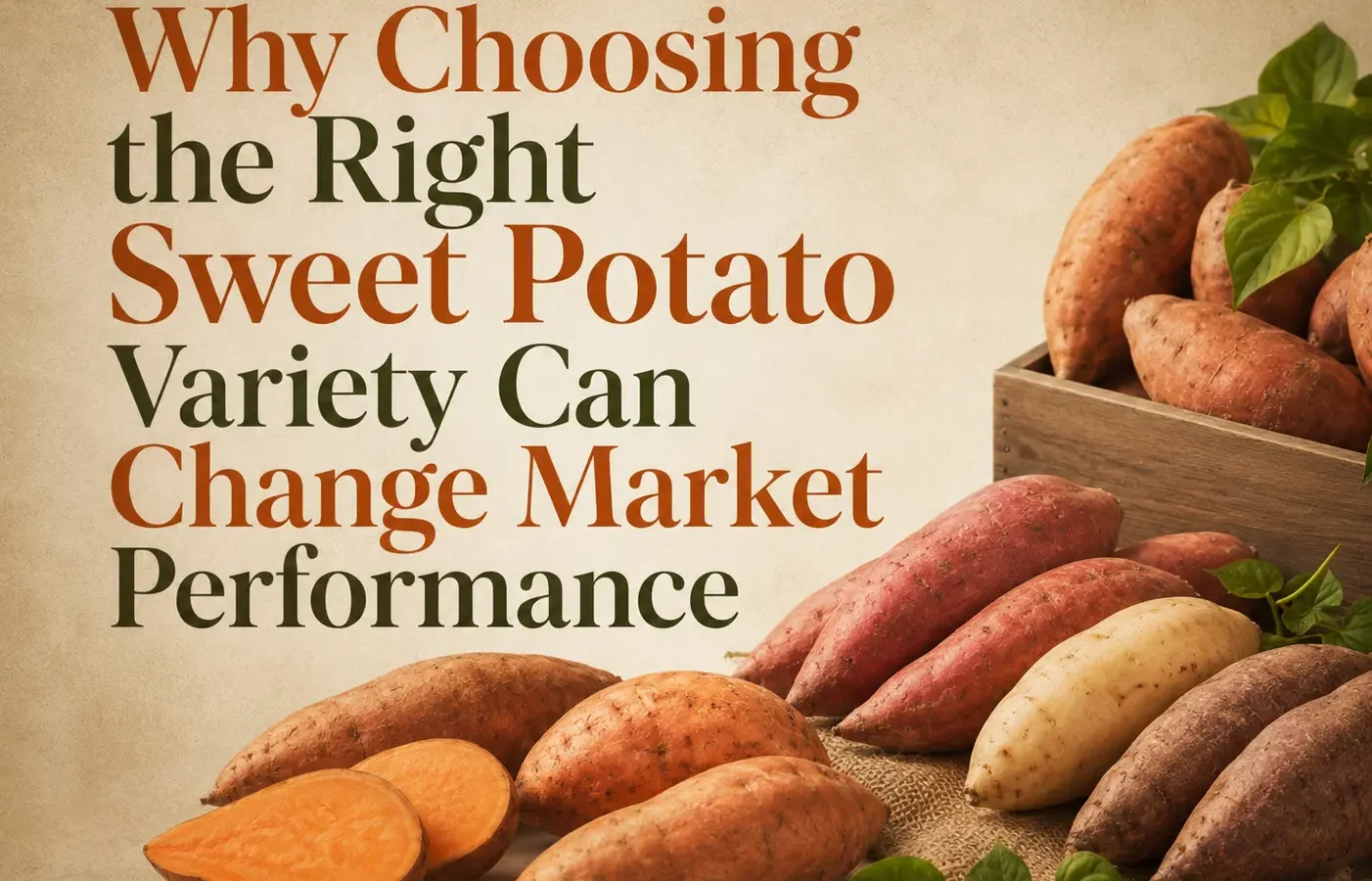
Colour can strongly influence how customers identify and choose sweet potatoes. Some sweet potato varieties have copper or reddish skin with deep orange flesh, while others may be lighter, cream-coloured, or purple.
Colour differences matter because they can affect:
- Shelf appeal.
- Consumer familiarity.
- Product positioning.
- Cooking presentation.
- Market expectations.
A Beauregard sweet potato is widely recognised for its copper-toned skin and vibrant orange flesh, which helps make it familiar in many commercial markets.
Sweetness, Moisture, and Texture
Varieties can also behave very differently after cooking. Some become soft, moist, and naturally sweet, while others remain firmer or drier.
These differences matter when growing sweet potatoes for specific commercial uses because buyers may be sourcing for:
- Baking.
- Roasting.
- Frying.
- Pureeing.
- Processing.
- Fresh retail consumption.
The right texture can be just as important as the right appearance.
Shape, Size, and Storage Performance
Commercial buyers also look at how easily a crop can be graded and how well it performs after harvest. Uniform roots simplify packing, while strong storage performance helps reduce losses.
When comparing sweet potato varieties, buyers should consider whether a variety consistently delivers the size, shape, and post-harvest performance required for their distribution channel.
How Taste and Texture Influence Market Demand
Taste and texture often determine whether customers buy a product once or continue purchasing it. Different sweet potato varieties can vary significantly in sweetness, moisture, softness, and cooking behaviour, which means a variety that performs well in one market may not be the best choice for another. Buyers should therefore understand how eating quality connects with consumer expectations and commercial use.
Moist Versus Firmer Sweet Potato Varieties
Some varieties develop a soft, moist texture after cooking, while others remain firmer and drier. Neither profile is universally better; the right choice depends on how the product will be used.
For example:
- Softer varieties may suit baking and purees.
- Firmer varieties may work better for roasting or processing.
- Moist varieties may appeal to customers who prefer a sweeter eating experience.
- Drier varieties may suit markets that value structure and texture.
A Beauregard sweet potato is often chosen because of its familiar soft texture and balanced sweetness.
Sweetness and Consumer Expectations
Sweetness can influence both household purchasing and food-service use. Some markets expect a noticeably sweet product, while others may prefer more neutral flavour.
Understanding how to farm sweet potatoes for consistent eating quality also matters because field conditions, maturity, and post-harvest handling can affect the final experience.
Matching Texture with Cooking Applications
Commercial buyers should consider how the product will actually be prepared. The different varieties of sweet potatoes can respond differently to frying, roasting, baking, or processing.
Matching texture with the intended use helps reduce customer dissatisfaction and gives retailers, restaurants, and processors a more predictable product.
Why Beauregard Sweet Potato Remains a Commercial Favourite
The Beauregard sweet potato remains one of the most recognised commercial options because it combines attractive appearance, familiar flavour, and broad cooking versatility. Among the many sweet potato varieties available to buyers, Beauregard has built a strong position because it works across multiple distribution channels and is already familiar to many consumers.
Appearance and Recognisable Orange Flesh
One of Beauregard’s strongest advantages is its visual identity. The copper-toned skin and rich orange flesh create a recognisable product that performs well in retail displays and fresh produce markets.
Healthy Beauregard sweet potato plants can produce roots with:
- Attractive skin colour.
- Vibrant orange flesh.
- Good visual uniformity.
- Strong retail presentation.
- Familiar commercial appeal.
These characteristics help the variety stand out without requiring buyers to introduce an unfamiliar product to customers.
Cooking Versatility and Consumer Acceptance
Beauregard works well across a wide range of cooking methods, including baking, roasting, frying, and pureeing. Its natural sweetness and soft texture make it suitable for both household consumers and food-service businesses.
This versatility helps explain why the Beauregard sweet potato continues to perform well even as buyers explore other different varieties of sweet potatoes.
Commercial Performance Across Multiple Channels
The variety can serve:
- Supermarkets.
- Wholesalers.
- Restaurants.
- Catering businesses.
- Processors.
- Export markets.
For growers and buyers, this broad commercial relevance makes Beauregard a dependable option when consistent quality and familiar market acceptance are important.
Beyond Beauregard: Other Sweet Potato Varieties Buyers Consider
While Beauregard remains a strong commercial option, buyers should not assume that one variety is suitable for every market. Different sweet potato varieties offer different combinations of appearance, flavour, texture, and storage performance. Understanding these differences gives buyers more flexibility when selecting products for specific customers or distribution channels.
Bellevue and Other Orange-Fleshed Options
Orange-fleshed varieties may share some visual similarities, but they can differ in consistency, texture, sweetness, and commercial performance.
Buyers looking for alternatives can explore our Bellevue sweet potatoes when comparing orange-fleshed options with different characteristics for retail, wholesale, or food-service use.
A Beauregard sweet potato may remain the preferred choice in some markets, while Bellevue can offer advantages where buyers prioritise uniformity or specific presentation requirements.
White-Fleshed Sweet Potatoes
White-fleshed types generally offer a different eating experience from orange varieties. They may have a milder flavour or firmer texture, making them suitable for markets with different consumer preferences.
When comparing the different varieties of sweet potatoes, buyers should consider whether customers are familiar with the product and whether its texture fits common cooking habits.
Purple and Specialist Varieties
Purple-fleshed and other specialist sweet potato varieties can create opportunities in premium, niche, or visually driven markets. Their distinctive appearance can help them stand out, but demand may be more specific than for widely recognised commercial varieties.
For buyers, the right choice depends on customer expectations, intended use, and whether the product can be supplied consistently at the required quality.
Choosing Varieties for Retail, Wholesale, and Food Service
Different sales channels do not always want the same product. The sweet potato varieties that work well in supermarket displays may not be the same ones preferred by wholesalers or food-service buyers. Understanding the different varieties of sweet potatoes helps businesses match size, appearance, texture, and cooking performance with the expectations of each customer group. A familiar Beauregard sweet potato may suit broad commercial demand, while other varieties can serve more specific requirements.
What Retail Buyers Prioritise
Retail buyers usually place strong emphasis on appearance because consumers often make purchasing decisions visually. Uniform roots, attractive skin, and familiar flesh colour can all influence shelf performance.
Retail buyers commonly look for:
- Consistent sizing.
- Clean, healthy skin.
- Attractive colour.
- Familiar eating quality.
- Strong shelf presentation.
For many markets, the Beauregard sweet potato remains appealing because it combines recognisable orange flesh with broad consumer acceptance.
Requirements for Wholesale Distribution
Wholesale buyers often manage larger volumes and need products that can move efficiently through storage and distribution. In sweet potato wholesale, consistency becomes especially important because mixed sizing or uneven quality can create extra work further along the supply chain.
When comparing sweet potato varieties, wholesalers may prioritise:
- Reliable grading.
- Consistent shipment quality.
- Good storage performance.
- Suitable packaging.
- Stable seasonal availability.
Cooking Performance for Food-Service Buyers
Food-service buyers focus heavily on how products behave after preparation. Texture, sweetness, moisture, and portion consistency can all influence whether a variety works efficiently in kitchens.
Understanding the different varieties of sweet potatoes helps restaurants, caterers, and processors choose the product that best suits roasting, baking, frying, or pureeing rather than selecting by appearance alone.
How Export Conditions Affect Variety Selection
Export suitability is another important factor when comparing sweet potato varieties. A product may perform well locally but need stronger shelf life, handling resistance, or storage stability when travelling internationally. Buyers therefore need to consider how each variety responds to transport and post-arrival distribution, not just how it performs immediately after harvest.
Shelf Life and Long-Distance Transport
Long-distance shipping places additional pressure on fresh produce. The different varieties of sweet potatoes can vary in storage performance, skin strength, and sensitivity to handling.
Buyers should consider:
- Expected transit duration.
- Shelf-life potential.
- Skin condition.
- Firmness on arrival.
- Product consistency after storage.
A Beauregard sweet potato is often valued because it can combine familiar eating quality with practical commercial performance when properly harvested and handled.
Packaging and Handling Requirements
Professional sweet potato packaging protects the crop during loading, transit, unloading, and storage. The right format should limit unnecessary movement while allowing suitable ventilation and efficient handling.
Packaging decisions may depend on:
- Variety.
- Root size.
- Carton weight.
- Transport distance.
- Buyer specifications.
Some sweet potato varieties may require slightly different handling approaches because of differences in skin sensitivity, shape, or size distribution.
Maintaining Quality After Arrival
Export success does not end when a shipment reaches port. Buyers still need the products to maintain freshness during storage and onward distribution.
Understanding the different varieties of sweet potatoes helps importers choose products that can remain commercially attractive after arrival rather than focusing only on how they looked at packing.
Why Growing Conditions Still Matter Regardless of Variety
Choosing the right variety is important, but genetics alone cannot guarantee quality. All sweet potato varieties depend on suitable soil, moisture, nutrition, and crop management to express their commercial potential. Even a well-known Beauregard sweet potato can develop inconsistently if field conditions are poor, which is why buyers should consider both variety and production quality when evaluating supply.
Soil and Root Development
Sweet potatoes develop below the surface, making soil structure especially important. Loose, well-drained ground gives roots room to expand naturally and reduces the risk of irregular formation.
Suitable sweet potato growing conditions support:
- Better root shape.
- More consistent sizing.
- Improved drainage.
- Healthier root development.
- Easier harvesting.
These factors influence the final quality of the different varieties of sweet potatoes, even when the crops have different natural characteristics.
Irrigation and Nutrition
Water and nutrients need to remain balanced throughout the season. Too little moisture can create stress, while excessive irrigation can reduce soil aeration and affect root quality.
Across sweet potato varieties, balanced crop management helps support:
- Healthy vines.
- Steady root development.
- Better uniformity.
- Consistent internal quality.
- Stronger commercial yield.
Harvest Timing and Post-Harvest Care
Harvesting at the correct stage helps protect size, skin quality, and storage potential. Post-harvest handling then determines how much of that field quality is preserved.
For a Beauregard sweet potato or any other commercial variety, careful curing, grading, storage, and handling remain essential after the crop leaves the field.
How Buyers Can Compare Sweet Potato Varieties Before Ordering
Buyers should compare sweet potato varieties systematically rather than choosing based only on appearance, price, or one successful sample. The different varieties of sweet potatoes can perform differently in storage, cooking, grading, and transportation, so clear specifications help businesses understand what they are actually purchasing before committing to larger volumes.
Asking for Clear Specifications
Professional suppliers should be able to provide clear information about:
- Variety.
- Size range.
- Grade.
- Skin and flesh colour.
- Packaging.
- Expected availability.
- Storage characteristics.
Buyers can also explore our sweet potato products to compare available commercial options and understand which characteristics may be best suited to their market.
Reviewing Samples and Commercial Grades
Samples can help buyers assess appearance, shape, texture, and overall consistency before placing larger orders. However, the sample should reflect the commercial grade that will actually be supplied.
When assessing a Beauregard sweet potato, buyers should look beyond one attractive root and consider whether the full shipment can maintain similar standards.
Comparing Repeat-Shipment Performance
The strongest supplier is not necessarily the one that provides the best first shipment. Consistency across repeated orders is more important.
Buyers comparing different varieties of sweet potatoes should evaluate whether sizing, quality, packaging, and arrival condition remain stable over time. This helps reveal which varieties and suppliers offer the most dependable long-term value.
How Farm Sweet Helps Buyers Select the Right Variety
Selecting between sweet potato varieties can become easier when buyers work with a supplier that understands both production and commercial market requirements. Farm Sweet helps customers compare characteristics, expected applications, and supply conditions so they can choose varieties that fit their distribution channels rather than selecting based on one feature alone.
Commercial Varieties for International Markets
Farm Sweet supplies varieties selected for commercial performance and international demand. Different markets may prefer different characteristics, which is why understanding the different varieties of sweet potatoes is important when planning an order.
A Beauregard sweet potato may be appropriate for buyers looking for:
- Familiar orange flesh.
- Balanced sweetness.
- Versatile cooking use.
- Strong retail recognition.
- Broad commercial acceptance.
Other varieties may better suit customers prioritising different texture, presentation, or storage characteristics.
Consistent Grading and Quality
Variety choice only creates value when product quality remains consistent. Our grading process focuses on helping buyers receive products that match agreed commercial requirements as closely as possible.
This includes attention to:
- Size.
- Shape.
- Skin condition.
- Overall appearance.
- Shipment consistency.
Professional preparation helps different sweet potato varieties reach buyers in a condition that reflects their commercial potential.
Supply Planning Around Buyer Requirements
Farm Sweet also works with buyers to understand order volumes, seasonal requirements, packaging preferences, and destination-market needs.
Businesses comparing sweet potato varieties or planning repeat orders can contact our Farm Sweet team to discuss which option best matches their customers and commercial objectives.
Final Thoughts: The Best Variety Is the One That Fits Your Market
There is no single variety that is automatically best for every buyer. The right choice depends on consumer preferences, cooking applications, distribution channels, storage requirements, and the commercial specifications of the destination market. Understanding sweet potato varieties allows businesses to make sourcing decisions based on performance rather than familiarity alone.
The different varieties of sweet potatoes offer different strengths. Some buyers may prioritise sweetness and soft texture, while others need firmer roots, greater uniformity, specialist colours, or specific storage characteristics. A Beauregard sweet potato remains a strong option for many commercial markets, but the most valuable product is ultimately the one that matches the buyer’s actual requirements.
Working with an experienced Egyptian sweet potato exporter can make this selection process more reliable by combining variety knowledge with grading, packaging, seasonal planning, and export preparation. When buyers compare the full commercial picture rather than one individual characteristic, they can choose varieties that support stronger customer satisfaction, more predictable supply, and better long-term market performance.
FAQs: What Buyers Should Know About Sweet Potato Varieties
- What are the main sweet potato varieties?
Commercial markets include orange-, white-, and purple-fleshed varieties, with each offering different characteristics in flavour, texture, appearance, and storage.
- How do different varieties of sweet potatoes compare?
They may differ in skin and flesh colour, sweetness, moisture content, cooking texture, shape, size, and shelf-life performance.
- Why is Beauregard sweet potato so widely used?
Beauregard is recognised for its orange flesh, familiar sweetness, cooking versatility, attractive appearance, and strong commercial acceptance.
- Which sweet potato variety is best for export?
The best option depends on the destination market, buyer specifications, storage requirements, consumer preferences, and intended use.
- Should buyers choose a variety based on price alone?
No. Commercial buyers should also consider product quality, shelf life, grading consistency, consumer demand, and shipment performance.