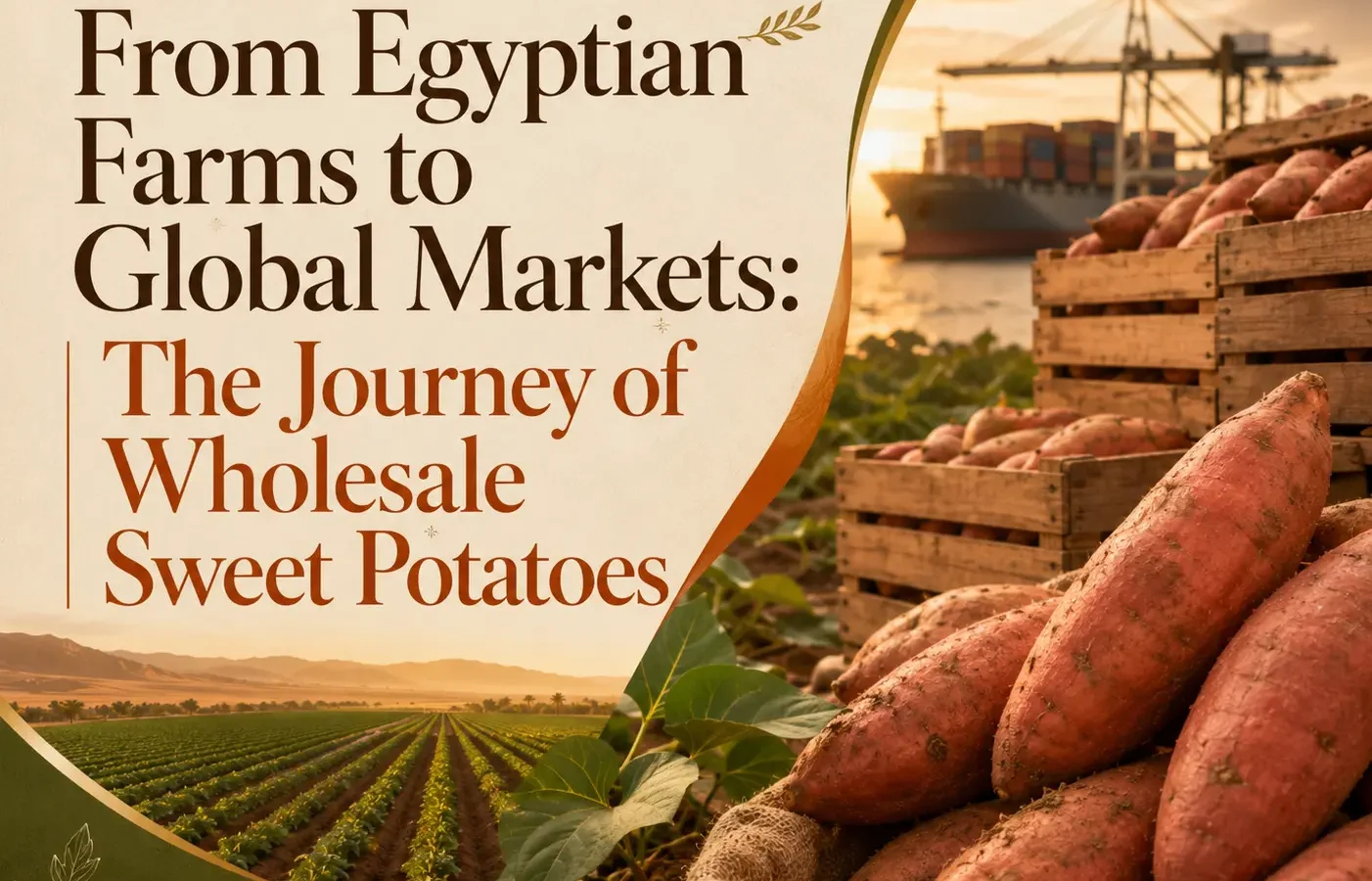
The journey of sweet potato wholesale begins long before the product reaches supermarkets, wholesalers, or food-service businesses around the world. Every shipment reflects months of careful cultivation, harvesting, grading, and packing to ensure buyers receive sweet potatoes that meet international quality standards. From fertile Egyptian farmland to global distribution networks, every stage plays an essential role in delivering products that arrive fresh, consistent, and ready for market.
As demand for farm fresh sweet potatoes continues to grow, buyers are placing greater importance on suppliers who can provide both reliable quality and dependable logistics. This is why successful sweet potato exports rely on more than high-quality crops, they require expertise, efficient supply chain management, and strict quality control from farm to shipment. In this article, we’ll take you through the complete export journey and explore how our export services help bring premium Egyptian sweet potatoes to customers across international markets.
The Foundation of Every Wholesale Sweet Potato Order
A successful sweet potato wholesale business starts long before the products are packed for export. The quality buyers receive is shaped by every decision made in the field, from selecting suitable growing conditions to following the right cultivation practices and harvest schedule. When these stages are carefully managed, suppliers can consistently deliver sweet potatoes that meet the expectations of international wholesalers, retailers, and food-service businesses.
Starting with High-Quality Cultivation
Producing premium sweet potatoes begins with creating the right environment for healthy crop development. Fertile soil, favourable climate conditions, and experienced agricultural practices all contribute to producing roots with excellent size, colour, and overall quality.
Strong cultivation practices help achieve:
- Healthy and uniform crop development.
- Better product appearance.
- Consistent internal quality.
- Higher marketable yields.
Establishing this strong foundation allows growers to produce sweet potatoes that are suitable for demanding export markets.
Growing for Commercial Standards
Commercial buyers require more than a good harvest, they expect consistency across every shipment. This means production is planned around internationally recognised grading and quality requirements rather than simply maximizing yield.
Throughout the growing season, attention is given to maintaining:
- Uniform sizing.
- Consistent skin quality.
- Healthy root development.
- Reliable product presentation.
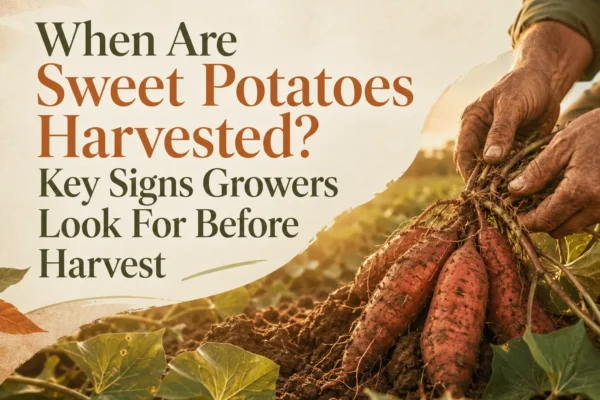
Equally important is understanding when to harvest sweet potatoes, as harvesting at the right stage helps preserve quality, improve storage performance, and ensure the crop is ready for international distribution.
Preparing for Large-Scale Supply
Meeting wholesale demand requires careful planning throughout the production cycle. Export markets often require large, consistent volumes that can be supplied within strict delivery schedules, making preparation just as important as cultivation itself.
This includes:
- Planning harvest volumes in advance.
- Organizing grading and packing operations.
- Coordinating storage before shipment.
- Maintaining a dependable supply throughout the export season.
By combining careful production planning with high agricultural standards, growers can supply farm fresh sweet potatoes that meet the quality, consistency, and reliability expected by buyers across global markets.
Why Farm Fresh Sweet Potatoes Make the Difference
The quality of sweet potatoes isn’t determined only by how they are grown, it also depends on how they are handled after harvest. From the moment they are removed from the field, every step influences their freshness, appearance, and ability to withstand international transportation. For businesses involved in sweet potato wholesale, maintaining product quality throughout this process is essential to delivering a reliable product that meets the expectations of buyers worldwide.
Harvesting at Peak Maturity
Harvest timing has a direct impact on both product quality and shelf life. Sweet potatoes harvested at the right stage develop the size, texture, and internal quality expected by commercial buyers, while harvesting too early or too late can affect their overall performance during storage and shipping.
A carefully timed harvest helps ensure:
- Well-developed roots with consistent sizing.
- Better skin quality and appearance.
- Improved storage potential.
- Stronger performance during export.
This attention to timing helps preserve the characteristics buyers expect from premium farm fresh sweet potatoes.
Protecting Freshness After Harvest
Freshness doesn’t end in the field. Once harvested, sweet potatoes require careful handling to minimize damage and preserve their natural quality before they enter the packing process.
This includes:
- Gentle handling during collection.
- Protection from unnecessary bruising.
- Proper storage conditions before packing.
- Organized movement from the field to the packing facility.
These practices help maintain the freshness and appearance that international customers associate with high-quality Egyptian produce.
Maintaining Quality Before Packing
Before sweet potatoes are prepared for export, they go through a series of quality checks to ensure they meet commercial and market-specific requirements. Careful sorting, grading, and inspection help guarantee consistency across every shipment while reducing unnecessary waste.
At this stage, the right packaging solutions also become essential, as they help protect product quality throughout transportation and delivery. By combining thorough quality control with professional packing methods, suppliers can support successful sweet potato exports and deliver products that arrive in excellent condition, ready for wholesale distribution.
Preparing Sweet Potatoes for Wholesale Markets
Producing premium sweet potatoes is only part of the wholesale journey. Before they are ready for international buyers, every harvest must go through a careful preparation process that ensures consistency, protects product quality, and meets customer specifications. From sorting and grading to selecting the right sizes and preparing products for export, each stage helps ensure that buyers receive sweet potatoes that arrive in excellent condition and are ready for distribution.
Sorting and Grading
Not every harvested sweet potato is identical, which is why sorting and grading are essential before products enter the wholesale market. Careful inspection helps create uniform shipments while ensuring that each order matches the quality requirements of its destination.
During this stage, sweet potatoes are evaluated based on:
- Overall appearance.
- Shape and uniformity.
- Skin quality.
- Size consistency.
- Export suitability.
This systematic process helps maintain consistency across shipments while supporting the high standards outlined in our quality assurance process.
Selecting the Right Sizes
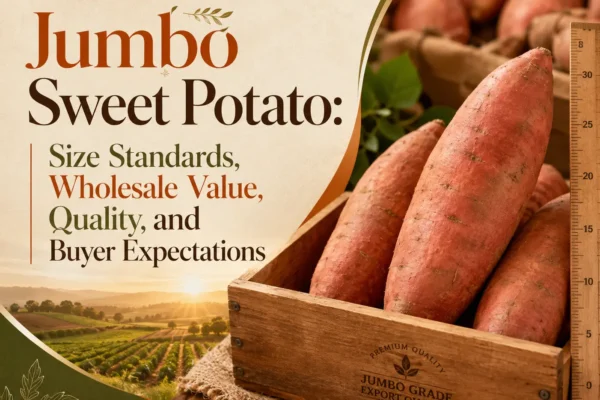
Different markets often require different product sizes depending on how the sweet potatoes will be sold or used. Retail chains, wholesalers, and food-service businesses may each have their own purchasing specifications, making accurate size selection an important part of wholesale preparation.
Selecting the appropriate size helps:
- Meet customer specifications.
- Improve packing efficiency.
- Create a more uniform product presentation.
- Reduce sorting requirements after delivery.
Providing buyers with the right size categories allows them to streamline their own operations while maintaining consistent product quality.
Packaging for International Distribution
Once grading and sizing are complete, sweet potatoes are prepared for export using packaging that protects them throughout storage and transportation. Proper packaging reduces the risk of damage while preserving freshness during long-distance shipping.
Effective export packaging is designed to:
- Protect products during handling.
- Support ventilation throughout transit.
- Maintain product presentation.
- Meet international shipping requirements.
By combining careful grading with appropriate packaging, suppliers help ensure farm fresh sweet potatoes reach global buyers in the same excellent condition in which they left the packing facility.
How Sweet Potato Exports Connect Farms with Global Buyers
The success of sweet potato exports depends on far more than producing a high-quality crop. International buyers rely on suppliers who understand export requirements, maintain consistent standards, and can deliver products safely across borders. Every shipment represents a coordinated process involving production, quality control, documentation, logistics, and communication to ensure products arrive on time and in excellent condition.
Meeting International Quality Standards
Global markets expect consistency with every shipment. Buyers want products that meet agreed specifications while maintaining the appearance, freshness, and quality required for retail and wholesale distribution.
To achieve this, exporters focus on:
- Consistent grading and selection.
- Compliance with buyer specifications.
- Careful inspection before shipment.
- Reliable product presentation.
These standards begin long before harvest. Understanding how to grow sweet potatoes using proven agricultural practices helps establish the quality that international markets expect from Egyptian exporters.
Managing Export Documentation and Logistics
Moving agricultural products across international markets requires careful coordination beyond the farm. Every shipment must be supported by accurate documentation and well-organized logistics to ensure smooth customs clearance and timely delivery.
This process typically includes:
- Preparing export documentation.
- Coordinating shipping schedules.
- Meeting destination market requirements.
- Maintaining clear communication throughout the supply chain.
Strong logistical planning minimizes delays and helps buyers receive their orders according to schedule.
Delivering Products Safely Across Borders
The final stage of the export journey is ensuring sweet potatoes reach their destination with the same quality they had when they were packed. Careful handling throughout transportation helps preserve freshness, reduce damage, and maintain customer confidence.
Successful export operations prioritize:
- Secure transportation methods.
- Proper handling throughout transit.
- Protection of product quality.
- Reliable delivery to international markets.
When every stage of the supply chain is managed effectively, sweet potato wholesale becomes more than a transaction, it becomes a dependable partnership that connects Egyptian farms with buyers around the world.
What Wholesale Buyers Expect from an Export Partner
A successful sweet potato wholesale partnership depends on far more than the quality of a single order. International buyers need a supplier they can rely on throughout the season—one that understands their specifications, maintains dependable delivery schedules, and communicates clearly from confirmation to arrival. When these expectations are met consistently, buyers can plan their inventory with greater confidence and build stronger relationships with their own customers.
Consistent Product Quality
Wholesale buyers expect every shipment to reflect the same agreed standards. Significant differences in size, appearance, or freshness can create additional work for distributors and affect how the product is presented to retailers and consumers.
A dependable supplier maintains consistency through:
- Careful crop selection.
- Accurate grading and sizing.
- Regular quality inspections.
- Controlled handling before shipment.
This reliability begins with well-managed sweet potato farming, where proper cultivation supports healthier roots and more uniform harvests. It continues through every preparation stage until the products are ready for export.
Reliable Supply and Delivery Schedules
Buyers need to know that the required volumes will be available when promised. Delays or unexpected shortages can disrupt stock levels, retailer commitments, and seasonal sales plans.
A reliable partner supports buyers by:
- Planning production according to expected demand.
- Coordinating harvesting and packing efficiently.
- Confirming realistic delivery schedules.
- Maintaining supply throughout the export season.
This structured approach makes it easier for businesses to secure farm fresh sweet potatoes without facing avoidable interruptions.
Clear Communication Throughout Every Shipment
Strong communication keeps buyers informed and reduces uncertainty at every stage. From confirming quantities to sharing shipping updates, timely information helps customers prepare for incoming orders and respond quickly when plans change.
Experienced exporters provide clear updates on product availability, packing progress, documentation, departure dates, and expected arrival. This level of transparency is essential for building long-term partnerships based on trust rather than one-time transactions.
Overcoming Challenges in Sweet Potato Wholesale
Managing wholesale orders across international markets comes with several challenges. Product quality must remain consistent, shipments must withstand long journeys, and suppliers must be prepared to respond when demand changes. Experienced exporters overcome these difficulties through careful planning, strong quality control, and a flexible supply process designed around the realities of global trade.
Maintaining Consistency Across Shipments
Natural crops can vary from one harvest to another, but commercial buyers still expect dependable standards. Consistency requires suppliers to manage cultivation, selection, grading, and packing as connected stages rather than separate activities.
Egypt’s growing environment also plays an important role. The 7 Nile Delta soil advantages support healthy root development and contribute to the size, appearance, and overall quality required for international distribution. These natural benefits must still be supported by careful inspection to ensure every order meets the buyer’s specifications.
Protecting Product Quality During Transportation
Long-distance transportation can expose products to repeated handling, changing conditions, and extended transit periods. Without proper preparation, even high-quality crops may lose part of their commercial value before arrival.
Protecting farm fresh sweet potatoes during transportation requires:
- Suitable export packaging.
- Careful loading and unloading.
- Proper ventilation during transit.
- Efficient shipping coordination.
- Reduced delays throughout the journey.
These measures help preserve freshness, minimize bruising, and ensure the shipment remains suitable for wholesale distribution upon arrival.
Adapting to Changing Market Demand
Demand may change according to season, destination market, customer preferences, or retail activity. Exporters must therefore remain flexible enough to adjust volumes, sizes, packaging formats, and delivery schedules when required.
Well-managed sweet potato exports allow suppliers to respond to these changes without compromising product standards. By combining production planning with clear buyer communication, exporters can support both regular orders and unexpected increases in demand while keeping the supply chain stable.
How Farm Sweet Supports Wholesale Buyers Worldwide
Farm Sweet supports international buyers by combining reliable production, careful export preparation, and a clear understanding of wholesale market requirements. Every stage is managed with the goal of helping customers receive consistent products, dependable supply, and responsive service. From growing sweet potatoes under suitable agricultural conditions to coordinating final shipment, the process is built around the expectations of importers, distributors, retailers, and food-service businesses.
Premium Farm Fresh Sweet Potatoes
Wholesale buyers need products that meet both commercial specifications and consumer expectations. Farm Sweet supplies farm fresh sweet potatoes selected for their appearance, consistency, and suitability for international distribution.
Our production approach focuses on:
- Healthy root development.
- Consistent sizing and shape.
- Strong skin quality.
- Reliable taste and internal texture.
This attention to crop quality gives buyers greater confidence when planning repeat orders for their markets.
Professional Export Preparation
Successful sweet potato exports require careful preparation after harvest. Products are sorted, graded, inspected, and packed according to the needs of each order and destination market.
Professional preparation helps ensure:
- Accurate size selection.
- Consistent presentation.
- Protection during handling and transit.
- Compliance with agreed buyer specifications.
These steps support smoother distribution once the shipment reaches its destination.
Long-Term Partnerships Built on Trust
A dependable sweet potato wholesale relationship is built through consistency, transparency, and reliable communication. Farm Sweet works closely with buyers to understand their requirements, confirm realistic schedules, and provide clear updates throughout every shipment.
By maintaining product standards and supporting customers across repeated orders, we aim to become a trusted long-term supply partner rather than simply a one-time exporter.
Final Thoughts: A Reliable Journey from Farm to Market
The journey from Egyptian farmland to international wholesale markets involves much more than harvesting and shipping a crop. Every stage, from cultivation and quality control to grading, packaging, documentation, and transportation, affects the condition of the final product. When these processes are managed carefully, buyers receive sweet potatoes that are consistent, fresh, and ready for distribution.
Successful sweet potato wholesale depends on choosing an export partner that understands both agricultural production and the commercial realities of global supply. Buyers need dependable volumes, accurate specifications, clear communication, and shipments that arrive according to plan. These qualities help businesses reduce uncertainty, protect their customer relationships, and maintain a stable supply throughout the season.
Farm Sweet brings these stages together to support reliable sweet potato exports from farm to destination. Through careful production and professional export preparation, we help international buyers source products that match their market needs. To discuss your required varieties, sizes, packaging formats, or order volumes, contact our Farm Sweet team and begin planning a supply solution built around your business.
FAQs: Sweet Potato Wholesale and Export
- What is sweet potato wholesale?
Sweet potato wholesale involves supplying large quantities of sweet potatoes to distributors, retailers, supermarkets, food service businesses, and importers. Wholesale suppliers focus on consistent quality, reliable volumes, and meeting commercial specifications.
- Why are farm fresh sweet potatoes important for wholesale buyers?
Farm fresh sweet potatoes retain their quality, appearance, and shelf life when they are harvested at the right time and handled carefully throughout the supply chain, making them more suitable for domestic and international markets.
- What is involved in sweet potato exports?
Sweet potato exports include grading, quality inspections, packaging, documentation, logistics coordination, and shipping products to international markets while maintaining freshness and compliance with import requirements.
- How can buyers choose a reliable wholesale sweet potato supplier?
Buyers should look for suppliers with proven export experience, consistent product quality, flexible packaging options, dependable delivery schedules, and strong quality control processes.
- How does Farm Sweet support international wholesale buyers?
Farm Sweet supplies premium-quality sweet potatoes through carefully managed farming, professional grading and packaging, and reliable export services designed to meet the needs of wholesale buyers worldwide.